
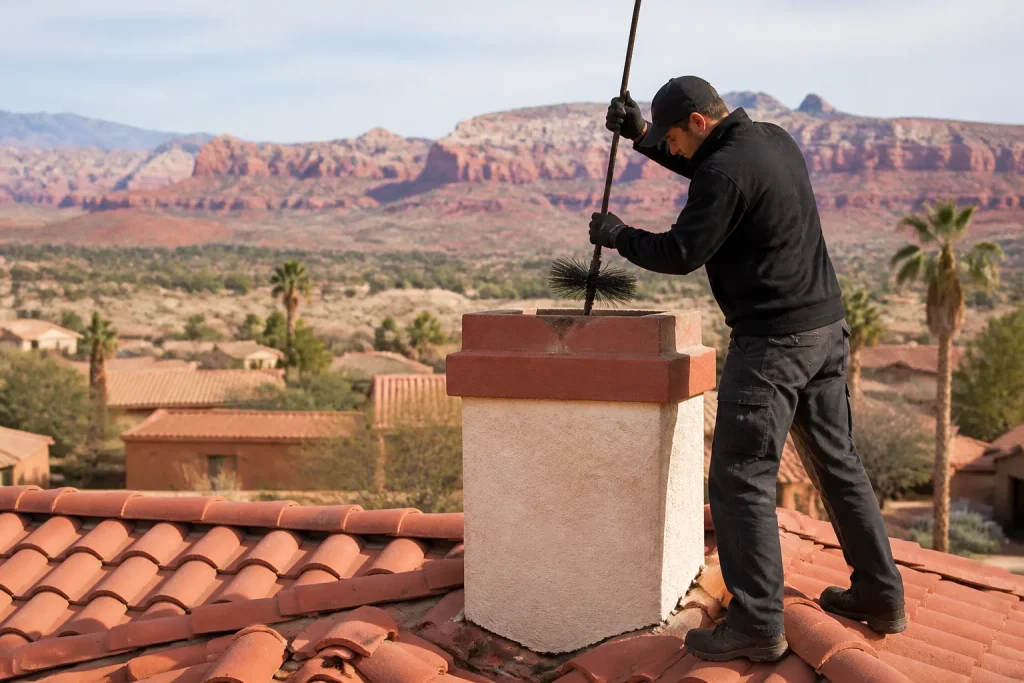
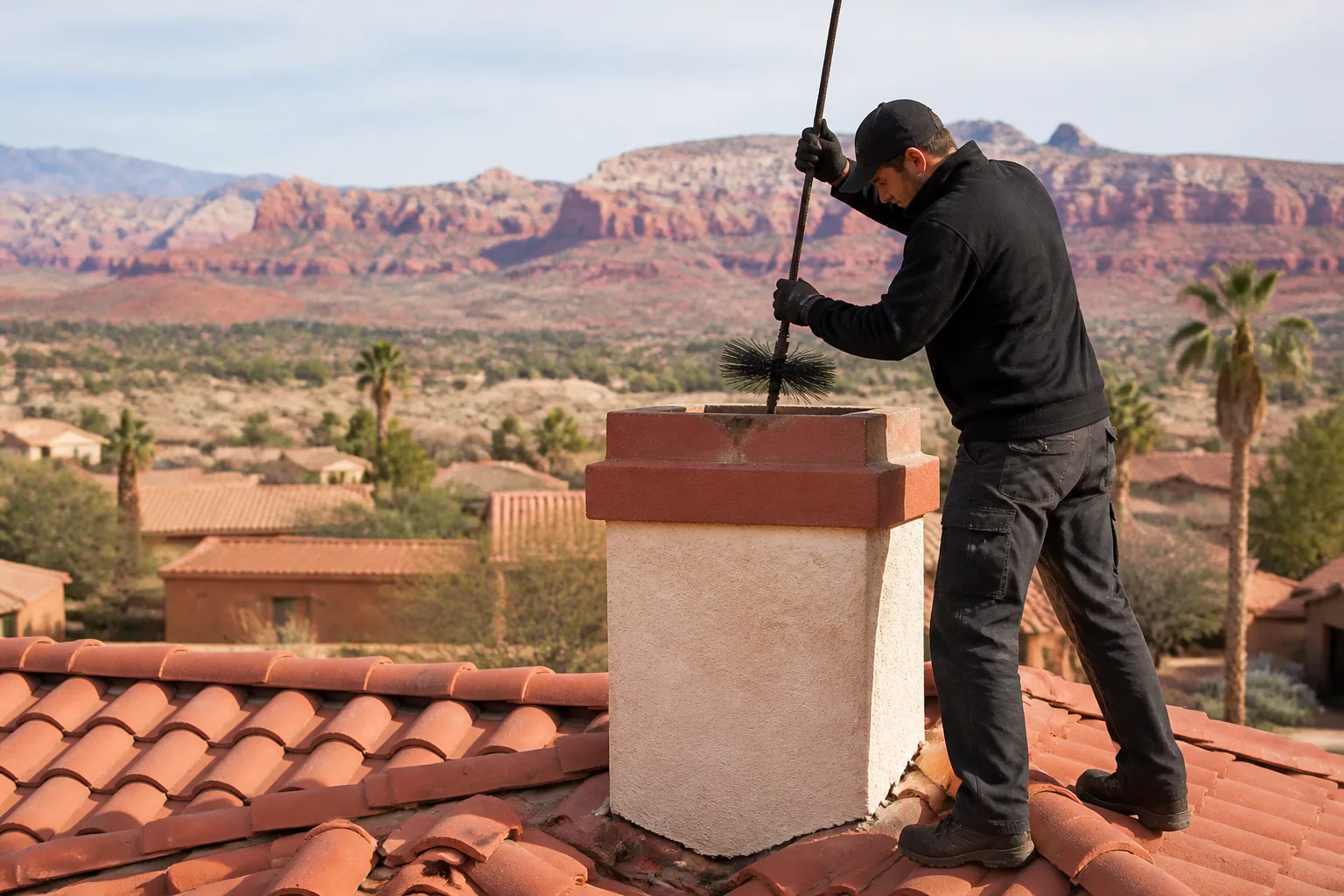
HeatShield Chimney Sweep in St. George: A Homeowner’s Guide
Most homeowners in St. George have never heard the word HeatShield until a sweep hands them a report with “deteriorated flue liner” checked off. Then come the questions. Is this a real fix or a patch? Do I actually need a full stainless reline, or is someone selling me one? Here’s the thing worth understanding upfront: HeatShield isn’t one product, it’s two different repair systems for two different problems, and knowing the difference changes how you read any chimney quote you’re handed.
We work with HeatShield because it solves a specific, common problem in desert-climate homes. Whether it’s right for your chimney depends entirely on what a camera finds inside the flue. If you’d rather have a trained eye look than guess, call (877) 327-1971 and we’ll book a sweep and inspection.
What is HeatShield, and why do St. George homeowners need to know about it?
HeatShield is a ceramic resurfacing system applied to the inside of a clay-tile chimney liner to restore its structural integrity and fire safety. It’s an alternative to a full stainless steel reline when the existing liner is still sound enough to build on. In plain terms: instead of sleeving a new metal liner down the flue, HeatShield coats and seals the original clay liner from the inside, closing cracks, gaps, and deteriorating mortar joints without tearing anything out.
A full stainless reline on a two-story chimney in St. George can run $3,000 – $5,000. HeatShield applied to that same liner, when the damage qualifies, achieves the same fire-safety outcome for a fraction of the cost. That’s the part that gets a homeowner’s attention. The catch is the qualifying language, and it matters.
We install and work with HeatShield because it’s one of the product lines professional chimney contractors specify, not what you’d find on a hardware store shelf. If a sweep tells you your liner is compromised, HeatShield is worth asking about by name. If they steer you straight to a $4,000 reline without mentioning it, ask why. Sometimes relining really is the answer. Sometimes it isn’t.
What are the two HeatShield formulations, and which one fixes your chimney?
HeatShield comes in two formulations, and this is where most quotes get vague. Cerfractory Flue Sealant is for a liner that’s still structurally intact but has cracks, gaps, or surface spalling in the flue wall. It coats the entire flue interior with a ceramic-refractory layer that seals those defects and restores a smooth, heat-resistant surface. Think of it as resurfacing a worn road rather than repaving it.
Joint Repair Sealant is narrower in scope. It targets the horizontal mortar joints between clay tiles, the seams where the sections of liner meet. Those joints are the first thing to fail as a liner ages, and gaps there let heat and combustion gases escape into the chimney structure. Joint Repair Sealant fills and seals each joint individually rather than coating the whole flue.
Which one applies depends on what the camera shows:
- Cerfractory Flue Sealant: cracks, spalling, gaps, and general surface deterioration across the flue wall, with tiles still stable
- Joint Repair Sealant: isolated mortar joint failure with otherwise healthy tiles, often caught early
- Full reline: missing tiles, offset or shifted tiles, cracked tiles that come apart under inspection, or flue sizing that won’t support safe operation
The difference between these three outcomes is the difference between a few hundred dollars and several thousand. Any honest quote starts with the camera, not the catalog.
What has to be true before HeatShield is the right call?
A camera inspection has to confirm three things before HeatShield makes sense: the clay tiles are still in place and structurally bonded, the flue is the correct size for the appliance it serves, and the deficiencies are surface-level or joint-level, not structural. If any of those fails, HeatShield is the wrong product for your chimney, and no amount of it will make the flue safe.
What rules HeatShield out:
- Tiles that are cracked through, loose, or missing sections
- A flue that’s too large or too small for the appliance (common in older St. George homes that have been re-applianced)
- Offsets, damage from a past chimney fire, or a flue that’s been relined before with something else
- A single flue serving two appliances, which calls for a different configuration entirely
What qualifies it:
- Intact tiles, correct flue size, and open joints or surface defects
- Older clay-tile liners with early-stage deterioration caught before the tiles let go
- Chimneys where the structure is sound but the flue surface isn’t
This is where the camera does the work. During the inspection, you should see the footage, not a summary. Ask to look at the screen. If the sweep can’t show you the defect they’re describing, you don’t have a diagnosis, you have a suggestion. And several of the defects above are genuinely dangerous to guess at: a compromised liner lets heat and carbon monoxide reach combustible material, so this is a call a trained professional makes with a camera, not something you investigate yourself.
Our sweep includes a camera inspection and photo report, so you can see what we see and get a plain answer on whether HeatShield fits your liner, whether a reline is the safe path, or whether the deficiency can wait a season. Nothing gets recommended that you can’t look at yourself.
Why do St. George chimneys deteriorate the way they do?
St. George sits at the meeting point of desert heat and occasional hard freezes, and that swing is hard on clay tile and mortar. Summer afternoons push the flue into the triple digits, then winter mornings drop below freezing. Mortar and clay expand and contract at slightly different rates, and after enough seasons, the joints between tiles open up. Add the thermal stress of actual use and you get a liner whose worst defects are often at the joints, exactly where Joint Repair Sealant or Cerfractory Flue Sealant can help.
Homes in older St. George neighborhoods, especially around the historic downtown blocks and the older stretches off Bluff Street, tend to have clay-tile liners that have seen decades of that cycling. Newer construction on the east side and out toward Washington Fields often has different liner materials entirely, and inspection of those chimneys looks at different failure points. The point is local: a heater-chimney inspection in St. George isn’t the same as one in a milder climate, because our winters deliver just enough freeze-thaw cycling to stress a liner without the constant cold that keeps it from drying out.
If you’re in St. George and haven’t had your liner looked at, the seasonal window matters. A sweep and inspection before the heating season starts is the right time to catch joint deterioration while HeatShield is still an option, rather than finding out in January that the liner has moved past the point where resurfacing can help.
What does a HeatShield application actually look like inside your home?
A HeatShield application happens inside the flue, entirely from the roof and the fireplace opening, and it typically takes a good part of a day for a standard chimney. It’s a controlled, deliberate job, not a quick coat-and-go, and knowing the sequence removes most of the anxiety.
- Prep and protection. The firebox and surrounding floor area are covered. Any appliance connection is disconnected or protected as needed.
- Cleaning. The flue is swept first. HeatShield bonds to a clean surface, so the sweep and the application are part of the same job.
- Application. The HeatShield mixture is applied to the flue interior with a specialized applicator pulled through the flue. Joint Repair Sealant is worked into each mortar joint. Cerfractory Flue Sealant coats the full flue wall.
- Curing. The material cures into a ceramic layer. Cure time depends on the formulation and conditions, and the chimney stays out of service until it’s done.
- Post-application camera check. The flue is inspected again on camera to confirm the coverage and seal before the job is closed out.
There’s no demolition, no tearing out of the original liner, and no new stainless sleeve. For a homeowner dreading a multi-day reline, the lighter footprint is a real benefit. It’s also why it can be done without the disruption a reline involves.
What about warranty and maintenance after a HeatShield application?
HeatShield carries a manufacturer warranty that covers the material and its performance when the application meets the manufacturer’s requirements and the chimney is maintained. The warranty is only as good as the installation, which is why the qualifying inspection and the pre-application cleaning both matter. If the flue wasn’t properly prepped or the wrong formulation was used for the defect, the warranty won’t help you.
What keeps a HeatShield application valid over the long term:
- Annual or as-needed chimney sweeps, based on how much you burn
- Prompt attention to any new creosote buildup or appliance changes
- Keeping the chimney cap in place and in good condition so water and debris stay out
- A camera re-check at regular intervals, since a camera catches new defects before they become problems
If you change appliances down the road, say from a wood-burning insert to a gas appliance, have the liner re-evaluated. A flue sized for one appliance isn’t automatically right for another, and that’s a conversation, not an emergency. When you book a sweep, we’ll flag it.
When to call a pro instead of reading any further
If you’ve got a damaged liner but no camera footage, you don’t yet know whether HeatShield is right, whether a reline is the safe answer, or whether the defect can wait. That’s the point at which a professional should look. Not because the chimney is about to fall down, but because the diagnosis is the whole decision, and the difference between HeatShield and a reline is thousands of dollars and the right outcome for your home.
A chimney with a compromised liner can let heat and combustion gases reach the structure of the house. That’s a serious risk, and it’s not one to investigate with a flashlight from the firebox. Have it inspected properly.
If you want to know where your St. George chimney stands, we can help. Our technicians have up to 12 years of experience, and a sweep with a camera inspection and photo report gives you a clear answer before any repair decision is made.
Related services in St. George: a full chimney sweep includes the camera inspection that answers the reline-versus-resurface question, and dryer vent cleaning addresses your home’s other high-fire-risk venting system in the same visit. If you’re new to the area, our St. George page covers what homeowners here should know. Learn more about Glacier Chimney Sweep.
The Bottom Line
HeatShield isn’t a magic fix and it isn’t a marketing word for a patch. It’s two specific formulations for two specific defect types, and whether it fits your chimney depends entirely on what the camera shows. Clay tiles that are intact with deteriorating joints or surface defects can often be resurfaced; tiles that are cracked, shifted, or missing need a reline, full stop. Getting the diagnosis right is the whole game, because the cost gap between a HeatShield application and a stainless reline is significant, and paying for the wrong one is the expensive mistake.
If you’re in St. George and need help, Glacier Chimney Sweep offers free estimates, call (877) 327-1971. We answer 24/7 and dispatch 7am to 7pm, Sunday through Friday. The written estimate is the final word on price, and nothing gets recommended that you can’t see in the photo report yourself.
Frequently Asked Questions
A full stainless reline on a two-story chimney in St. George typically runs $3,000 – $5,000, while HeatShield resurfacing of the same liner, when the damage qualifies, is a fraction of that cost. The exact number depends on flue length, the formulation needed, and access. The written estimate sets the final price. Call (877) 327-1971 for an exact quote, estimates are free.
HeatShield works if the clay tiles are intact and the defects are surface-level cracks or open mortar joints. If tiles are cracked through, missing, or misaligned, HeatShield is not safe and a full reline is the only correct fix. Only a camera inspection can tell you which situation you’re in. Call (877) 327-1971 to book an inspection with photo evidence.
It depends on how much you burn, but annual inspection is the standard for a wood-burning chimney, with sweeping as needed based on creosote buildup. In a climate with our temperature swings, don’t stretch past a year without looking. Call (877) 327-1971 to schedule a sweep and inspection.
A compromised liner lets heat and combustion gases, including carbon monoxide, reach the structure of the house, and that’s the serious risk. Skipping the inspection doesn’t make the defect go away, it just means you don’t know where you stand. Call (877) 327-1971 for a camera inspection, it’s the only way to know if your chimney is safe to burn.
Written by the team at Glacier Chimney Sweep.
Need Chimney Cleaning Help?
Call Glacier Chimney Sweep - licensed & insured, here with fast help in St. George.
(877) 327-1971