
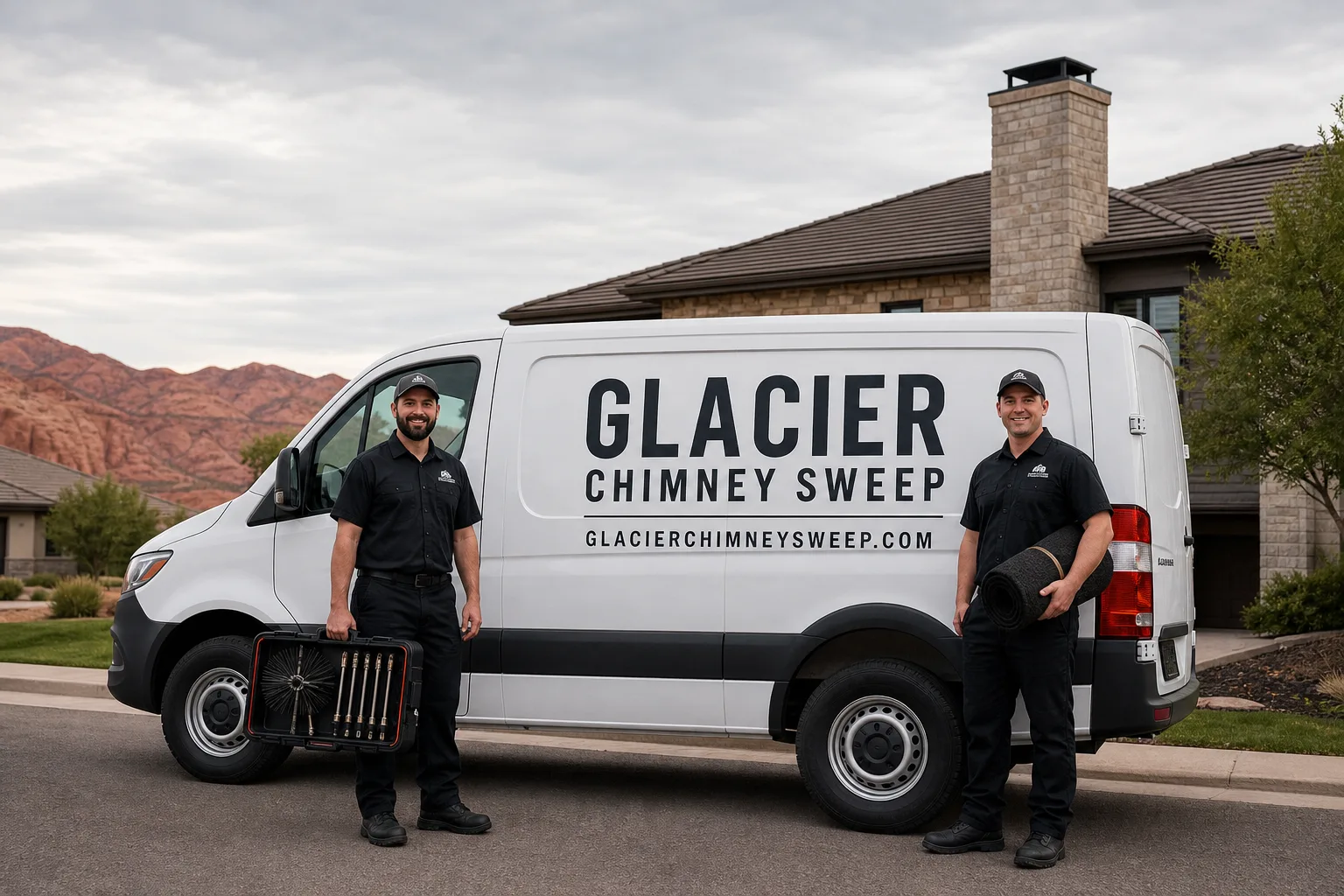
Trusted Dryer Vent Cleaning for St. George Homeowners
If your towels take two cycles to dry, the dryer cabinet feels hot to the touch, or you notice a faint burning smell when the drum stops, your vent is probably packed with lint. Dryer vent cleaning in St. George is the work of removing that lint from the duct run that carries heat and moisture out of your house, and it’s the single most overlooked fire-safety job in most homes. Our technicians have up to 12 years of experience on residential vents and use a rotary brush system plus a camera to see exactly what’s in the run before we call it clean. We handle it in a single visit, so you’re not waiting days for a callback. Call (877) 327-1971 and we’ll get you on the schedule.
What Our Dryer Vent Cleaning Service Includes
Every job starts with the same question: what’s actually in this vent, and where does it run? A duct that looks simple from the laundry room can travel through a wall, turn twice, and exit on the roof. We clean the whole run, not just the part you can reach from the dryer.
Full Vent System Cleaning
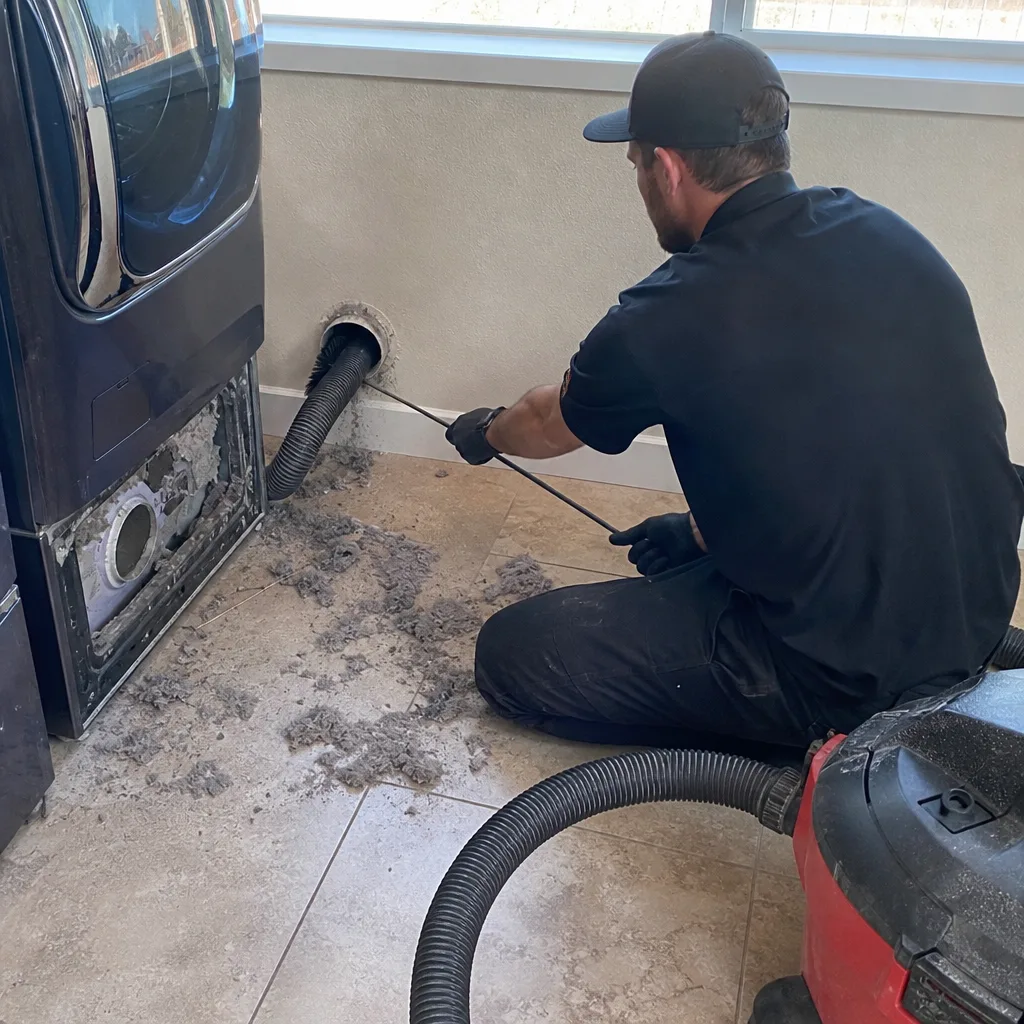
Full vent system cleaning means the entire duct run, from the dryer connection point all the way to the exterior hood, gets brushed and vacuumed clear of lint. You need it when drying times have crept up, when it’s been more than a year since the last cleaning, or when you’ve moved into a home and have no service record. We run a rotary brush through the full length of the duct and follow with a high-powered vacuum so loosened lint is captured, not blown into your laundry room.
Lint Removal
Lint removal is the core of the work: collecting the soft, highly flammable material that accumulates along the duct walls as warm, damp air passes through. It builds fastest at the seams, bends, and the last few feet before the exterior cap. We remove it mechanically rather than relying on air pressure alone, because compressed lint packs against the duct and can look clean from the outside while still restricting airflow.
Lint Screen & Trap Cleaning
The lint screen in your dryer and the trap housing behind it are the first line of defense, and both get checked during every visit. A screen with a clogged mesh or a torn panel lets lint straight into the duct, which is why a “clean screen” doesn’t always mean a clean vent. We clean the screen, clear the trap housing, and tell you plainly if the screen needs replacing rather than leaving you to guess.
Rooftop Vent Cleaning
Rooftop vent cleaning covers homes where the dryer duct exits through the roof instead of a side wall, which is common on single-story and some two-story builds around St. George. Roof terminations collect lint at the cap and can be blocked by nesting material or a stuck damper. We access the roof safely, clear the cap and the terminal section, and confirm airflow at the dryer end before we leave.
Bird Nest & Debris Removal
Birds, wasps, and rodents find dryer vent caps inviting, especially in desert climates where shade and shelter are scarce. When a nest or debris plug blocks the exterior hood, airflow reverses into the laundry room and the fire risk climbs quickly. We remove the blockage, clear the duct behind it, and check that the cap and damper still close properly afterward.
Booster Fan Cleaning
Long or heavily angled duct runs sometimes use a booster fan to keep air moving, and that fan blade collects lint like a filter. A booster packed with lint stops helping and starts becoming a fire risk itself. We clean the fan assembly, confirm it spins freely, and check that the whole run moves air the way it’s supposed to.
Signs You Need Dryer Vent Cleaning Right Now
Lint buildup rarely announces itself with a bang. It shows up as small changes you might shrug off. Here’s what to watch for, and what each sign means.
- Clothes take longer than one cycle to dry. When a normal load needs two or three passes, the dryer is working against restricted airflow. That extra run time means more heat trapped in the duct, and more strain on the appliance.
- The dryer cabinet or the top of the machine feels hot. A dryer that gets noticeably warm to the touch is pushing heat it can’t move out. Restricted exhaust is the most common cause, and it’s worth checking before you keep running loads.
- You smell something burning or musty in the laundry room. That smell is often lint heating up against the duct or moisture trapped in a blocked run. Either way, it’s a signal to stop using the dryer until the vent is checked.
- The exterior hood flap doesn’t open when the dryer runs. The flap should lift freely with warm air. If it stays shut, hangs limp, or has visible lint packed around it, the vent is blocked at the exit point.
- It’s been more than a year since the last cleaning, or you don’t know when it happened. Lint accumulates on a schedule regardless of how tidy your laundry room is. A first cleaning in a new-to-you home establishes a baseline you can actually trust.
Our Dryer Vent Cleaning Process – Step by Step
Every job follows the same sequence, so you know what’s happening and why. Nothing gets skipped because the vent “looks fine” from the laundry room.
- 1
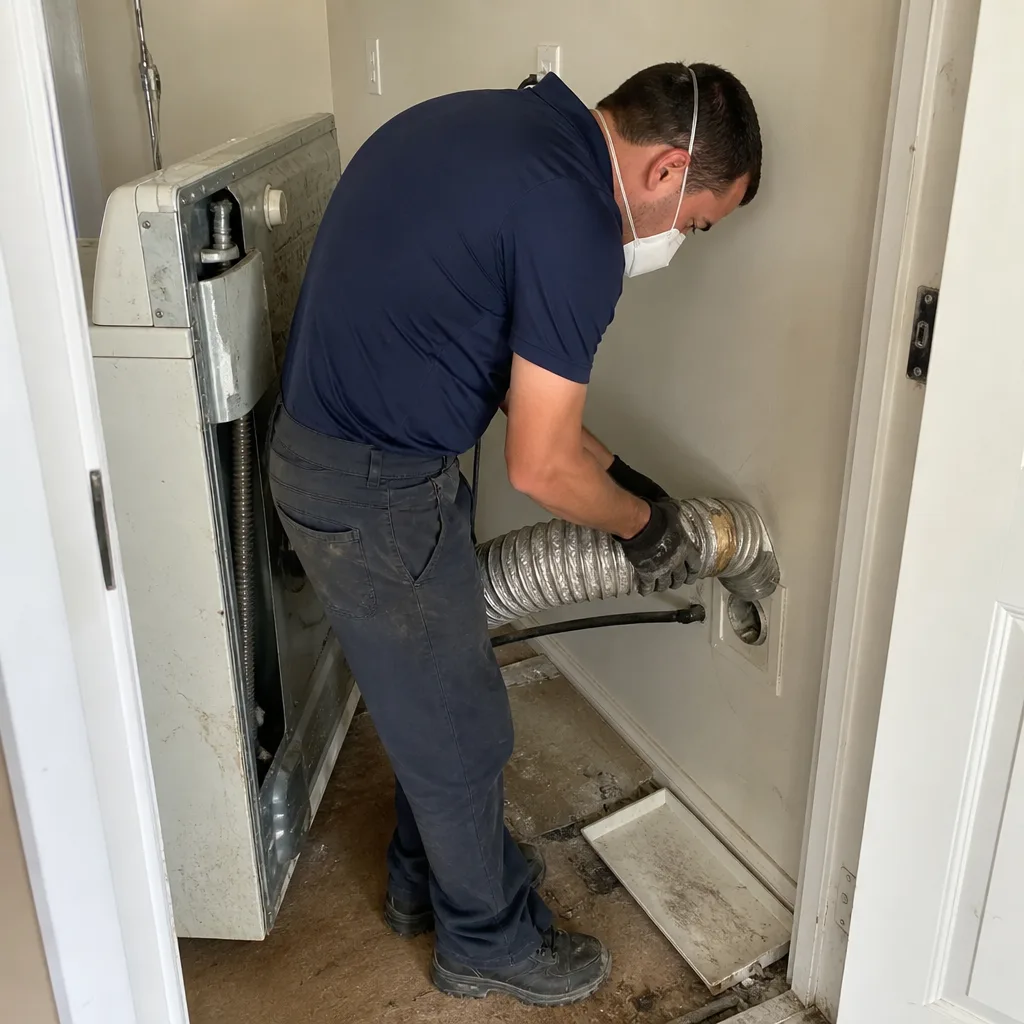
Disconnect and inspect the dryer connection. We pull the dryer out, disconnect the transition duct, and inspect the connection point for crushed sections, torn foil, or improper fittings. A crushed transition is its own airflow problem, and we’ll tell you if yours needs replacing.
- 2
Camera the duct run. We feed a camera through the vent to map the route and see where lint has collected. This matters in St. George homes where ducts turn through walls or exit on the roof; you can’t clean what you can’t see, and the camera tells us where the real blockage sits.
- 3
Brush and vacuum the full length. A rotary brush runs the entire duct while a high-powered vacuum captures loosened lint at the same time. This keeps lint out of your home and gets the duct walls genuinely clear rather than just opening a channel through the middle.
- 4
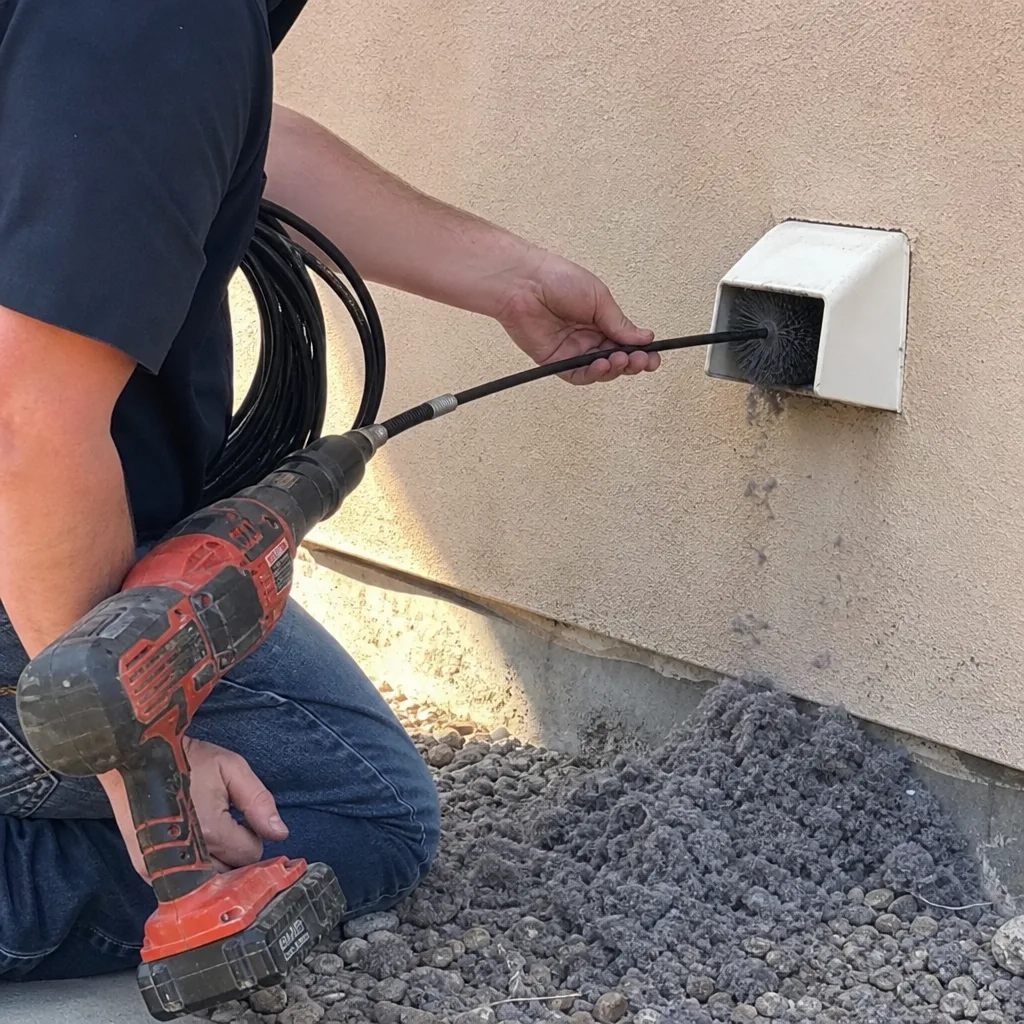
Clear the exterior hood and cap. We get to the outside termination, whether that’s a wall hood or a roof cap, and remove lint, nesting material, and any stuck debris. The damper gets checked so it opens and closes freely afterward.
- 5
Confirm airflow and leave you with a report. We reconnect everything, run the dryer, confirm strong airflow at the exterior hood, and show you what we found along the way. If we spot a problem we can fix, we’ll tell you what it is and what it takes.
How Much Does Dryer Vent Cleaning Cost in St. George?
Most dryer vent cleaning in St. George lands in the $120 to $225 range for a standard residential run, and that’s an estimate rather than a fixed number. The written estimate you get before work begins sets the final price, and the estimate itself is free.
A few things move the number. A short, straight duct with a wall exit sits at the low end. A long run with multiple 90-degree turns, a roof termination, or a booster fan takes more time and equipment, so it prices higher. Heavy lint accumulation, a nest or debris plug, or a crushed transition duct adds work. If the duct is foil flex that’s torn or sagging, replacing that section is often the sensible fix, and we’ll say so plainly rather than cleaning a duct that won’t stay clear.
Here’s how to avoid overpaying: get the scope in writing before anyone starts, make sure the quote covers the full run and the exterior cap (not just the first few feet), and ask whether a camera inspection is included. Some outfits quote low and then bill for “extra blockage.” We quote the whole job up front.
| Scenario | Typical Estimated Range |
|---|---|
| Standard run, short and straight, wall exit | $120 – $150 |
| Longer run or multiple bends | $150 – $190 |
| Rooftop termination or booster fan | $175 – $225 |
| Heavy blockage, nest, or debris removal | Quoted per job after inspection |
What’s included: the full duct run, the lint screen and trap housing, the exterior hood or cap, and an airflow check at the end. If we find something during the visit, we have the parts and skills to fix it without a second appointment. Call (877) 327-1971 for an exact quote.
Dryer Vent Cleaning Near St. George – Our Service Area
We serve homeowners across Washington County, including St. George itself and the surrounding communities of Washington, Santa Clara, Ivins, Hurricane, La Verkin, Toquerville, Leeds, Dammeron Valley, and Veyo. Whether your vent exits a side wall or climbs to the roof, we schedule the work and confirm a window with you before we head out. If you’re in one of the outlying towns, mention it when you book so we can plan the route properly. Homeowners looking for dryer vent cleaning in Washington or dryer vent cleaning in Santa Clara can book the same way.
Serving St. George, UT – Our Local Coverage Area
We serve St. George and nearby communities. Use the map below to see the area we cover. If you’re nearby, we can almost certainly help.
Frequently Asked Questions – Dryer Vent Cleaning in St. George
Dryer vent cleaning is the removal of lint and debris from the duct that carries hot, moist air from your dryer to the outside of your home. The work covers the full run, from the dryer connection to the exterior hood or roof cap, along with the lint screen and trap housing. It’s different from cleaning the inside of the dryer itself, though we check the transition duct and connection as part of the visit. Lint is highly flammable, which is why the vent needs regular clearing.
Most residential jobs take about 45 minutes to an hour and a half, depending on the length of the run and how much lint has built up. A short, straight wall-exit duct moves quickly; a long run with bends, a roof termination, or a booster fan takes longer. We don’t rush the work, but we also don’t stretch it out. When you book, we’ll give you a realistic time range.
A typical dryer vent cleaning in St. George runs $120 to $225, depending on duct length, number of bends, and whether the vent exits through a wall or a roof. Heavy blockage, nesting material, or a booster fan can push the quote toward the top of that range or into a per-job estimate. The written estimate you receive before work starts sets the final price, and it’s free. Call (877) 327-1971 for an exact quote – estimates are free.
Yes. Dryer vent cleaning is about the duct, not the machine, so brand doesn’t change how we clean. Whether you have a Whirlpool, LG, Samsung, GE, Maytag, or any other common residential dryer, the vent run and exterior termination get the same treatment. We disconnect the transition duct, clean the full run, and reconnect it. If we spot a problem with the connection itself, we’ll point it out.
Same-day appointments are often possible when you call in the morning, and we’ll tell you honestly what’s open. We answer 24/7 on the phone line, with fast dispatch from 7am to 7pm, Sunday through Friday. We’re closed Saturday, and a call outside dispatch hours is booked into the next opening, Sunday through Friday, 7am to 7pm. If a vent is blocked and the dryer is unusable, say so when you call and we’ll prioritize it.
We stand behind the workmanship on every cleaning. If airflow problems return shortly after a visit because something was missed, call us and we’ll come back to look at it. We don’t promise the duct will stay clear forever, since lint rebuilds over time, but we do stand behind the job we did. Any warranty details specific to your service are confirmed in writing with your estimate.
Clear access to the dryer and the exterior vent is the main thing. Move anything stacked in front of the machine, and if the exterior hood is behind furniture, shrubs, or a fence, clear a path so we can reach it safely. Empty the lint screen beforehand and pull the dryer out a few inches if you’re able. You don’t need to do anything else; we handle the disconnection, cleaning, and reconnection.
Schedule Your Dryer Vent Cleaning Service in St. George Today
Book your dryer vent cleaning in St. George with Glacier Chimney Sweep and get a free, no-obligation estimate before any work starts. We’ll camera the run, show you what we find, and tell you honestly what needs fixing versus what can wait. Call (877) 327-1971. We answer 24/7, with fast dispatch from 7am to 7pm, Sunday through Friday.
Written by the team at Glacier Chimney Sweep.