
Last updated November 15, 2026
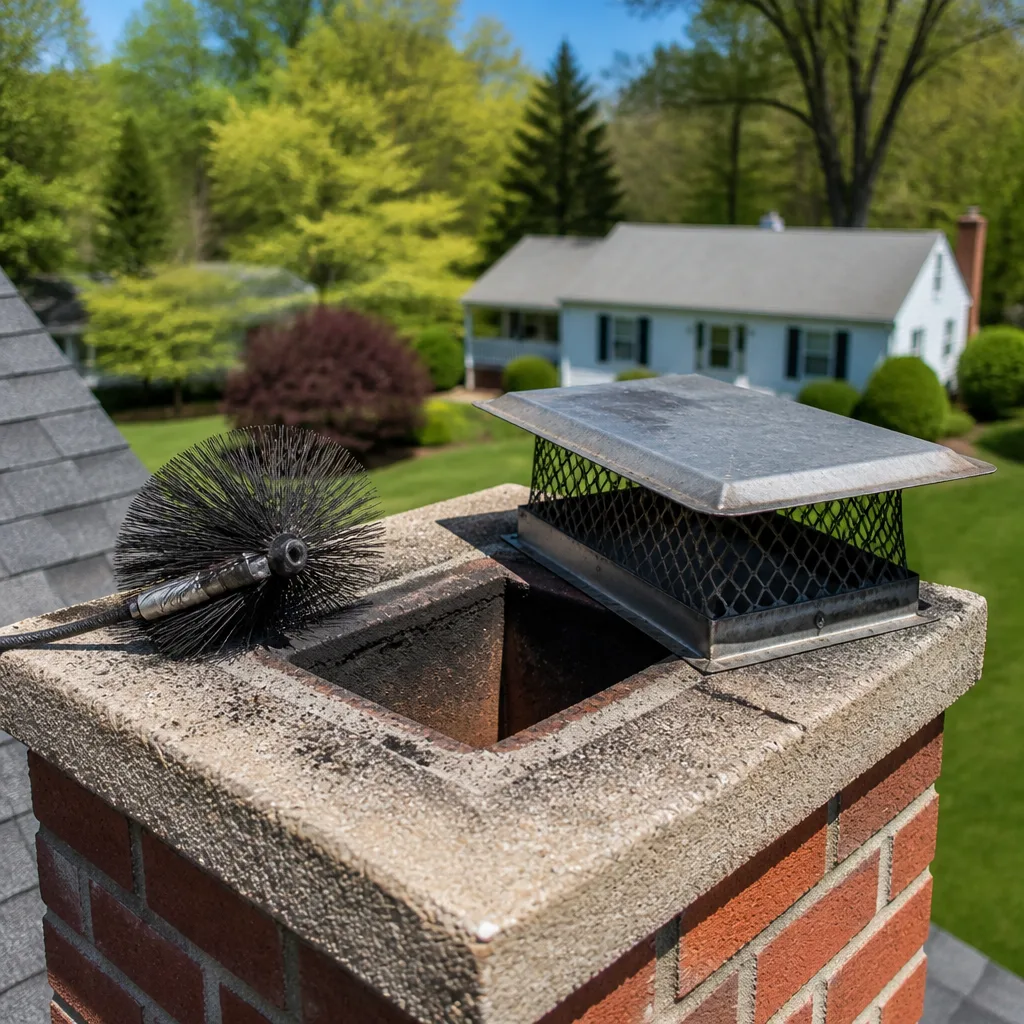 Sweep & inspection
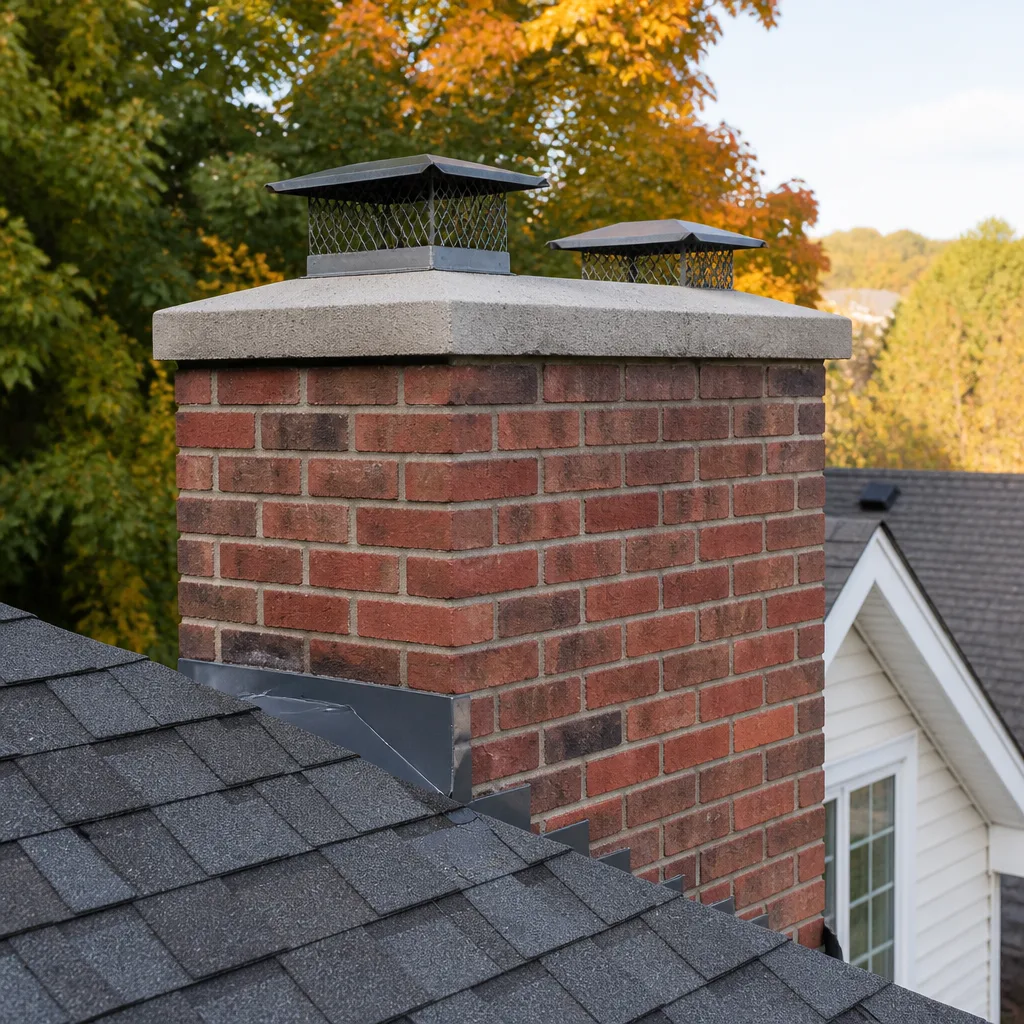 Caps & crowns
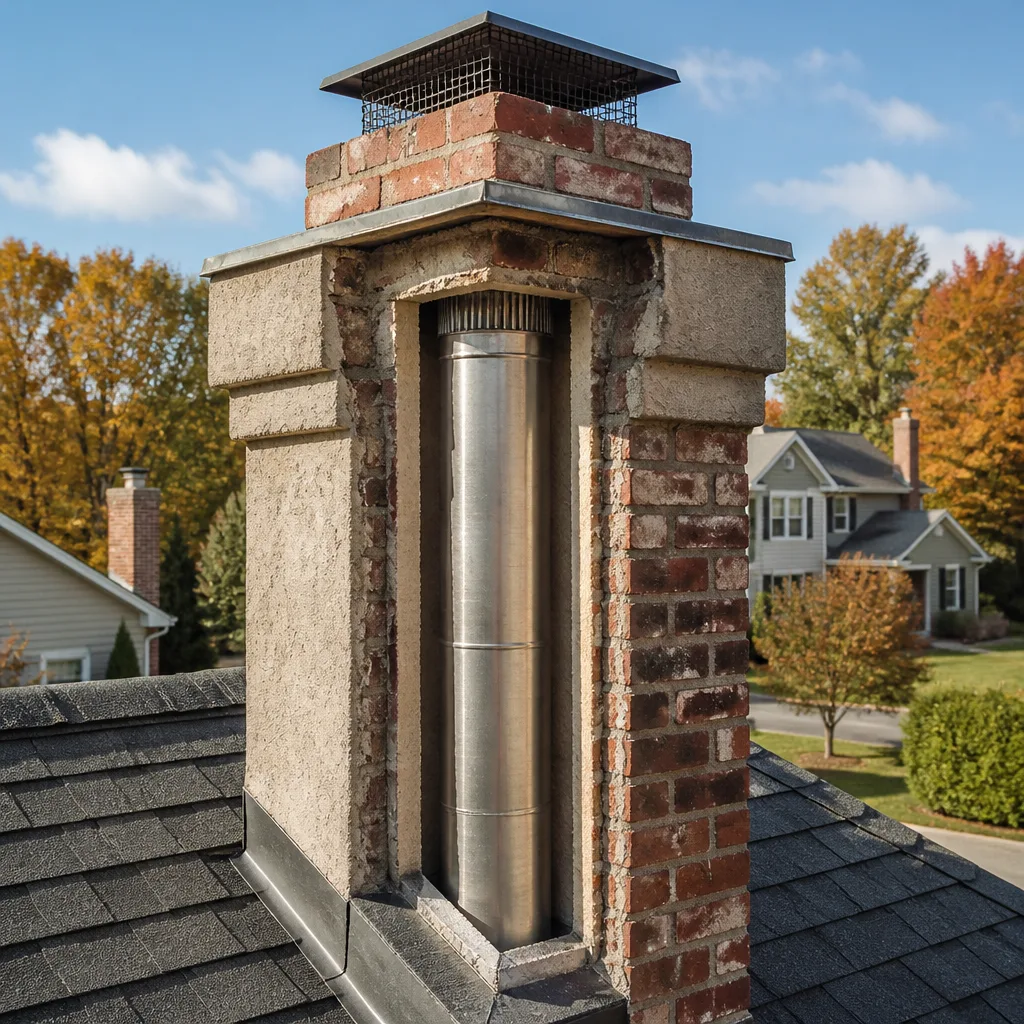 Flue relining
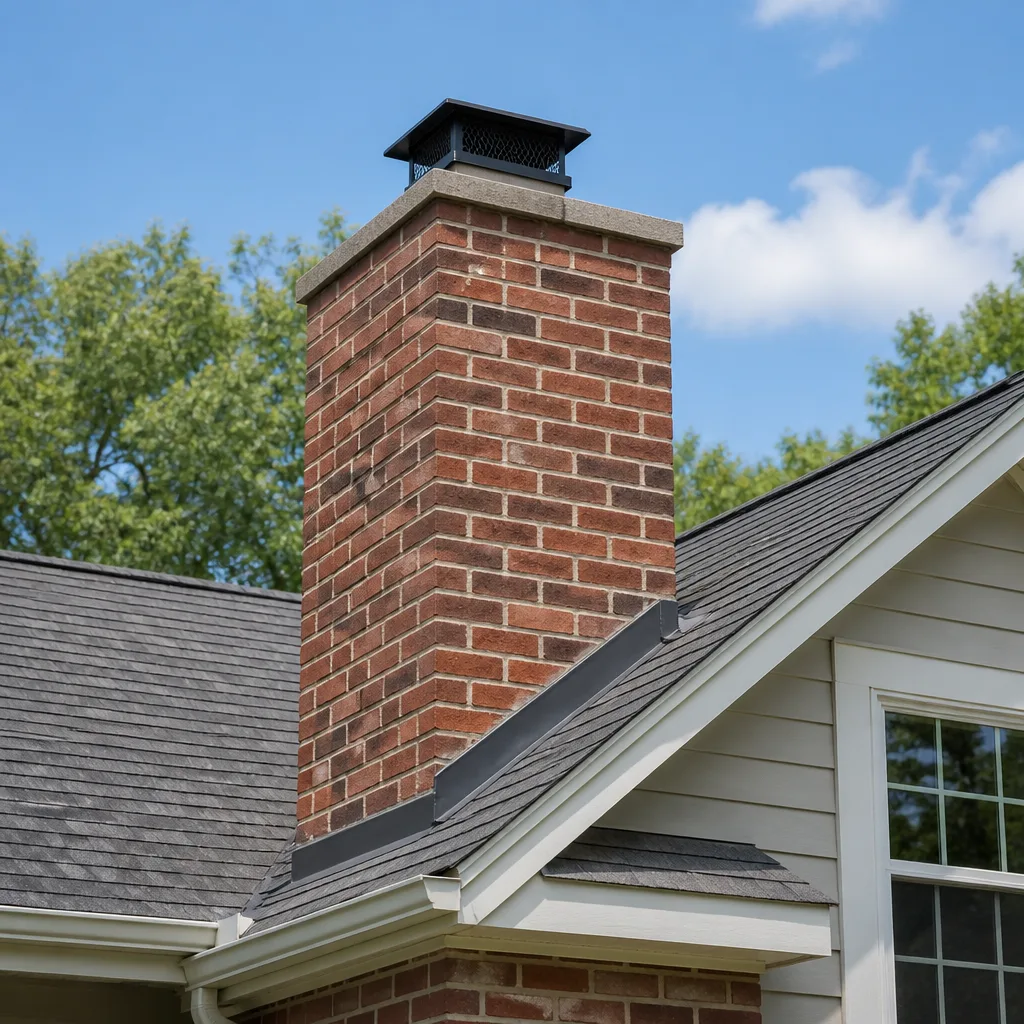 Masonry repair
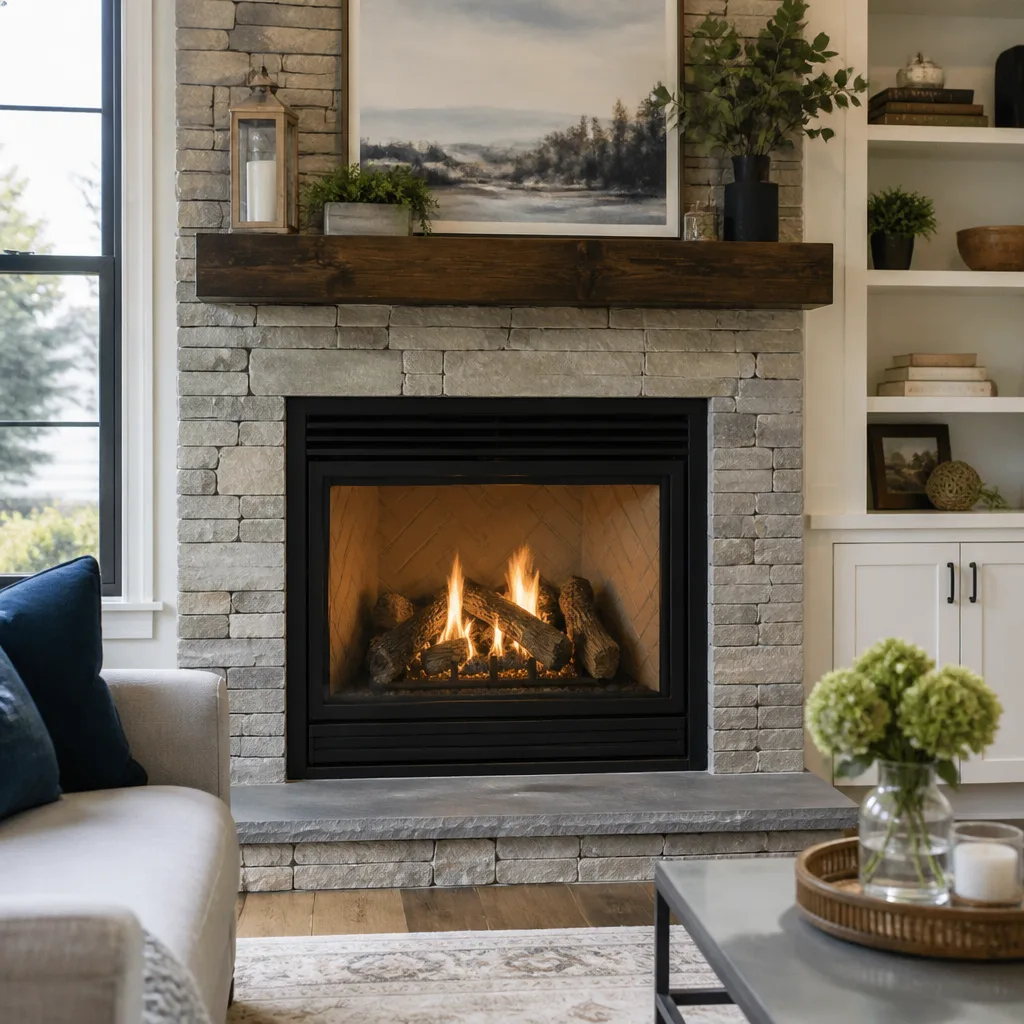 Gas fireplace service
Level 1 sweep and inspection to the NFPA 211 annual standard - flue, crown, cap, and flashing checked and photographed
Chimney sweep logs do not sweep chimneys. They loosen some creosote - which then falls where a brush and vacuum still have to collect it.
How to Hire a Chimney Cleaning Contractor in St. George: A Step-by-Step Guide
Utah does not require a state license to call yourself a chimney sweep. That single fact changes how you should shop for one. The credential gap between a trained, certified technician and someone with a brush kit and a pickup is invisible from the outside: both will hand you a business card, both will quote a price, and only one will actually inspect the flue before declaring your chimney safe. What separates them is not advertising, it’s the questions you ask before you book. This guide gives you those questions, the verification steps that follow them, and the quote details that reveal a surface-only job. By the end you’ll know exactly how to hire a chimney cleaning contractor in St. George without relying on guesswork or price alone.
Quick Answer
To hire a chimney cleaning contractor in St. George, verify current CSIA certification on the public CSIA registry, confirm the company carries liability insurance that specifically covers chimney work, ask what inspection method and camera equipment they use, and insist on a written report with photographic evidence before any repair is recommended. A legitimate sweep will welcome every one of those questions. A surface-only operator will dodge them, quote a flat price with no inspection line, and pressure you toward repairs you can’t verify.
Styles & brands we work with
- Sweep & inspection
- Caps & crowns
- Flue relining
- Masonry repair
- Gas fireplace service
Table of Contents
- Why hiring a chimney sweep in Utah takes extra care
- What CSIA certification actually verifies (and how to confirm it)
- The three technical questions that reveal real competence
- How to read a chimney sweep quote line by line
- Red flags in low-price sweep offers
- How to verify insurance that actually covers chimney work
- What a proper inspection includes in St. George homes
- When repairs can wait and when they can’t
Why Hiring a Chimney Sweep in Utah Takes Extra Care
Most states regulate chimney sweeps through some form of licensing or registration. Utah does not. There is no state-issued chimney sweep license, no required exam, and no minimum training standard to hang a shingle and start taking calls. That’s not a knock on Utah specifically, it’s simply how the trade is categorized here. But it means the burden of verification lands on you, the homeowner, in a way it wouldn’t in a state that screens contractors at the door.
In a market like St. George, that gap has a visible shape. The area has a steady stream of new residents, a large stock of homes built across several decades, and a climate that pushes people toward their fireplaces for a few concentrated months each winter rather than year-round. Demand spikes, the phone book fills with sweep listings, and the cheapest quote is often the one that never opens a camera or writes a report. We’ve seen the results of that in our work around St. George: flues declared clean that were never properly inspected, and homeowners told they needed a full reline without a single photo to justify it.
None of this means every unlicensed sweep is a bad actor. It means you can’t use a license as a shortcut to trust, so you have to use something else: certification you can look up, insurance you can verify, and a quote you can read.
What CSIA Certification Actually Verifies (And How to Confirm It)
CSIA stands for the Chimney Safety Institute of America, and its Certified Chimney Sweep credential is the closest thing the trade has to a recognized professional standard. It is not a government license, and it does not replace one. What it verifies is narrower and more useful than a business license: that the individual technician has passed a written exam on chimney and venting science, code requirements, and inspection standards, and that the certification is maintained rather than earned once and forgotten.
That last point matters. CSIA certification is a living credential, not a trophy on a wall. It has to be kept current, which means the technician is staying engaged with the standards rather than coasting on a certificate from years ago. A sweep who says “I’m certified” and can’t produce a current listing is telling you something different from a sweep who can.
How to verify it in three steps
- Ask for the technician’s full name and CSIA certification number before you book. Any certified sweep will have both ready.
- Look the name up on the CSIA public registry online. The registry is searchable by name or location, and it will show you whether the certification is currently active.
- Confirm the person arriving at your door matches the name you verified. A company that sends a different technician than the certified one you checked is a company whose credential doesn’t apply to the work being done.
If a company can’t produce a current certification for the technician actually doing the work, that’s not automatically a deal-breaker, but it means you’re relying on other signals: verifiable insurance, an inspection method you can see, and a written report. In St. George, where no state credential exists to fall back on, those signals carry the full weight of the decision.
The Three Technical Questions That Reveal Real Competence
You don’t need to know the trade to interview someone in it. You need three questions that a trained technician answers easily and a surface-only operator deflects. Ask these on the phone before you book, and listen to how the answer comes back.
1. “What inspection method do you use, and what does it cover?”
A trained sweep will name a recognized inspection level and describe what it includes: a look at the firebox, damper, smoke chamber, flue, and the exterior termination, often with a camera. Someone who says “we just clean it” is telling you the visit is cleaning only, with no diagnostic step. Cleaning without inspection is the single most common shortcut in the trade.
2. “Do you use a camera, and will I see the footage or photos?”
Camera inspection is how a sweep actually sees the inside of the flue. A technician who runs a camera knows what a cracked liner, a heavy glaze deposit, or an offset joint looks like, and can show you. A sweep who can’t or won’t show you a photo of what they found is asking you to take it on faith. In our experience, the honest answer is always yes, and the evidence is the point.
3. “If you find a problem, what’s your process for recommending repair?”
This question separates a diagnostic visit from a sales visit. A trained sweep will describe a written report, photographs, and an explanation of what needs fixing now versus what can wait. A surface-only operator will often skip straight to a verbal recommendation with a price attached. We work with professional-grade product lines including Gelco and Olympia Chimney, and we’d rather show you why a part is needed than tell you.
Ask all three before you book. The answers, more than any review or website, tell you what kind of visit you’re buying.
How to Read a Chimney Sweep Quote Line by Line
A chimney sweep quote is a short document, and what’s missing from it says as much as what’s in it. A complete quote for a standard cleaning and inspection should include these line items. If a quote is a single flat number with no breakdown, that’s your first signal.
- Cleaning scope: a description of what gets cleaned – the firebox, flue, smoke chamber, and damper, not just “chimney.”
- Inspection level: a named inspection type with what it covers, so you know whether the technician is looking at the whole system or just the flue.
- Camera inspection: stated explicitly if a camera is used. If it’s not on the quote, assume it’s not happening.
- Written report: confirmation that you’ll receive a written summary with photographs, not just a verbal “you’re all set.”
- Any repair line items: itemized separately, with the specific part or material named, so you can see what’s being installed and why.
A quote that includes all five is a quote you can evaluate. A quote that’s a single price with no inspection component and no report is a cleaning, not an inspection, whether or not it’s called one. That distinction is the whole game: a clean chimney and a safe chimney aren’t always the same thing, and only one of them is what you actually need.
If a repair is recommended, ask which product line is being proposed. We name ours because it matters: HeatShield ceramic resurfacing, for example, can restore a compromised liner without the cost of a full reline when conditions allow, and we’ll tell you honestly which one you need. A quote that can’t name the material it’s installing is a quote you should question.
Red Flags in Low-Price Sweep Offers
The lowest price in St. George is often the price of a visit that skips the diagnostic work. That’s not a universal rule, but the pattern is consistent enough to watch for. Here’s what to look for.
- A flat rate with no inspection component. Cleaning is fast and cheap to quote. Inspection takes time and equipment. A price that can’t accommodate both is usually pricing only one.
- No camera on the truck. Ask directly: “Do you carry a camera for flue inspection?” A sweep without one can’t see a cracked liner, and can’t show you one.
- No written report offered. If the visit ends with a verbal all-clear and nothing in writing, you have no record of what was checked.
- Repair recommendations with no photos. You can’t verify what you can’t see. Any recommendation for a liner or masonry repair should come with photographic evidence of the condition.
- Pressure to decide on the spot. A legitimate recommendation can survive a night’s sleep. Urgency that discourages a second look is a sales tactic, not a safety warning.
- Price quoted before the technician has seen the chimney. Phone pricing for a repair is a guess. A written estimate follows an actual look.
None of these alone proves a bad operator. Two or three together is enough to book someone else. The point isn’t suspicion, it’s evidence: ask for it, and expect to get it.
How to Verify Insurance That Actually Covers Chimney Work
This is the step most homeowners skip, and it’s the one where the gaps are widest. General contractor liability insurance does not automatically cover chimney work. Chimney and venting work involves roof access, firebox and flue modification, and liner installation, and some standard liability policies exclude or limit that category of work. A company holding a general policy and a company holding a policy that specifically covers chimney work are not the same thing.
Ask for a certificate of insurance and check two things: that the policy is current, and that its coverage description includes chimney or venting work or doesn’t exclude it. If a company can’t produce a current certificate, that’s not a paperwork problem, it’s a risk problem, and the risk lands on your property. We’re insured and carry coverage for the work we do, and we’ll show it on request.
Ask the same of any company quoting a repair. Liner installation and masonry restoration are where liability exposure sits highest, and that’s exactly where a policy with an exclusion can leave you exposed. In a St. George market with no state license to lean on, insurance and certification are the two verifiable signals that remain. Use them.
What a Proper Inspection Includes in St. George Homes
A proper inspection looks at the whole venting system, not just the flue. In St. George, the housing stock spans several decades, and the age of a home often shapes what the inspection turns up: older construction may have clay tile liners with joint wear, while newer homes may have factory-built fireplaces that need their own manufacturer-specific inspection. The technician should be checking all of the following.
- The firebox and damper: cracks, gaps, and whether the damper opens and closes properly.
- The smoke chamber and smoke shelf: the transition zone where creosote accumulates and where many hidden problems sit.
- The flue: liner condition, joint integrity, and buildup, checked with a camera.
- The chimney exterior: crown, flashing, cap, and masonry condition at the top, where weather works hardest.
- The termination and draft path: whether the chimney is venting correctly.
If the home has a fireplace insert or a factory-built unit, the inspection should account for the specific system rather than treating it like a masonry chimney. Ask whether the technician has inspected that type before. It’s a fair question, and the answer tells you a lot. Around St. George, where insert installations are common, the ability to inspect both is a real differentiator.
When we inspect, we take photographs and give you a written report. If we find something during your sweep, we have the parts and skills to fix it the same day, and if we don’t, we’ll tell you that too. A report that says “nothing needed this year” is a valid and valuable outcome.
When Repairs Can Wait and When They Can’t
Not every deficiency is urgent, and a guide that treats them all as emergencies isn’t being honest with you. Here’s the practical split.
What can usually wait
Cosmetic crown wear, minor surface staining, and buildup that’s within normal range for the burning season are often items to monitor and revisit next season. A written report should tell you which items are watch-and-wait versus fix-now. If a company can’t make that distinction, ask why, because the ability to say “that can wait” is a sign of a technician who isn’t selling.
What shouldn’t wait
Cracked or deteriorated liner sections, gaps at the smoke chamber, and heavy glaze or creosote deposits in the flue are conditions that affect how the chimney fires vent. Those are the findings that justify a repair recommendation, and they’re the findings a camera can show you directly. We won’t recommend a repair you can’t see evidence for, and we won’t tell you to replace a liner when ceramic resurfacing can restore it.
When it comes to liners, there are two honest paths: full reline or HeatShield resurfacing, and the right one depends on the condition, not the price tag. A company that only offers one path isn’t evaluating your chimney, it’s selling a product.
Common Mistakes to Avoid
- Booking on price alone. In a market with no licensing barrier, the cheapest quote often reflects the shortest visit. Price should be the last filter, not the first.
- Not verifying CSIA certification is current. A technician who was certified once and let it lapse is not the same as one who’s current. Check the registry, not the business card.
- Accepting a verbal all-clear. In St. George homes with older clay tile liners, problems hide above the firebox. A clean without an inspection and a report tells you very little about safety.
- Skipping the insurance check. A general liability policy that excludes chimney work leaves you exposed on a liner install. Ask for the certificate and read the coverage description.
- Approving a repair without photos. You can’t verify a liner crack you’ve never seen. Ask to see the evidence before you sign.
- Assuming a cleaning includes an inspection. They are different tasks, and a quote that names only cleaning is pricing only cleaning.
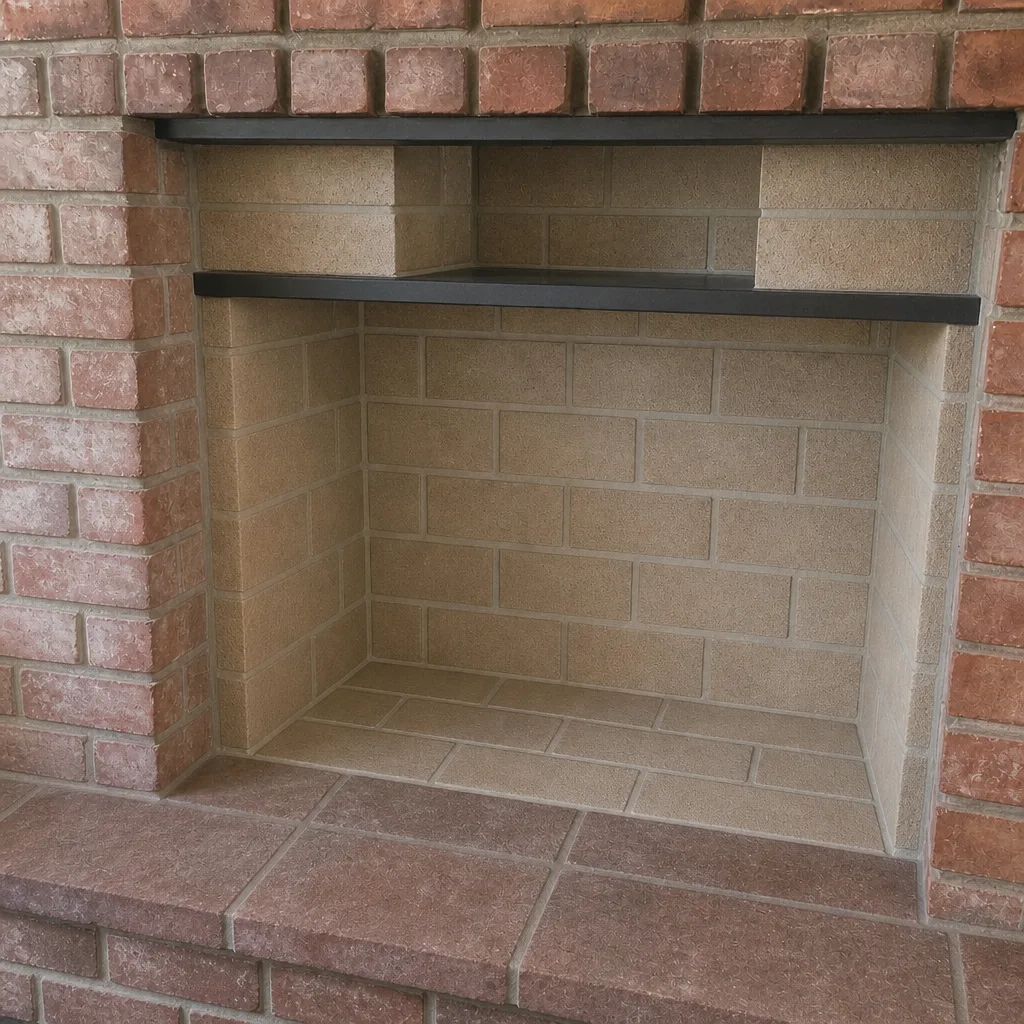
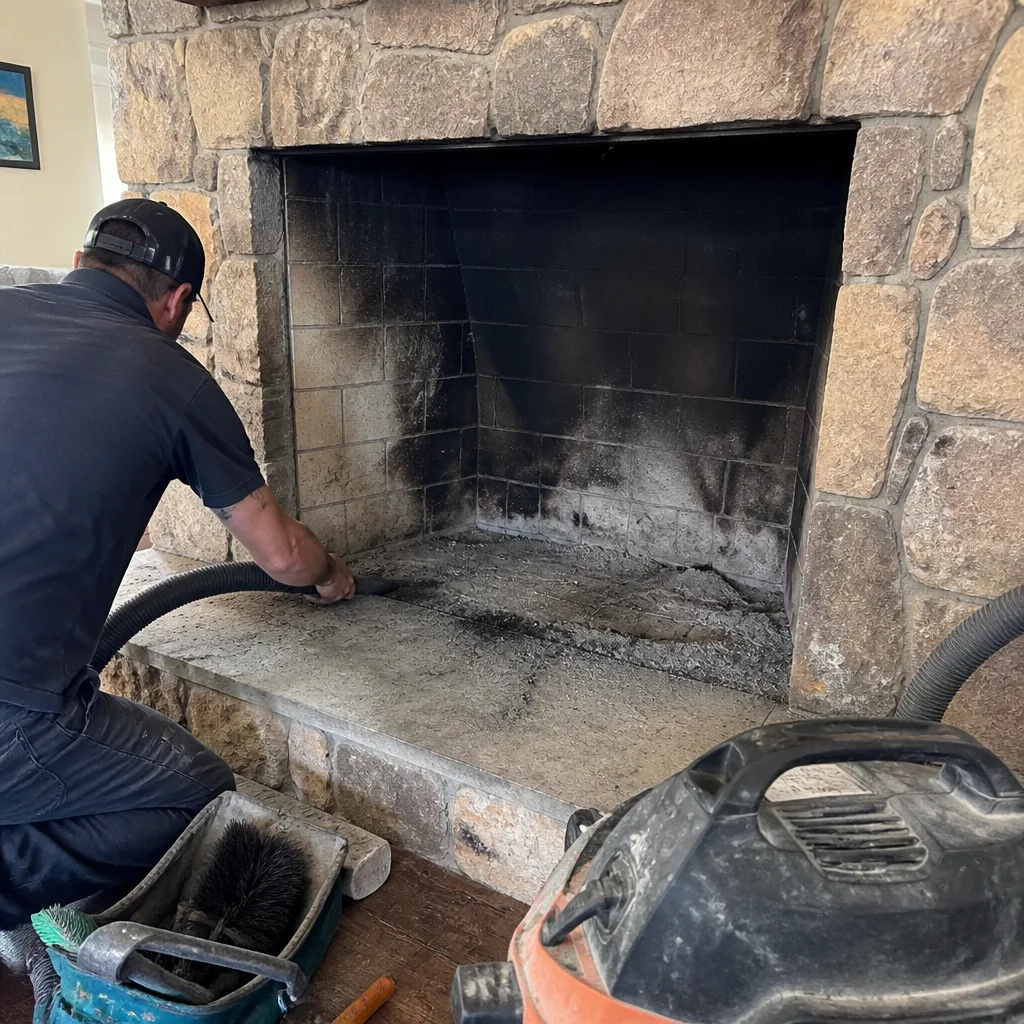
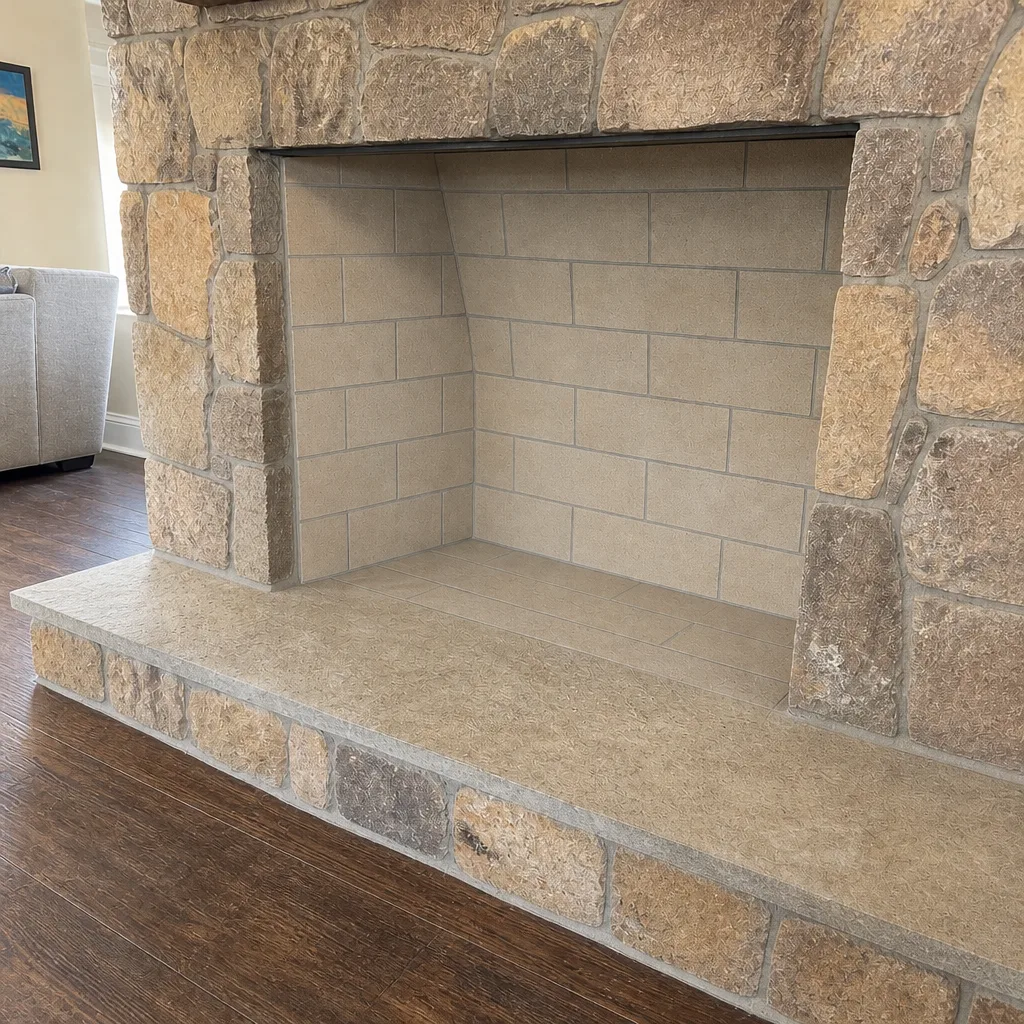
See the difference
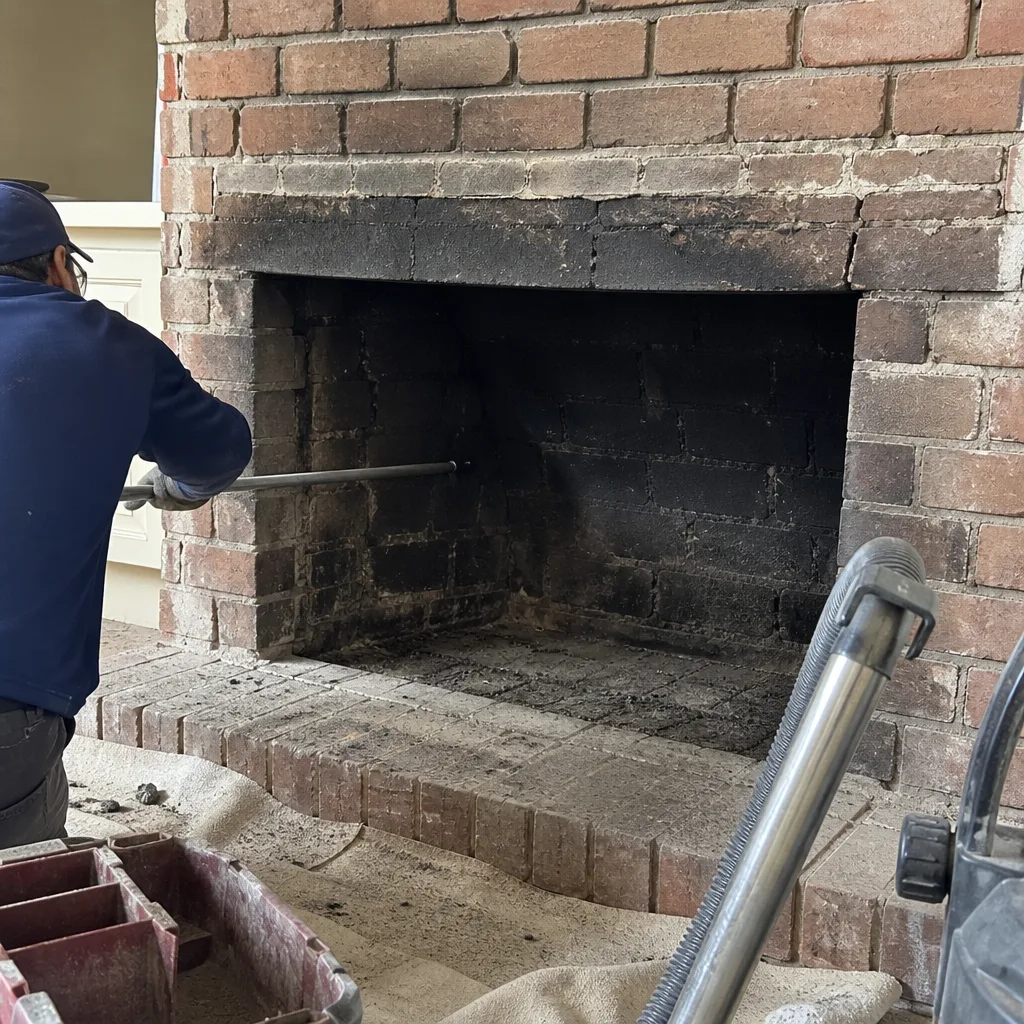 Before
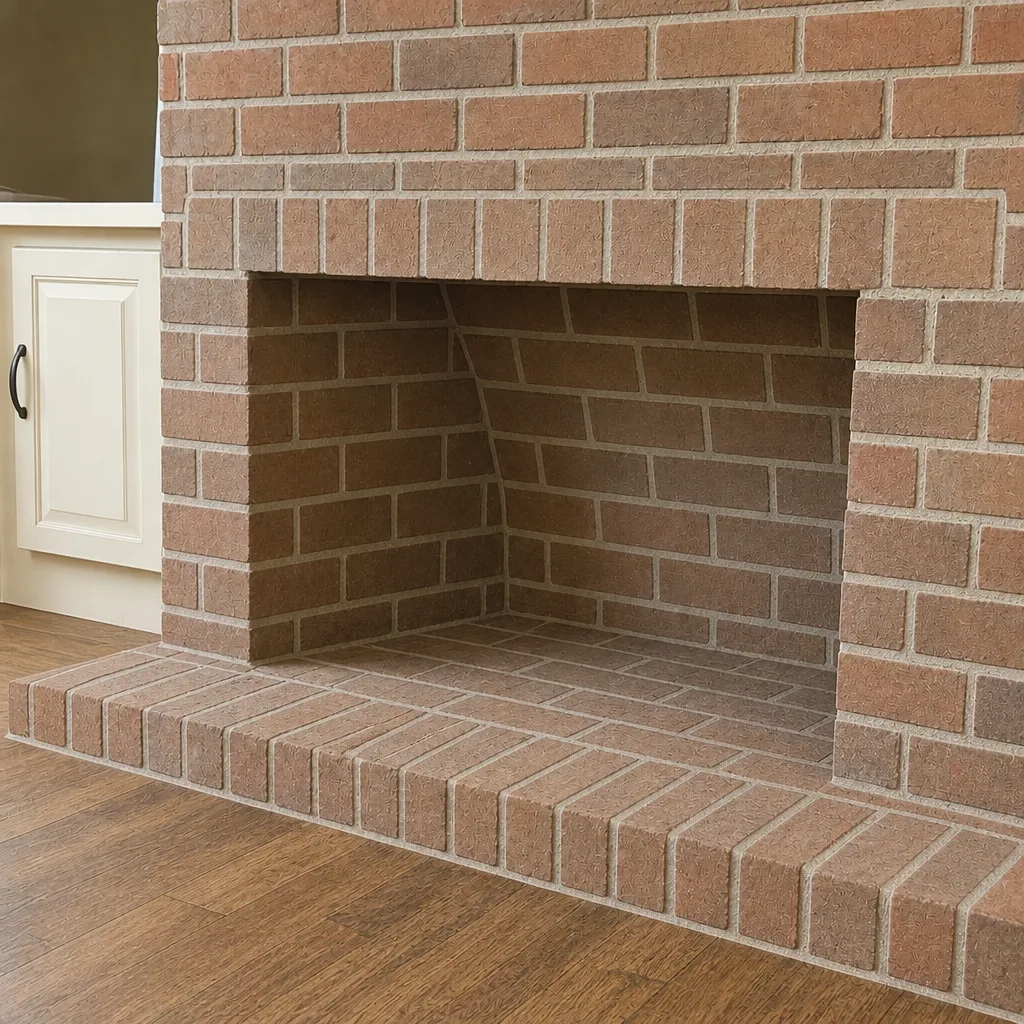 After
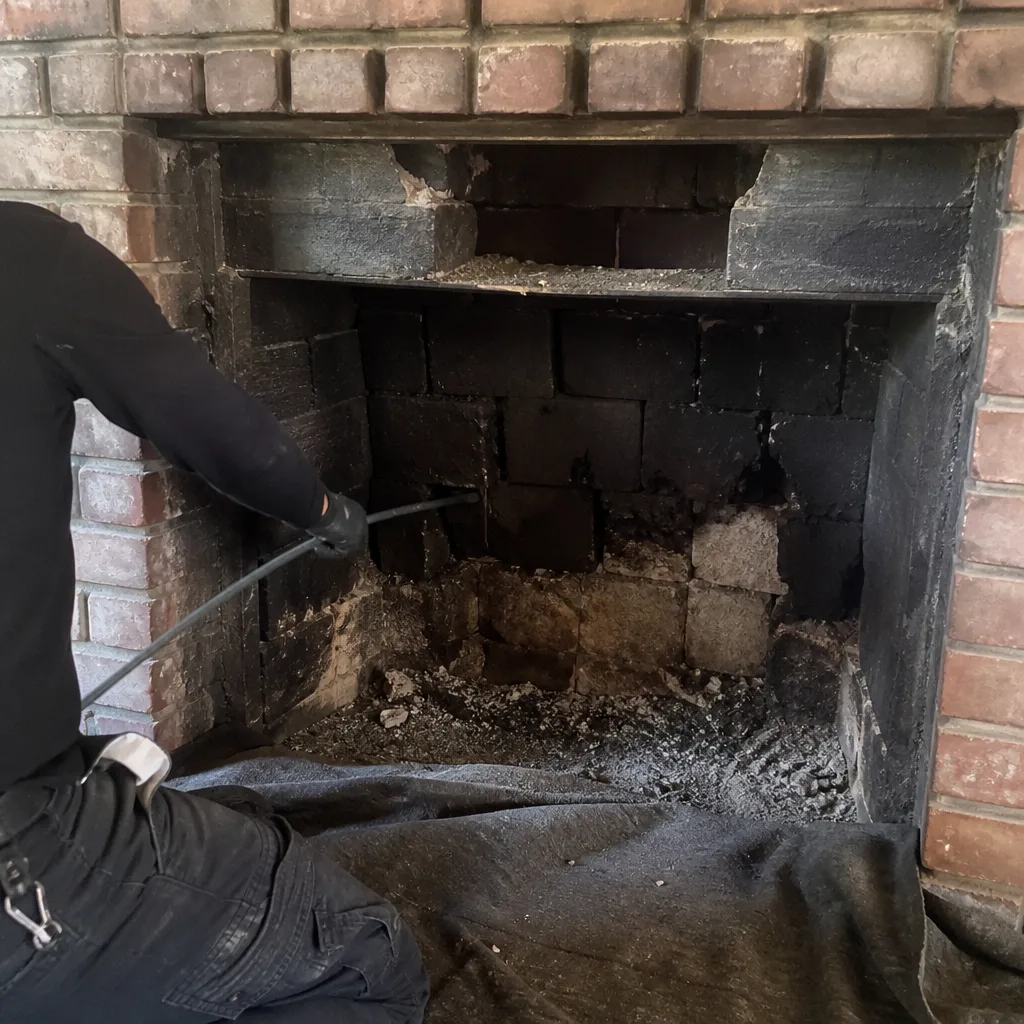 Before
 After
 Before
 After
When to Call a Professional
Book a professional sweep if you’ve just moved into a home with a fireplace and don’t know its service history, if you burn wood regularly and haven’t had the flue inspected, or if you notice draft problems, staining around the firebox, or a damper that doesn’t seat properly. Those are inspection triggers, not emergency signs, and they’re reason enough to get on the calendar before the burning season starts. We can also handle the other side of your venting: dryer vent cleaning is the same kind of fire-safety work, and catching lint buildup early is easier than dealing with it later. If you’re in St. George, Glacier Chimney Sweep offers free estimates. Call (877) 327-1971. We answer 24/7. Fast dispatch from 7am to 7pm, Sunday through Friday.
Frequently Asked Questions
Most homes burning wood regularly need a sweep once a year, checked before the burning season; if you burn lightly, an annual inspection is still the right baseline so a technician can catch changes early. An inspection can extend the interval if the flue is clean and the report shows no new concerns. Call (877) 327-1971 for an exact quote; estimates are free.
Not always. A liner replacement is justified when the flue’s liner has cracks or gaps that a camera can show you, or when the existing liner is incompatible with the appliance venting into it. When conditions allow, ceramic resurfacing can restore a liner without a full reline, and that’s a legitimate alternative we’ll tell you about honestly. Ask to see the photos before deciding; call (877) 327-1971 for an exact quote, and estimates are free.
Creosote builds up inside the flue, and heavy deposits are a fire risk when the fireplace is used, while a cracked liner can allow gases to vent where they shouldn’t. Skipping a sweep doesn’t cause a problem the day you skip it, it lets a condition develop unseen. An inspection with a camera is how you find out where your chimney actually stands; call (877) 327-1971 for an exact quote, and estimates are free.
Ask for the technician’s name and CSIA certification number, then look it up on the CSIA public registry to confirm it’s current before you book. In Utah, where chimney sweeps aren’t state-licensed, that registry is the clearest external check you have. If a company can’t provide a certification for the technician doing the work, ask about insurance and inspection method instead, and weigh those answers. Call (877) 327-1971 for an exact quote; estimates are free.
Yes, when you hire a sweep who uses camera inspection, and you should expect photographs and a written report. Camera evidence is how you can confirm a recommendation for yourself rather than taking it on faith, and it’s the reason we include it in every visit. If a sweep can’t show you what they’re describing, ask why. Call (877) 327-1971 for an exact quote; estimates are free.
Yes, if it’s been a while since the last one. Dryer vents are the other high-risk venting system in a home, and lint buildup is a well-known fire concern; handling both in one visit saves a second appointment. Our chimney sweep and dryer vent work are the same category of fire-safety service, which is why we offer both under one call. Call (877) 327-1971 for an exact quote; estimates are free.
The Bottom Line
Hiring a chimney sweep in Utah comes down to verification, not trust. Check the CSIA registry for a current certification. Ask what inspection method is used, whether a camera is involved, and how a repair recommendation gets documented. Read the quote for a named inspection level, a written report, and itemized repair lines. Confirm the insurance covers chimney work specifically. Do those four things and the credential gap that makes this market hard to read mostly closes. If a sweep welcomes the questions and shows you the evidence, you’ve found one worth booking. If not, you’ve learned what you needed to know before spending a dollar.
If you’d like a straight answer about your own chimney, we’re glad to give one. Reach out through Glacier Chimney Sweep or call (877) 327-1971 for a free estimate. We answer 24/7. Fast dispatch from 7am to 7pm, Sunday through Friday, and closed Saturday. We’re happy to walk you through what a visit involves before you book, and to show you exactly what we find.
Written by the team at Glacier Chimney Sweep.