
Last updated November 15, 2026
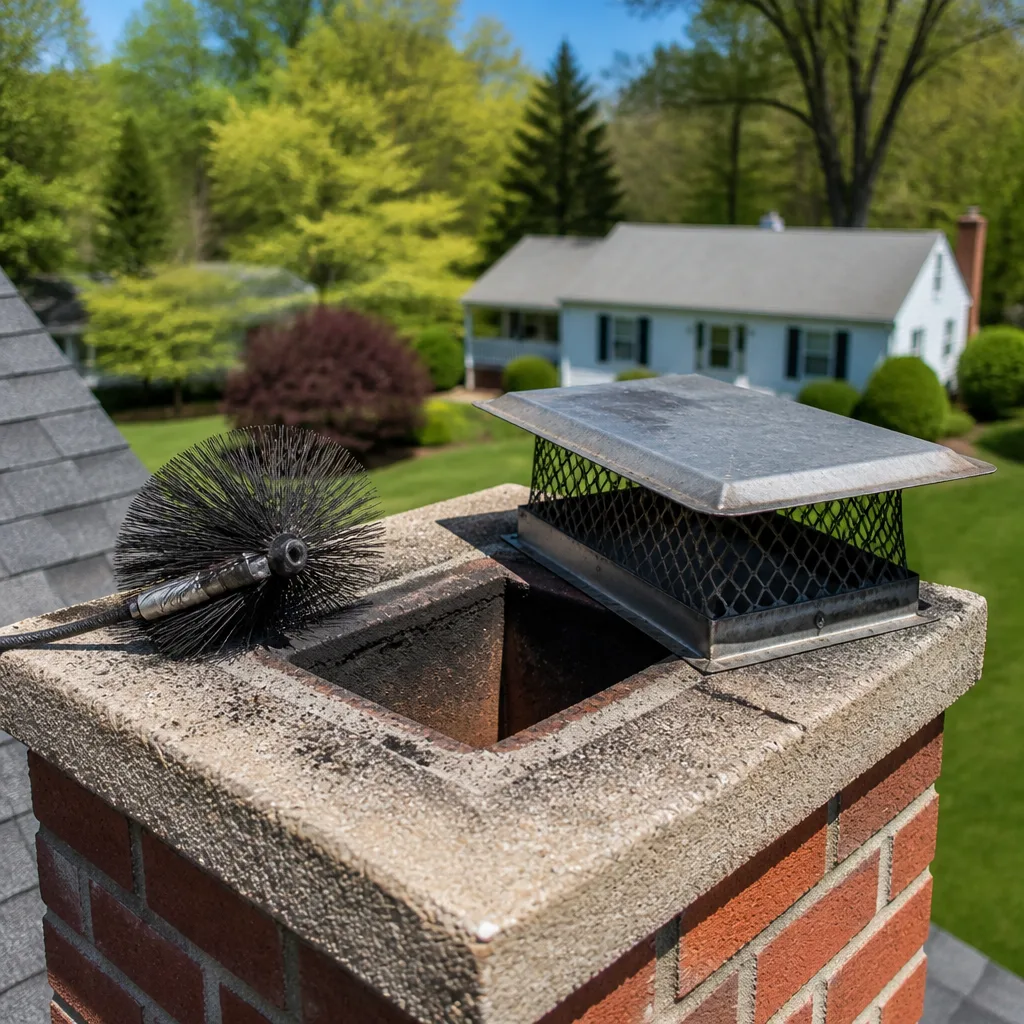 Sweep & inspection
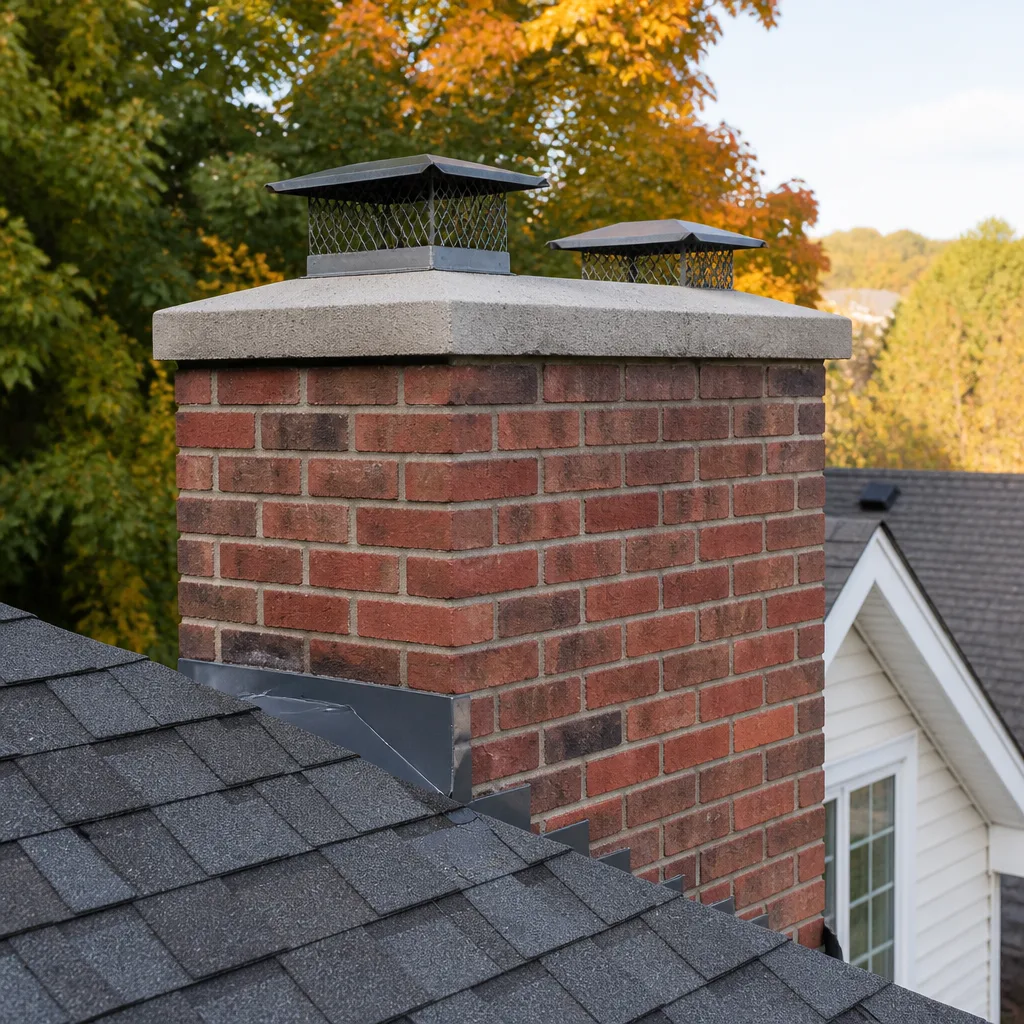 Caps & crowns
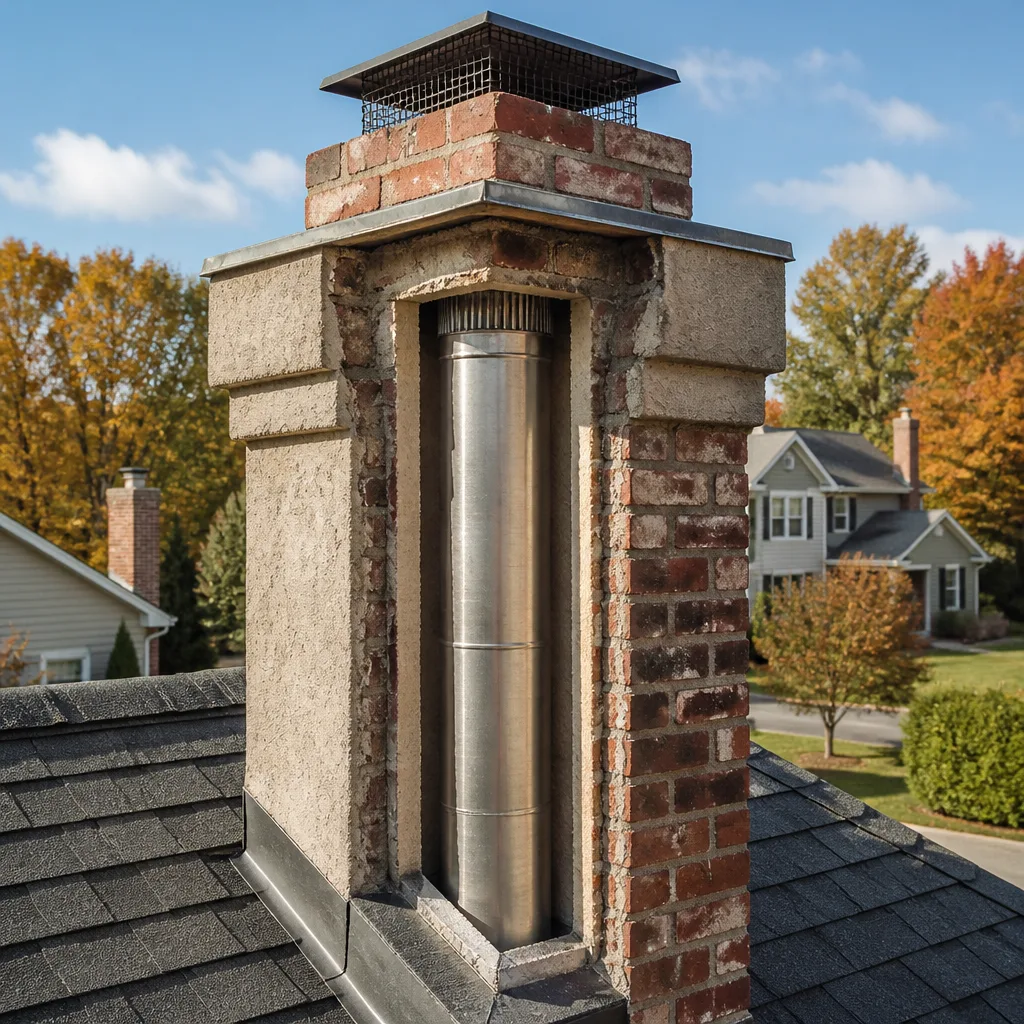 Flue relining
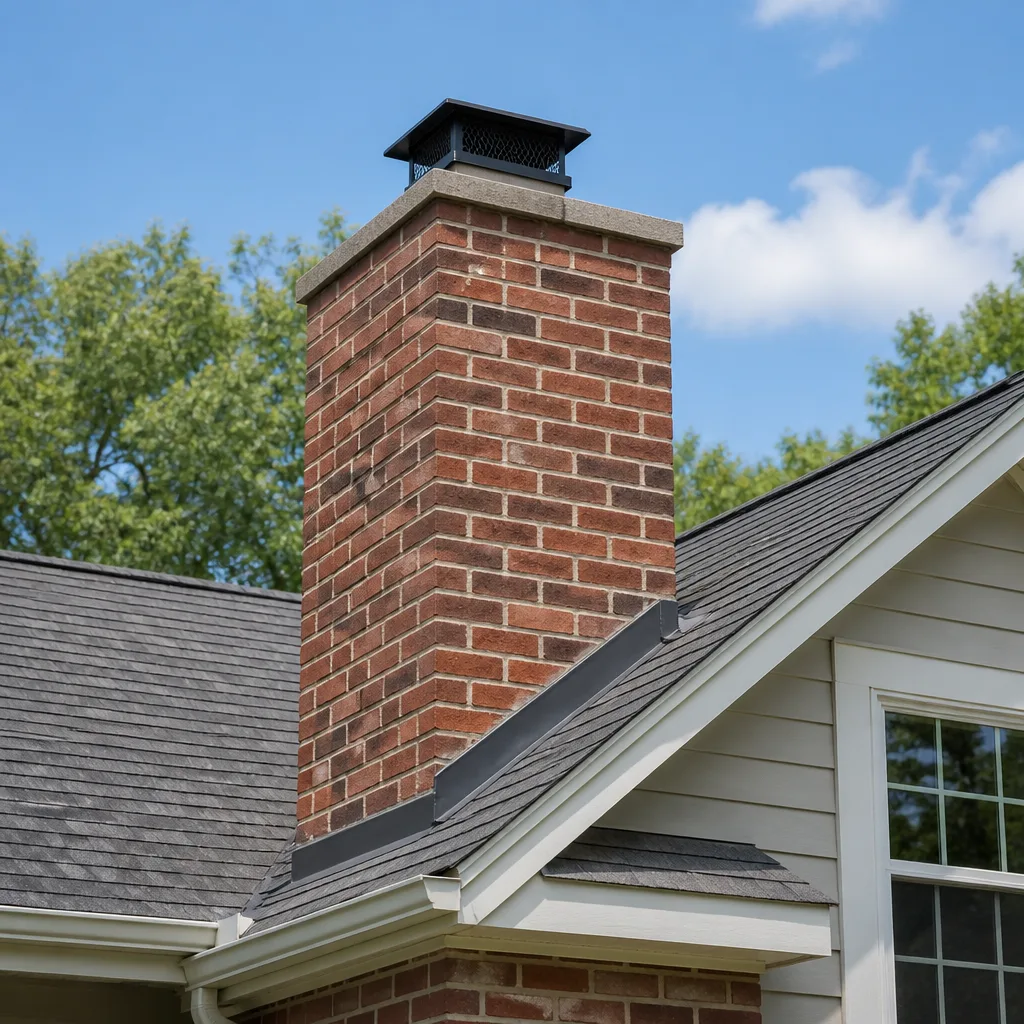 Masonry repair
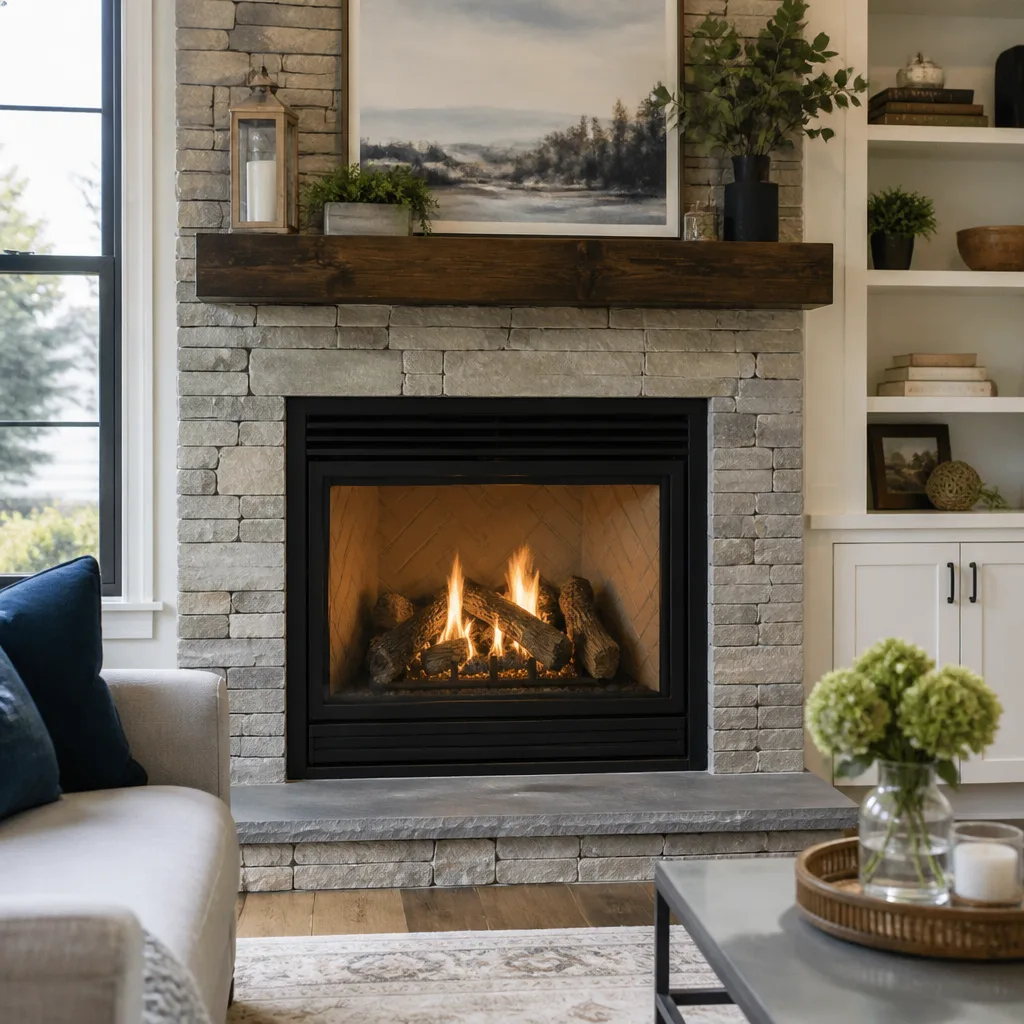 Gas fireplace service
Level 1 sweep and inspection to the NFPA 211 annual standard - flue, crown, cap, and flashing checked and photographed
Chimney sweep logs do not sweep chimneys. They loosen some creosote - which then falls where a brush and vacuum still have to collect it.
Chimney Cleaning Cost Breakdown: The St. George Homeowner’s Reference for 2026
The $89 chimney sweep and the $350 chimney sweep are not doing the same job. One price buys you a flue brush and a shop vac. The other buys you a camera inspection, a written condition report, and technician liability if something is missed. That gap is where nearly every St. George homeowner gets stuck, because the invoice rarely tells you which of those two you actually bought. This guide breaks down what a legitimate cleaning actually itemizes, what common add-ons cost in the local market, and how to calculate your true cost per year once deferred repairs are factored in.
Quick Answer
A standard chimney cleaning in St. George typically runs $150 to $350 for a wood-burning fireplace, $125 to $275 for a gas insert, and $175 to $375 for a prefab fireplace in Washington County, with the written estimate setting the final number. Budget another $75 to $200 for camera inspection and written reporting if it isn’t already bundled. Anything quoted at $79 to $99 is usually a surface brush with no camera, no report, and no liability if a liner crack goes unseen. The cheapest quote is rarely the cheapest outcome.
Styles & brands we work with
- Sweep & inspection
- Caps & crowns
- Flue relining
- Masonry repair
- Gas fireplace service
Table of Contents
- What a Standard Cleaning Invoice Should Itemize
- 2026 Price Anchors for St. George Chimney Cleaning
- Common Add-On Services and What They Cost
- Why the Cheapest Quote Comes From Operators Without a Camera
- Calculating Your True Cost Per Year
- Sweep-and-Repair: The Single-Visit Advantage
- How the St. George Climate Changes the Equation
- How Often You Actually Need a Sweep
What a Standard Cleaning Invoice Should Itemize
If you can’t read an invoice and tell exactly what was done, it isn’t a real invoice. A professional chimney cleaning in St. George should break the visit down into tangible line items, and each one should be named on the paper. Here’s what a legitimate invoice lists:
- Inspection level. Residential chimney work follows three inspection tiers. A Level 1 covers readily accessible portions of the flue and firebox during routine service. A Level 2 adds video camera scanning of the full flue interior, which is standard when you buy a home, change fuel types, or a problem is suspected. A Level 3 is a diagnostic inspection that opens concealed areas when a serious defect is indicated. The invoice should say which one you received.
- Equipment used. Polypropylene or wire brushes for the flue, a HEPA-rated vacuum to keep soot contained, and video scanning equipment if the service includes it. A company that lists its equipment is a company that owns it.
- Areas covered. The flue, the firebox, the smoke chamber, the damper, and the cap. If a technician cleans only the flue and leaves the smoke chamber alone, the job isn’t finished.
- Report format. A written condition report, ideally with photos or video captures of anything flagged. This is the piece that matters most if you ever sell the home or file an insurance claim.
- Disposal. Soot and creosote have to go somewhere. The cost of removal and disposal should be baked into the line items, not added as a surprise.
When those five pieces are on the paper, you’re comparing apples to apples. When they aren’t, you can’t compare anything. A $99 sweep with none of those items isn’t a cheaper version of a $300 sweep. It’s a different service entirely.
2026 Price Anchors for St. George Chimney Cleaning
Local pricing depends mostly on what you’re burning and what type of appliance is installed. Wood-burning masonry fireplaces cost more to clean because creosote volume is higher and access is more involved. Gas inserts run cheaper because combustion is cleaner. Prefab fireplaces sit in the middle. Here are the ranges we see as typical in the St. George market for 2026:
| Service | Typical Range | What It Includes |
|---|---|---|
| Wood-burning chimney sweep | $150 – $350 | Flue brush, firebox, smoke chamber, damper, cap check, visual inspection, written report |
| Gas insert sweep | $125 – $275 | Firebox clean, vent check, burner inspection, combustion verification |
| Prefab fireplace sweep | $175 – $375 | Manufactured flue cleaning, firebox access, joint inspection, cap check |
| Camera inspection add-on | $75 – $200 | Video scan of full flue length, photo captures provided to you |
| Dryer vent cleaning (standalone) | $125 – $250 | Full lint removal, vent path clearing, exhaust airflow verification, camera check on long runs |
| Dryer vent added to a chimney visit | $75 – $175 | Same dryer vent scope, added to an existing appointment |
Those are estimates, not quotes. The written estimate is what sets your actual price, and it depends on the condition of the flue, roof access, and any additional work the camera reveals. Older homes in neighborhoods like Bloomington and the areas around Dixie Downs often have deeper creosote buildup or masonry that needs minor attention before a cleaning can even be done safely, which pushes price toward the top of the range. Newer construction near Little Valley and Desert Canyons tends to sit lower.
Common Add-On Services and What They Cost
Sweeping is one part of chimney care, and it’s usually the cheapest part. The line items that add cost are the ones that fix a problem the sweep finds. Here are the add-ons that come up most often in St. George:
- Cap replacement ($150 – $400). A missing, damaged or rusted cap lets water, debris and animals straight down the flue. Locally-installed caps need to be sized to the flue and rated for the heat exposure. A cap that’s too small isn’t a cap, it’s a decoration.
- Crown sealing and repair ($300 – $650). The concrete crown at the top of the chimney sheds water away from the masonry. Cracks in the crown let moisture in, which then freezes, thaws and expands the masonry. Sealing is cheaper than rebuilding a crown, and much cheaper than rebuilding a chimney.
- Smoke chamber parging ($400 – $900). The smoke chamber is the sloping zone between the firebox and the flue. Rough or deteriorated surfaces there hold creosote and slow smoke, which produces draft problems and a higher fire risk. Smoothing the surface with refractory material – HeatShield is the product we use for this – restores performance without a rebuild.
- Liner restoration or replacement ($2,200 – $6,500). Full relining is the largest line item in chimney work. Flexible liner systems like DuraFlex are what we work with for most residential replacements. When conditions allow, ceramic resurfacing can restore a compromised liner at a fraction of the full replacement cost. We tell you honestly which one your flue actually needs.
- Dryer vent combo ($75 – $175 added). Chimneys and dryer vents are your home’s two highest fire-risk venting systems, and a combined visit saves a second appointment fee.
None of these should be recommended without camera evidence you can see with your own eyes. If a technician hands you a report listing a cracked liner and no photos, ask for the frames.
Why the Cheapest Quote Comes From Operators Without a Camera
The single largest reason discount chimney cleaning looks cheaper than professional service is simple: no camera. Video scanning equipment is expensive to buy, expensive to maintain, and requires training to use and interpret. A company that skips it saves real money on every visit. Those savings are what make the $89 special possible. They’re also the reason the sweep doesn’t catch hidden problems.
A flue brush and a shop vac can clean what’s visible. They can’t see:
- Hairline cracks in a clay tile liner that only open up under heat.
- Gaps at tile joints where the liner has shifted from settling or seismic movement.
- Creosote glazing at the top of the flue, past where any brush reaches cleanly.
- Damage to flexible liner walls where a previous installer failed to space the liner properly.
- Deterioration in the smoke chamber that a visual sweep simply can’t reveal.
A small crack in a liner isn’t cosmetic. It’s a path for hot flue gases, carbon monoxide and flame to reach framing and combustible materials. Early detection is what the camera buys – it’s not an upsell. If a company can’t show you the inside of your flue, neither of you knows what’s actually going on in there. That’s the omitted cost of a discount sweep, and it doesn’t show up until the expensive repair does.
Calculating Your True Cost Per Year
Price comparison on chimney cleaning almost always breaks down because it treats a single visit as the unit of analysis. The right unit is your cost per year of safe fireplace operation. Here’s how to actually calculate it:
- Start with the annual sweep price. A wood-burning fireplace usually needs a sweep once per year with regular use, which in St. George is typically October through March. Call that $150 to $350.
- Add camera inspection every third year, minimum. Spread that $75 to $200 over three years and it adds roughly $25 to $65 per year.
- Add any maintenance that came up during the visit. Crown sealing every several years, cap replacement when needed, minor mortar repairs. Realistically this runs $50 to $150 per year averaged out over time.
- Compare that total against the deferral price. A $99 sweep that skips the camera for three years defers roughly $75 to $200 in inspection cost. But it also defers detection of what the camera would have found. A hairline liner crack caught at inspection often costs a resurfacing or targeted patch to repair. The same crack discovered after two more seasons of use can mean a full reline.
In our experience, the homeowners who spend the most on chimney repair are consistently the ones who saved the most on chimney cleaning. The math works against the discount, every time. That doesn’t mean the $350 appointment is right for every home – it means the comparison has to include what’s being deferred, not just what’s being charged today.
Sweep-and-Repair: The Single-Visit Advantage
Most chimney companies either clean or repair. Cleaning is straightforward, low-margin work, so the biggest operators lean on it. Repair is more technical and requires specific parts and skill. Splitting those services onto two companies creates a hidden cost: the cleaning visit identifies a problem, the customer shops for a repair company, and weeks pass before anything gets fixed. In the interim they often burn the fireplace anyway.
Glacier Chimney Sweep handles both, which changes the cost calculation. When we find something during a chimney sweep, we have the parts and skills to address it in-visit without waiting on a special order. We install DuraFlex flexible liner systems, HeatShield ceramic resurfacing, and components from Gelco, Olympia Chimney and Famco – the same product lines professional chimney engineers specify, not what’s on the shelf at the hardware store.
That single-visit capability also matters because of one overlooked line item on many repair estimates: the second visit. A cleaning that turns into a repair booked weeks later means two appointments and two travel costs. When the repair is done during the same visit, the second appointment is simply gone. The material difference is real – not because we’re cheaper per job, but because you’re paying for fewer jobs.
For homes where the flue is compromised but not destroyed, HeatShield ceramic resurfacing is worth asking about specifically. It restores a compromised liner without the cost of a full reline. We’ll tell you honestly which one your chimney actually needs, and we’ll show you the camera evidence behind the recommendation. Nothing is recommended without it. And if the work can safely wait a season, we say so.
How the St. George Climate Changes the Equation
The dry desert climate around St. George looks forgiving for masonry, and in some ways it is. Low humidity means less freeze-thaw cycling than in mountain climates, which slows spalling and mortar failure. But the same conditions create different problems that affect what a cleaning visit finds.
Wide daily temperature swings are the local pattern. A hot afternoon and a cold night expand and contract the masonry shell thousands of times over a season. That cycling stresses mortar joints and crown edges, and it’s why crown sealing matters here even though water damage isn’t the headline story. Dust and wind-driven grit also make their way into flues and caps; caps that sit loose or slightly askew tend to work themselves further out of position over a season.
Fireplace usage in St. George concentrates tightly. Homeowners burn from late fall straight through early spring when the evenings cool down, then shut the fireplace off for six months. That concentrated season means creosote accumulates in a compressed window – so an annual sweep timed before the first cold snap is the realistic cadence. Sweeping in spring after the last burn is also fine for some homes, but it means summer is the interval where damage sits unobserved.
St. George homes in older parts of town, particularly around the historic downtown core, often have masonry chimneys with original clay tile liners. Those flues were built before modern liner standards and benefit most from annual camera checks. Newer builds across Washington County more often use prefab fireplace systems with factory-built flues, which need their own inspection protocol because the clearances and materials differ. A sweep for one isn’t the same as a sweep for the other, and the pricing reflects that.
We also see the second venting category come up constantly in this climate: dryer vent cleaning. Dryer vents are the leading appliance-related cause of house fires, and they clog faster than most homeowners expect because lint accumulates at bends and at the exterior termination. Adding the dryer vent to a chimney visit is the single easiest cost-saving move in the whole guide.
How Often You Actually Need a Sweep
The sweep interval that almost every chimney authority agrees on is once per year for a wood-burning fireplace in regular use, with the caveat that the actual test is creosote thickness. If you burn hardwoods and use the fireplace heavily, once per season. If you burn occasionally, once every one to two years. The governing question is simple: have you accumulated a quarter-inch of creosote along the flue? That’s the threshold above which ignition risk rises sharply.
Gas inserts change the answer. A gas fireplace produces very little creosote because combustion is cleaner, but it still needs annual service – the burner, venting and ignition need inspection, and dust and debris accumulate where a wood-burning chimney doesn’t see it. A gas insert that hasn’t been checked in three years is not “fine because it doesn’t burn wood.” It just has different failure modes, most commonly related to burner performance and venting.
Prefab fireplaces follow a similar annual pattern. Factory-built flues have specific inspection points at joints and termination that a generic brush won’t address. Whatever your appliance, the guide is: annual service on any fireplace you actually use, and always after you move into a home whose chimney history you don’t know. Buyers should insist on the Level 2 inspection before closing.
For homes in St. George combining a fireplace and a dryer, it’s worth booking both in one visit. Both systems, one appointment, one invoice. The bundled cost is meaningfully lower than two separate calls, and the calendar pressure is off since neither one needs emergency-timing relief – this is planned work, not a same-day rescue.
Common Mistakes to Avoid
- Treating an $89 quote as a discount off a $350 quote. It isn’t. They buy different work. Ask each company to list exactly what’s included before comparing prices.
- Never asking to see camera footage. If the technician can’t show you what they saw, you can’t verify the diagnosis. Any reputable chimney company will pull up the video and walk you through it frame by frame.
- Getting the sweep but skipping the report. A verbal “you’re all good” has no value if you sell the home or file an insurance claim later. Ask for the written condition report with photos.
- Scheduling the sweep during burning season. In St. George that means October through March. Book the appointment before the first cold snap, or any discovered repair forces a wait you didn’t plan for. Call (877) 327-1971. We answer 24/7. Fast dispatch from 7am to 7pm, Sunday through Friday.
- Betting on a repair you can’t see. A quote for a $4,000 reline with no evidence behind it is a red flag. Ask for the camera captures before signing anything. In our experience, honest chimney work always comes with pictures.
- Ignoring the dryer vent because the chimney “looked fine.” They’re two separate systems in the same home. The chimney sweep doesn’t clean the dryer vent, and the dryer vent can’t be judged by the chimney’s condition.
- Assuming gas means skip the sweep. Gas fireplaces still need annual service. Venting and burner performance are not “self-cleaning.”
- Believing discounts only apply to standard cleaning. Bundling the dryer vent with a chimney visit is one of the only legitimate discounts that exists in this trade – everything else worth doing is priced per job with a written estimate.
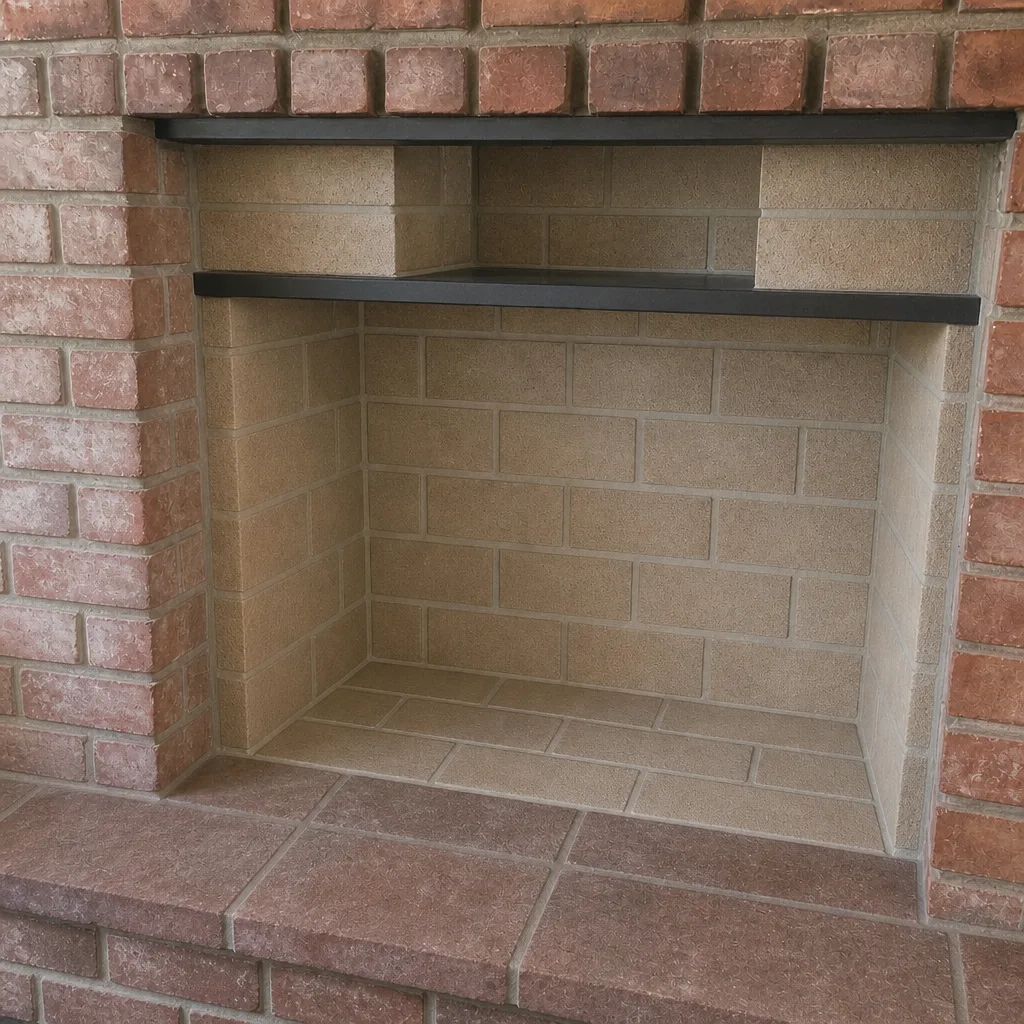
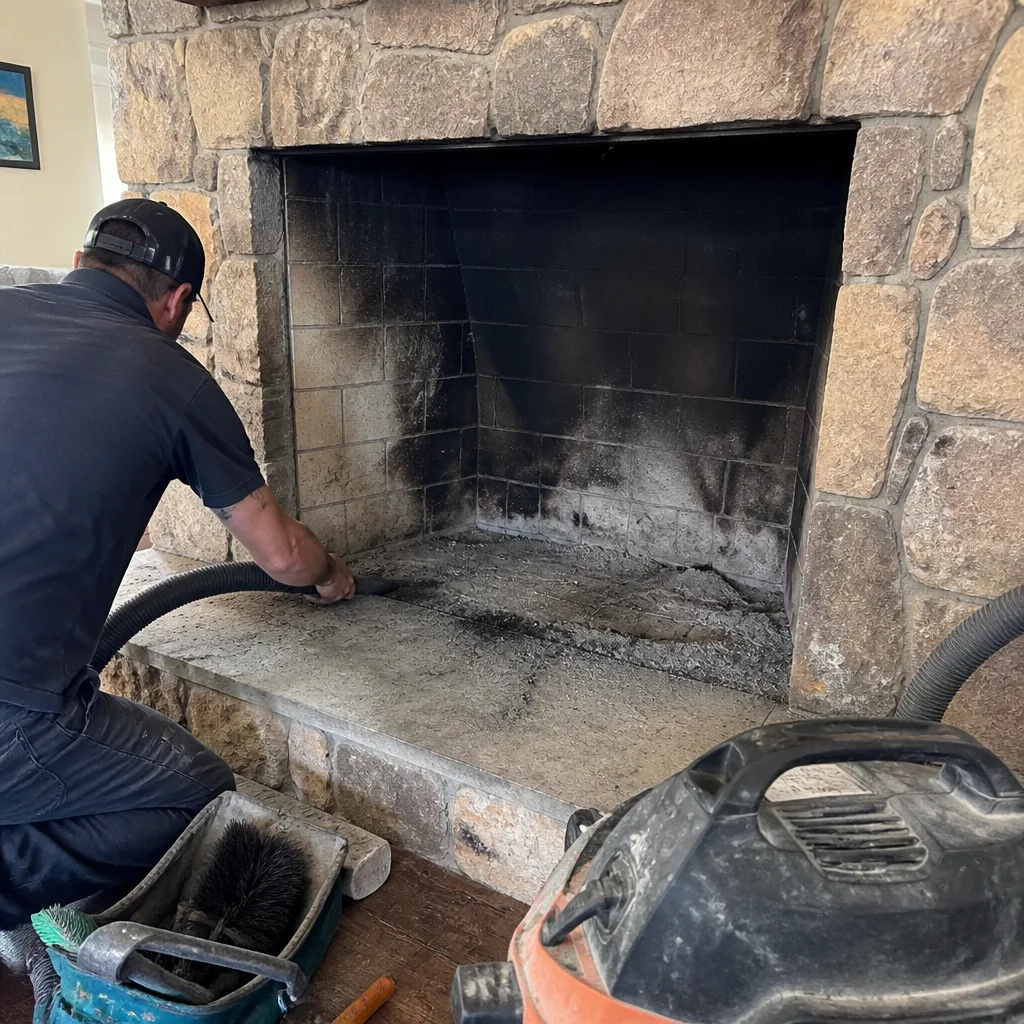
See the difference
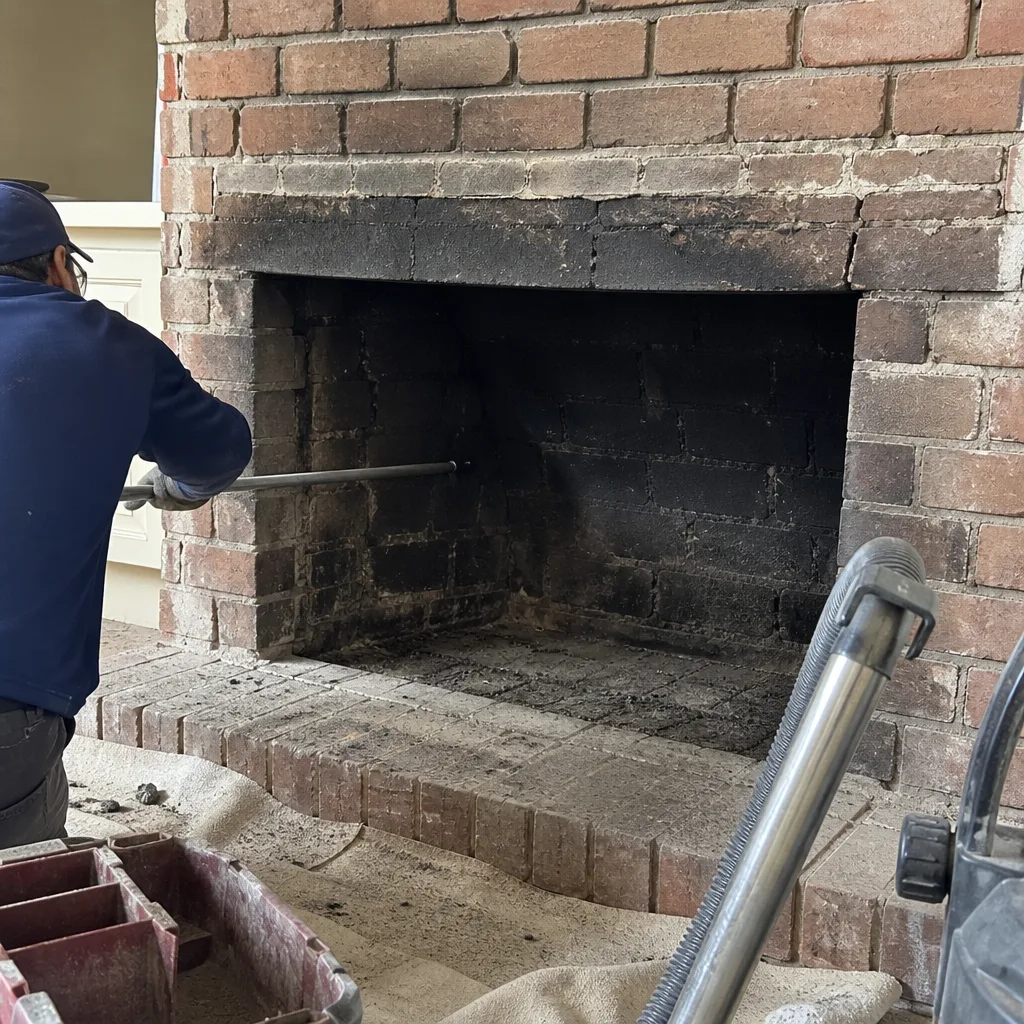 Before
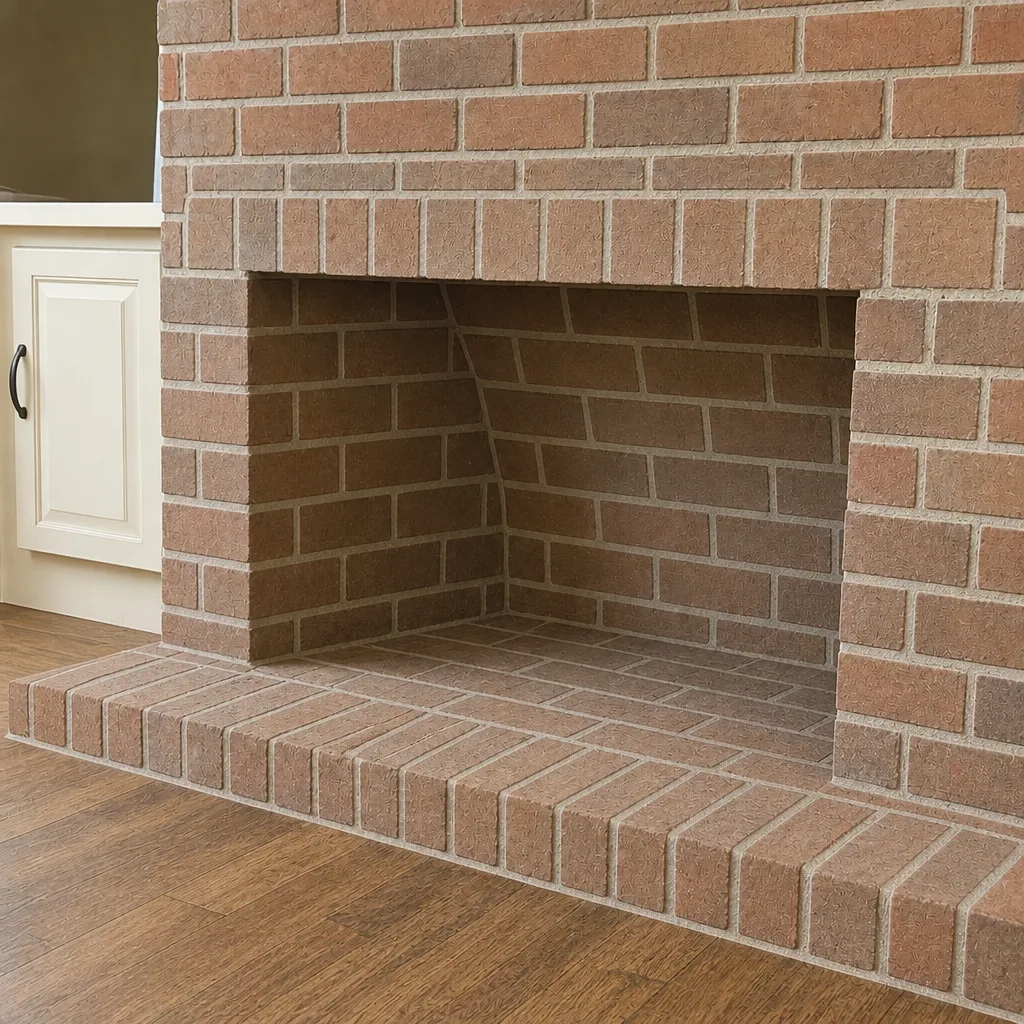 After
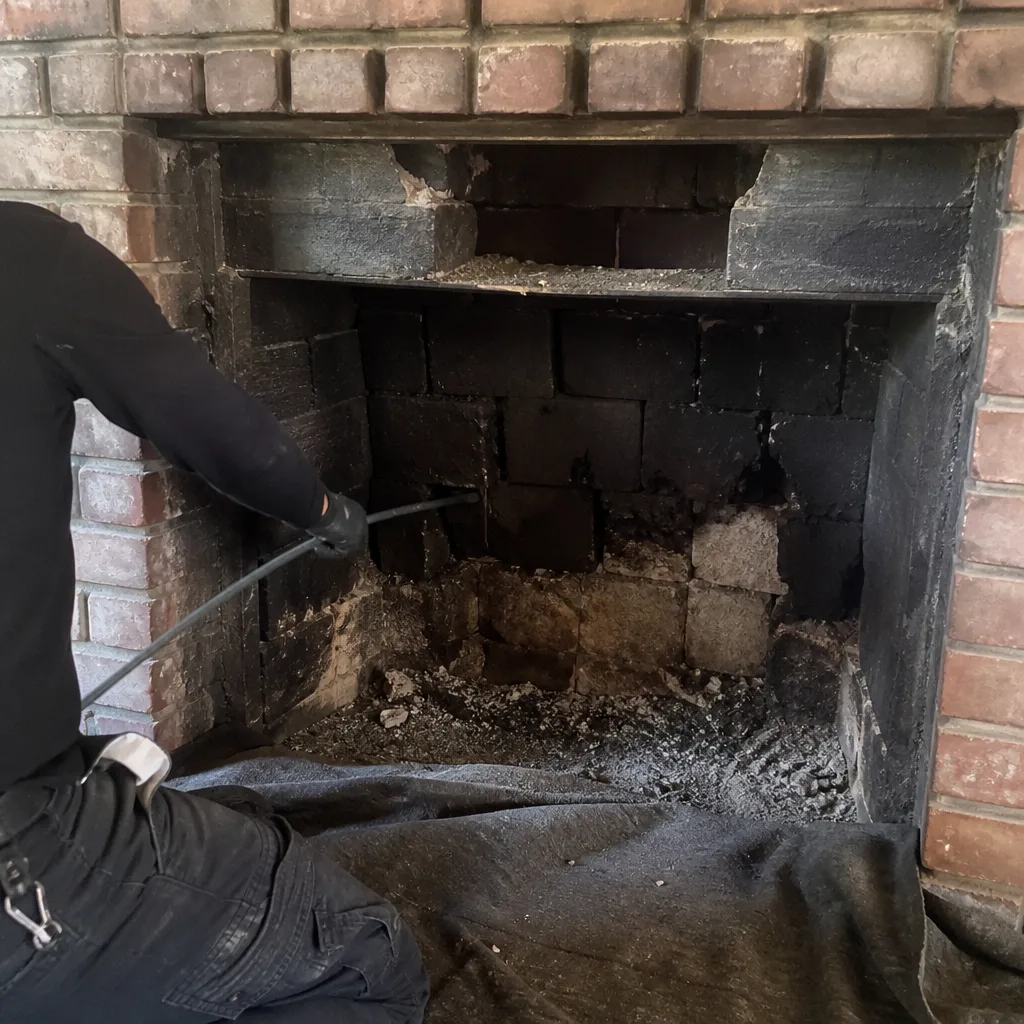 Before
 After
 Before
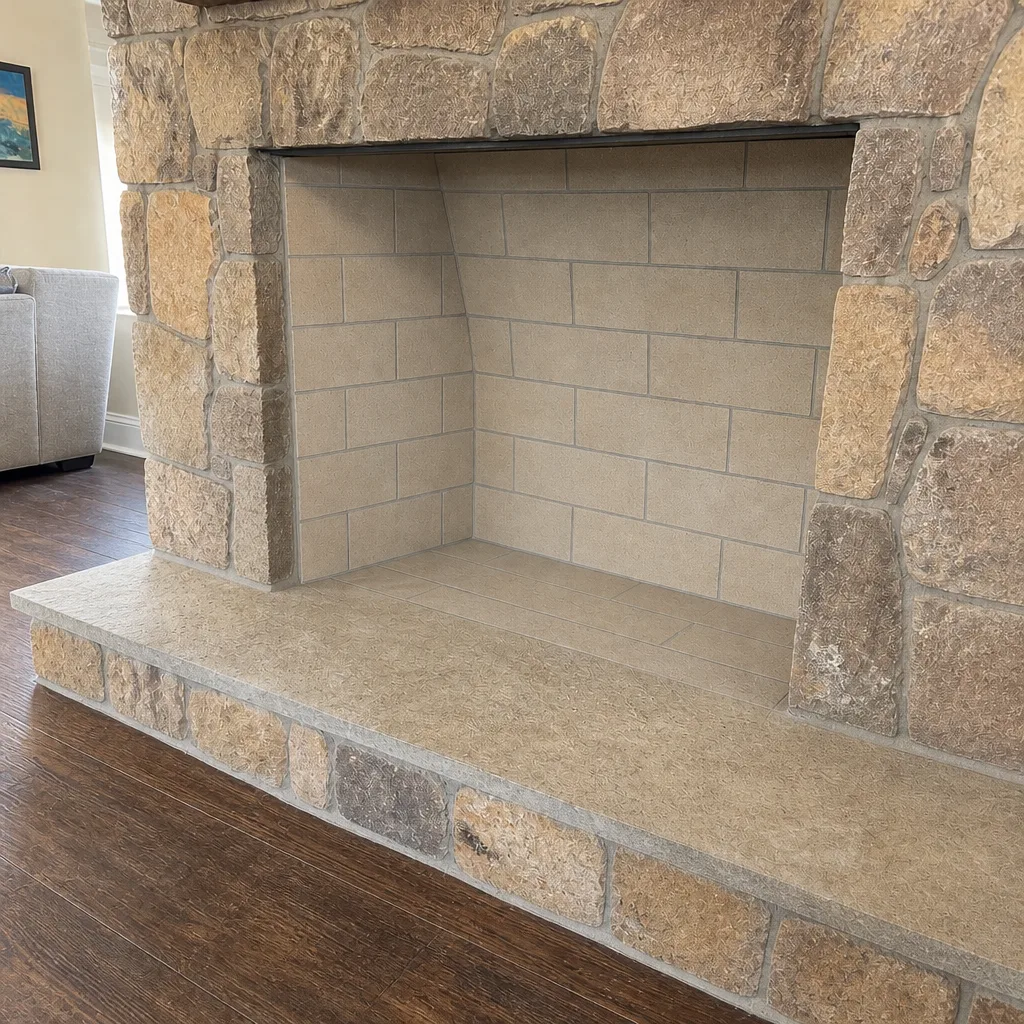 After
When to Call a Professional
Call us when any of the following applies: your fireplace is smoking into the room, you smell a strong odor from the firebox even when it’s not in use, the damper doesn’t open and close smoothly, the fireplace hasn’t been serviced in more than two seasons, you just bought a home with a masonry chimney, you’re changing fuel types (wood to gas or the reverse), your dryer is taking longer than usual to dry a load, or the exterior vent flap on the dryer hood isn’t popping open during use. High-tension springs, electrical wiring and gas line connections in and around venting systems are genuinely dangerous and should only be handled by a trained technician. Glacier Chimney Sweep offers free estimates in St. George – call (877) 327-1971. We answer 24/7. Fast dispatch from 7am to 7pm, Sunday through Friday.
Frequently Asked Questions
A standard wood-burning chimney sweep in St. George runs $150 to $350, with gas inserts at $125 to $275 and prefab fireplaces at $175 to $375. Those are typical estimates and the written estimate sets the final price. Call (877) 327-1971 for an exact quote – estimates are free.
Only if the camera evidence shows the existing liner can’t be restored. Many compromised liners can be resurfaced with HeatShield ceramic material at a fraction of the cost of a full reline, and we tell you honestly which one your chimney actually needs. Nothing gets recommended without camera footage you can review yourself. Call (877) 327-1971 and ask us to bring the camera.
Once a year for a wood-burning fireplace in regular use, and once every one to two years for occasional use, with the real test being whether creosote has reached a quarter-inch along the flue. Gas inserts and prefab fireplaces also need annual service, just of a different kind. Call (877) 327-1971 to schedule a sweep before the St. George burning season.
Creosote builds up and eventually reaches the ignition threshold, which is when chimney fires start; the danger is real but the timeline is measureable, not instant. On the carbon monoxide side, a cracked liner from undetected damage can let combustion gases reach the home’s interior. The cost of skipping a sweep is deferred detection, not immediate catastrophe – but the repairs after a chimney fire tend to be far larger than the cost of the sweep that would have prevented it. Call (877) 327-1971 for an estimate.
Because they’re different services. The discount price usually covers a flue brush and a shop vac only – no camera, no written report, no liability for anything missed. The higher price includes the inspection and reporting that catch the problems before they become expensive. Call (877) 327-1971 and we’ll walk you through exactly what a legitimate cleaning includes.
Yes, and it’s the most efficient way to handle both. Chimneys and dryer vents are your home’s two highest fire-risk venting systems, and bundling the two into one appointment costs $75 to $175 for the dryer vent instead of a standalone $125 to $250. Call (877) 327-1971 to schedule both.
The Bottom Line
The chimney cleaning price you see isn’t the chimney cleaning price you’ll pay. True cost only makes sense when the invoice itemizes inspection level, equipment, areas covered and report format, and when the comparison includes what’s being deferred rather than just what’s being charged today. Use the 2026 St. George price anchors in this guide as a sanity check against any quote, ask for camera evidence before you agree to any repair, and bundle the dryer vent with the chimney sweep to save the second visit. If you’re in St. George and want a free written estimate from a company that sweeps, inspects and repairs in one visit, call Glacier Chimney Sweep at (877) 327-1971. Our technicians have up to 12 years of experience, and we work with the product lines professional chimney engineers specify. We’re also reachable through our main page at Glacier Chimney Sweep, and you can read more about how we approach St. George homes specifically. We answer 24/7. Fast dispatch from 7am to 7pm, Sunday through Friday.
Written by the team at Glacier Chimney Sweep.