
Last updated November 15, 2026
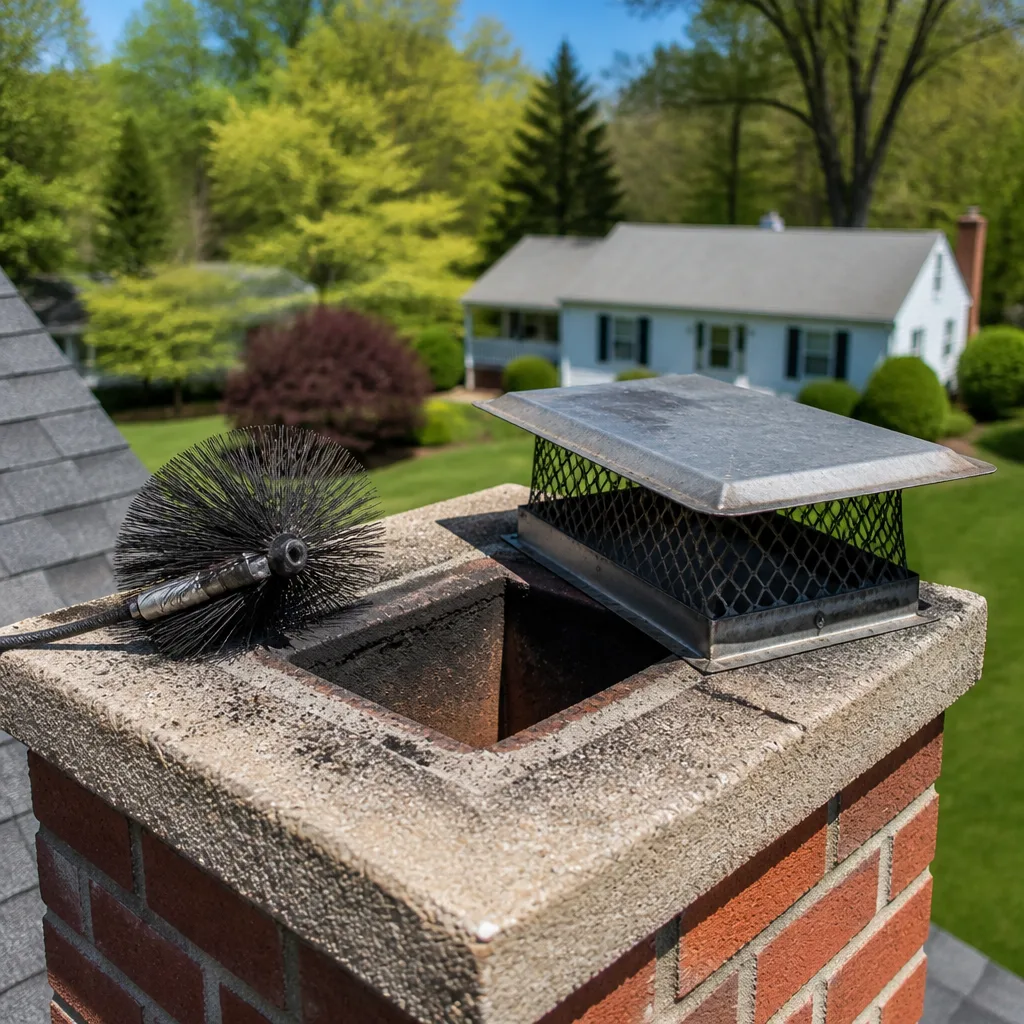 Sweep & inspection
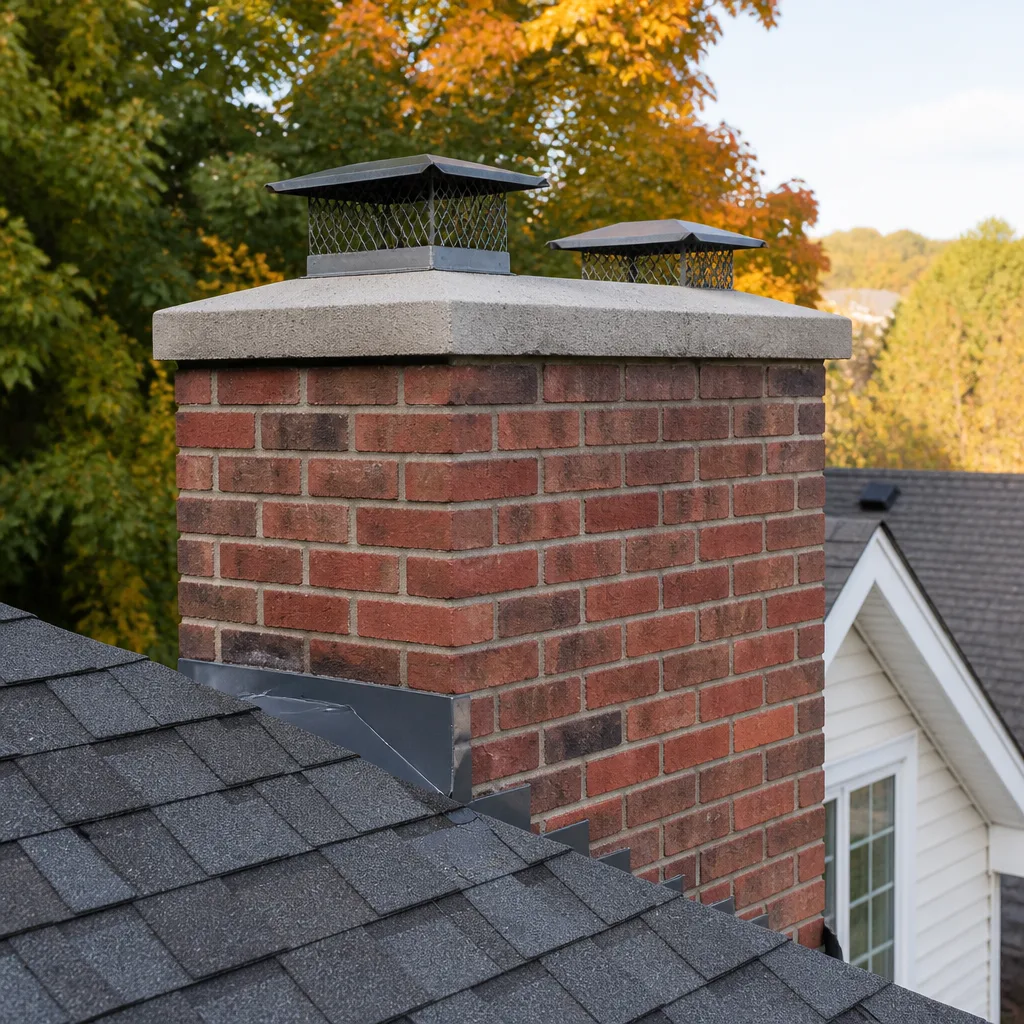 Caps & crowns
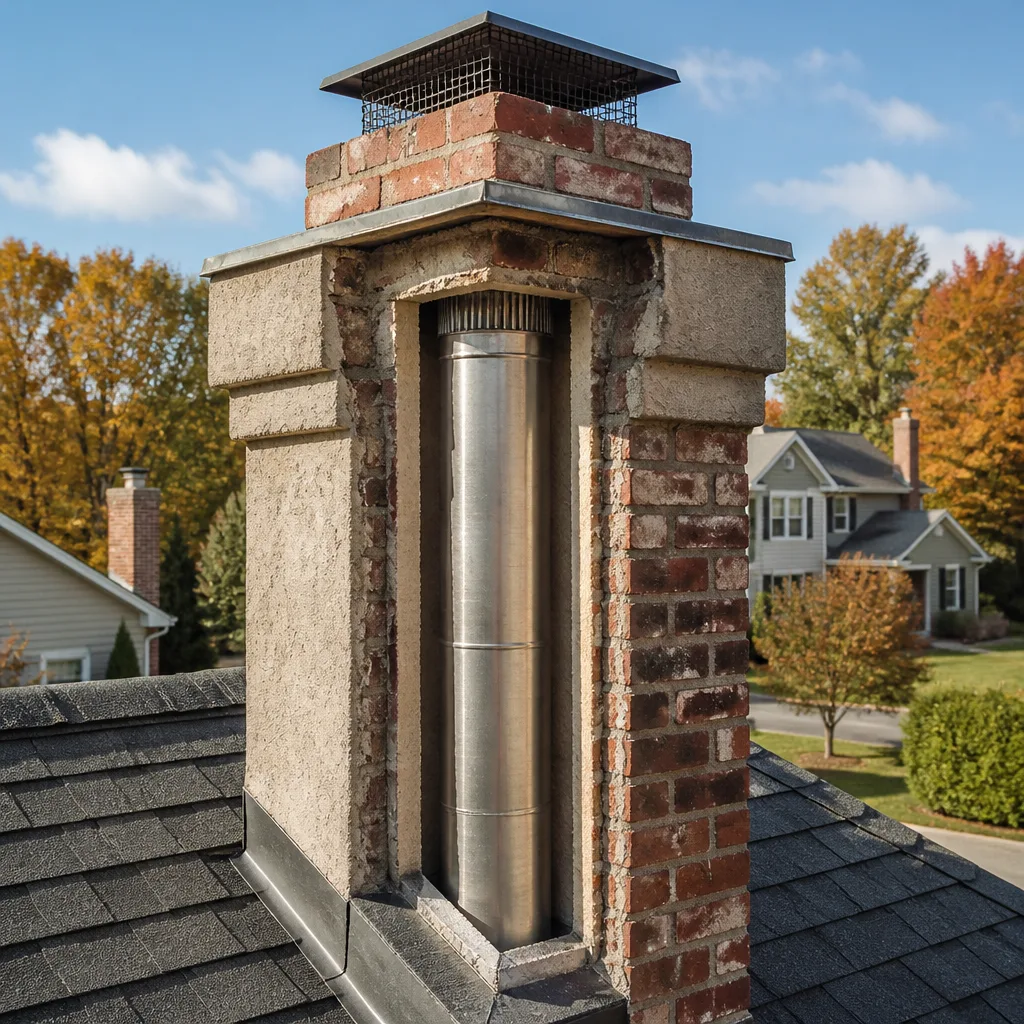 Flue relining
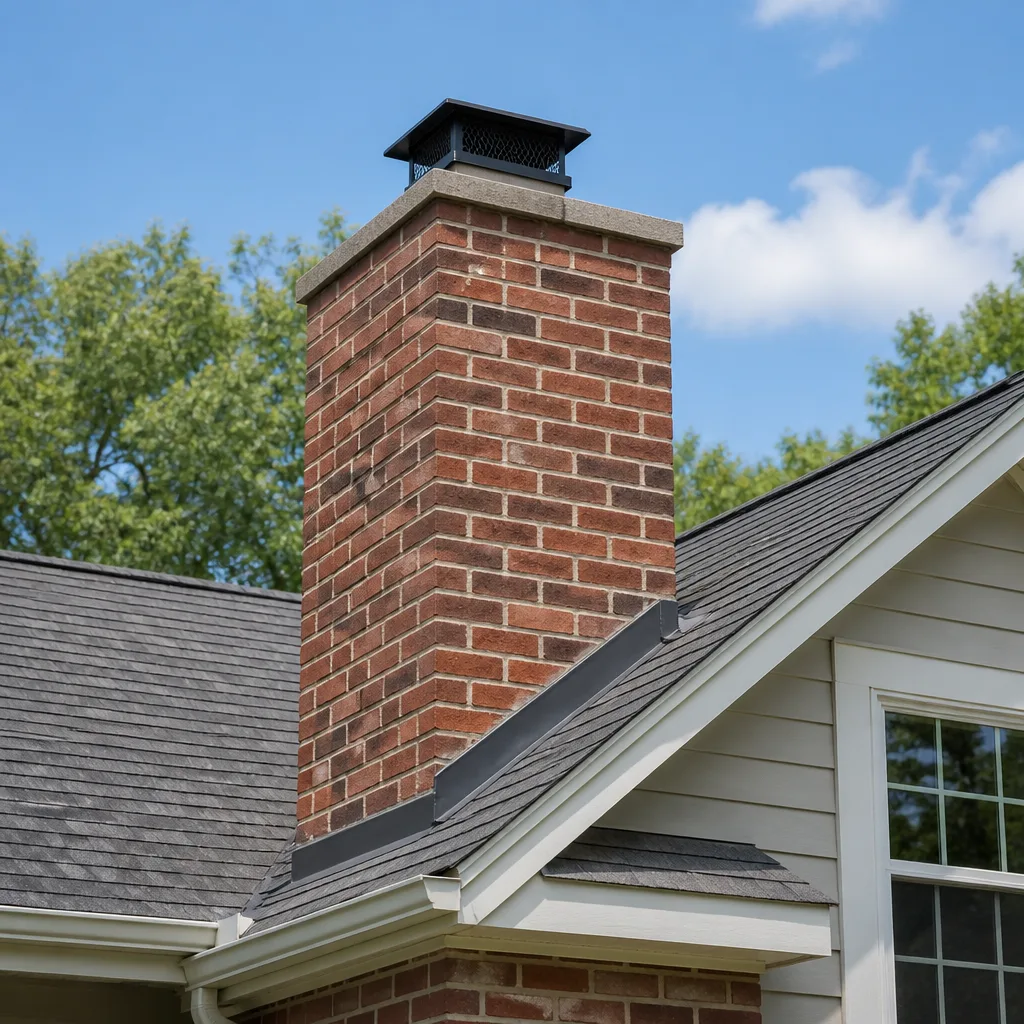 Masonry repair
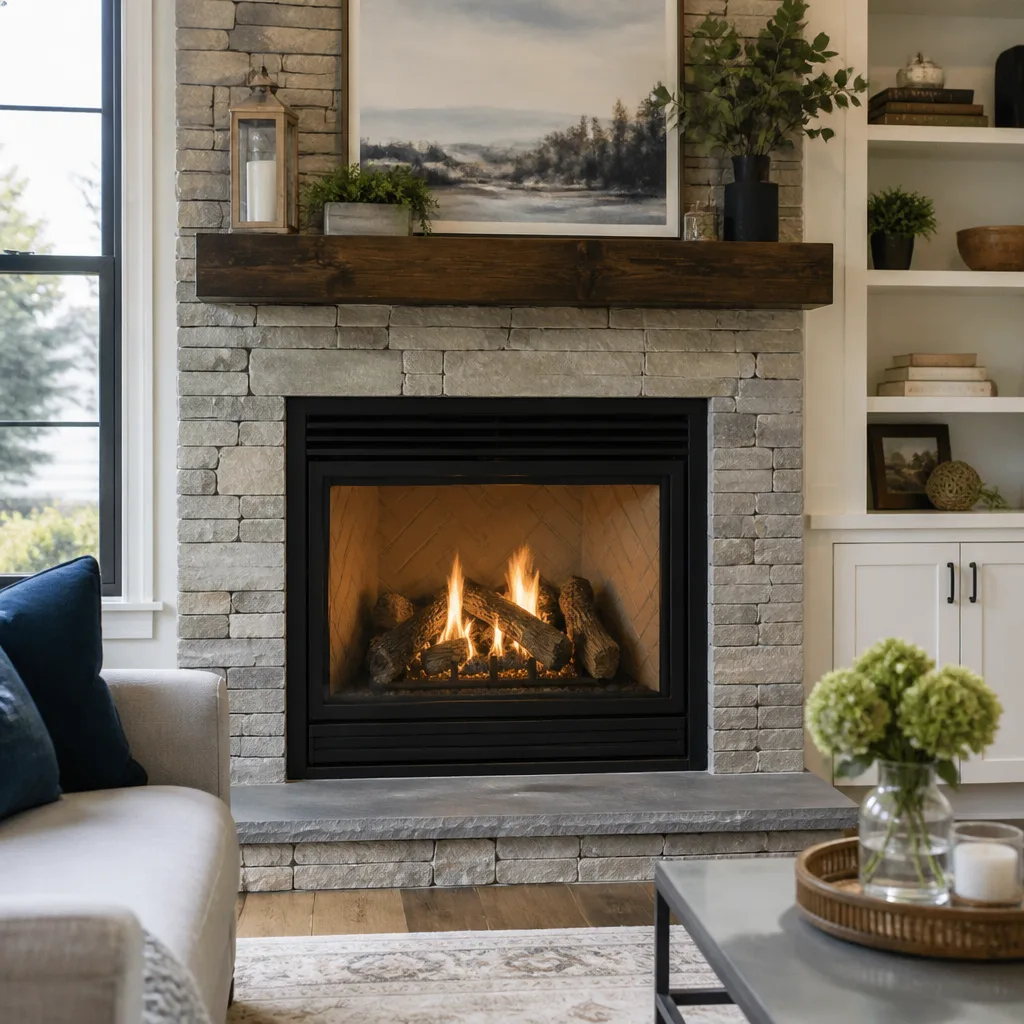 Gas fireplace service
Level 1 sweep and inspection to the NFPA 211 annual standard - flue, crown, cap, and flashing checked and photographed
Chimney sweep logs do not sweep chimneys. They loosen some creosote - which then falls where a brush and vacuum still have to collect it.
Chimney Cleaning Warning Signs: A St. George Homeowner’s Reference Guide
Most chimney warning-sign guides are written for a house that burns wood six months a year and sits in humid air. Neither describes St. George. Here, a fireplace often runs a few weeks in winter, then sits untouched through a long, dry summer and a shoulder season that flips between sun and cold rain. That pattern produces warning signs the standard lists ignore. A sharp chimney smell in August, when nothing has burned for months, tells you more about the inside of your flue than smoke spillage does in December. Below we walk through the signs that actually precede trouble in St. George homes, what each one means, and which can safely wait.
Quick Answer
The most reliable chimney warning signs in St. George are an off-season odor from the firebox, spalling or white staining on the exterior brick chase, smoke that rolls back into the room on startup, dark glazed creosote visible above the damper, and a gas insert that leaves condensation or a stale smell. Any one of these is a reason to book an inspection before the burning season. Visible smoke or flame escaping the chimney itself, or a carbon monoxide alarm, is a reason to stop using the fireplace immediately and have a professional look at it.
Styles & brands we work with
- Sweep & inspection
- Caps & crowns
- Flue relining
- Masonry repair
- Gas fireplace service
Table of Contents
- Off-Season Odor: The Warning Sign Almost Nobody Lists
- What Spalling Brick on the Chase Tells You About the Liner
- Draft Reversal in Single-Story Desert Homes
- Reading Creosote Stages From the Firebox
- Why Gas Insert Venting Failures Are More Dangerous Per Episode
- Dryer Vent Warning Signs Homeowners Miss
- Signs That Can Wait vs. Signs That Can’t
- What a Professional Inspection Actually Checks
Off-Season Odor: The Warning Sign Almost Nobody Lists
A strong, sour or acrid smell coming from the firebox in the middle of summer is one of the earliest signs of a chimney problem, and you’ll rarely see it on a standard warning-sign list. It happens because a chimney is not a sealed pipe. It’s a masonry or metal column that moves air with the outdoors, and in a dry desert summer the flue is a moisture pathway even when no fire is burning.
Here’s what’s actually happening. Warm, humid air from a monsoon afternoon meets cooler masonry inside the chimney and condenses. Rain that finds its way past a cracked crown or a worn flashing detail adds to it. That moisture soaks into creosote residue left from last winter’s fires, and creosote plus moisture plus warm temperatures is a recipe for biological growth and decay. The smell is the byproduct being pushed back into the living space when the pressure shifts.
In St. George this shows up in two predictable windows: late summer, as the monsoon moisture arrives, and early spring, when the last fires of the season leave fresh residue and the weather turns. If you notice a strong odor in either window, it’s worth having the flue checked before the next burning season.
What off-season odor usually points to:
- Moisture intrusion through a failing crown, cracked masonry, or a missing cap
- Residual creosote from the prior season that has absorbed that moisture
- Biological growth on the inside of the flue where it stays damp
- A blocked or damaged cap letting rain and debris in
None of these signals a fire this week. But left alone, moisture intrusion degrades the liner, and a degraded liner is where carbon monoxide and fire risk begin. If you smell your chimney in August, that’s the point to call for chimney sweep service and a proper look inside, not the week the weather turns cold and everyone else picks up the phone.
What Spalling Brick on the Chase Tells You About the Liner
Spalling brick (brick faces flaking off or crumbling) on the outside of the chimney chase usually signals that the brickwork and the structure behind it have absorbed water and are moving through freeze-thaw cycles. In St. George, that matters more than the local reputation for mild winters suggests: cold clear nights drop the temperature sharply, and brick that’s saturated from a monsoon season or a cracked crown will spall through that cycle just the same. When brick faces begin to pop, the chimney is telling you the moisture path is active and the liner inside may not be far behind.
White, powdery staining (efflorescence) is the earlier, gentler cousin of spalling. It’s mineral salt pushed to the surface by moisture moving through the masonry, and while efflorescence on its own isn’t structural, it’s a moisture indicator. If you see it, look for the source of the water.
Here’s the connection homeowners often miss. The brick chase and the flue liner share the same structure. A crown that’s cracked and letting water in doesn’t just damage the brick – that water runs down and reaches the liner, the smoke chamber, and the firebox. A clay-tile liner that stays wet will crack and spall the same way. Once the liner is compromised, combustion gases have a path into wall cavities instead of up and out.
What to check on the exterior of your St. George chimney:
- Cracked or crumbling mortar joints, especially near the top
- Spalled brick faces on the chase or the crown
- White efflorescence staining on the brick
- A chimney cap that’s rusted, missing, or loose
- The crown itself (the sloped concrete cap) for cracks or separation from the chase
Any of these warrants a professional inspection, because the outside condition is a preview of the inside. If the interior liner needs repair or restoration, we work in the same product lines professional chimney contractors specify, including HeatShield ceramic resurfacing for cases where the liner can be restored rather than fully replaced, and DuraFlex flexible liners when a repair calls for a new liner system. We’ll tell you which one your chimney actually needs.
Draft Reversal in Single-Story Desert Homes
Smoke that rolls back into the room on a cold start, or a chimney that smokes intermittently with a fire going, is a classic draft problem. St. George’s single-story, tightly built desert homes produce this more often than the national average assumes. The reason isn’t the chimney; it’s the house around it.
A chimney needs make-up air. Every cubic foot of smoke that leaves up the flue has to be replaced by a cubic foot of air coming in somewhere. A newer home with a tight building envelope and mechanical exhaust (kitchen hoods, bathroom fans, clothes dryers) can pull enough air to reverse the draft. A single-story house with a short chimney gives the flue less thermal advantage to lift smoke than a two-story home does. And wind on the exposed corners of a desert lot can push down the top of a chimney that’s short or improperly capped.
Signs your chimney is drafting incorrectly in St. George:
- Smoke spills into the room when you first light the fire
- The fire starts but burns lazily with visible smoke above the damper
- Coughing or eye irritation from fireplace smoke
- Soot on the fireplace glass doors or the face of the firebox
- A smell of smoke in the house after the fire dies down
- Draft that gets worse when the range hood or bath fan runs
Some of these are correctable without major work. Extending the flue height, installing a proper cap, or adding outdoor make-up air can often restore draft. But chronic reversal is also a warning sign of a partial blockage, a damaged flue tile, or a liner that’s no longer aligned. That’s why we recommend an inspection rather than guessing at fixes – a camera will tell you which problem you actually have.
Reading Creosote Stages From the Firebox
You don’t need a camera to spot some creosote problems. Certain conditions visible from the firebox floor and the damper can tell you the chimney is carrying Stage 2 or Stage 3 creosote, the stages that carry real fire risk. Creosote forms in three stages as it accumulates: Stage 1 is a light, flaky soot that brushes off easily; Stage 2 is a crusty, brittle deposit that’s harder to remove; Stage 3 is a glazed, tar-like coating that has effectively baked onto the flue wall. Stage 3 is the most flammable and is the stage most often associated with chimney fires.
What you can see from the firebox:
- Shiny black or tar-like streaks on the flue walls above the damper: sign of Stage 2 or Stage 3
- Flaky, crusty deposits you can see by flashlight: likely Stage 2
- Heavy soot caked on the damper or smoke shelf: a sign the system isn’t drafting cleanly
- Dull glaze at the top of the firebox: an early indicator of glazed creosote above
The St. George pattern that drives this is short, hot burning seasons with intermittent cool-weather fires. Many local homeowners burn a handful of fires over a few weeks, then let the chimney sit. That pattern produces deposits efficiently and then never scrubs them out through long, consistent burning. The residue stays, sits through a dry summer with the moisture issue we described above, and starts the next season with more buildup on top.
If you see evidence of Stage 2 or Stage 3 creosote, book a professional sweep before your next fire. Glazed creosote is difficult for a homeowner to remove and, more importantly, brushing alone won’t always clean it – it may need to be treated or removed with specialized tools. That’s exactly the kind of work we handle as part of Glacier Chimney Sweep.
Why Gas Insert Venting Failures Are More Dangerous Per Episode
Gas insert venting failures present differently from wood-burning failures. Instead of smoke and creosote, you get subtle signs: condensation, a stale or metallic smell, a flickering flame, or a slight exhaust smell after the insert shuts off. Those signs matter because a gas insert that isn’t venting properly can send combustion byproducts, including carbon monoxide, into the living space with no visible smoke to warn you.
That’s the part that makes gas failures more dangerous per episode. A wood-burning chimney that’s drafting poorly gives you smoke, odor, and eye irritation – an obvious alarm. A gas insert that’s venting incorrectly can run quietly with nothing more than a faint smell and a headache later. The warning is there, but it’s quiet, and it takes knowing what to look for.
Gas insert warning signs in St. George homes:
- A metallic, exhaust, or “stale” smell in the room after the insert has been running
- Condensation on the inside of windows near the fireplace
- A flame that is orange or yellow rather than blue (a sign of incomplete combustion)
- Soot deposits on the insert glass or trim (a gas insert shouldn’t soot)
- A carbon monoxide alarm going off
The venting arrangement on many St. George gas inserts is a short run that exits through an exterior wall or a direct-vent terminal. That’s efficient, but it also means the “chimney” is short, closer to the living space, and easier for a failing seal or a blocked terminal to compromise. It deserves a look just as a wood chimney does. If you have a gas insert, have the venting inspected on a regular interval and any time you see the signs above.
Our dryer vent and chimney work share a common thread with gas: all three are venting systems that carry risks homeowners can’t see. That’s why we handle all three under one company, so you’re not coordinating between contractors. If your gas insert is part of a larger venting safety picture, we’ll look at both the chimney and the dryer vent cleaning setup in the same visit.
Dryer Vent Warning Signs Homeowners Miss
The chimney gets the attention, but the dryer vent is the other residential venting system with significant fire risk. Many homeowners have never had theirs cleaned and don’t know what to look for. In St. George, the pattern is amplified by heat and dust: a vent run that’s a bit long or has too many bends builds up lint faster than a short, straight one, and that buildup is the same fire fuel whether it’s creosote in a chimney or lint in a dryer duct.
Warning signs for the dryer vent:
- Clothes take longer than one cycle to dry
- The dryer feels hot to the touch on top or around the door
- The exterior vent flap doesn’t open fully, or doesn’t open at all
- A burning or musty smell while the dryer is running
- Lint visible behind or around the dryer, or around the exterior vent
- A dryer that’s tripping its breaker or stopping mid-cycle
If more than one of those is true, the vent likely has a significant buildup. That’s the moment to stop running the dryer until it’s cleaned. The buildup isn’t just inefficient – it’s the fuel a fire needs. Cleaning the dryer vent is straightforward when done properly, and it’s one of the most useful preventive tasks a homeowner can have done.
Signs That Can Wait vs. Signs That Can’t
Here’s the distinction homeowners actually need, because it answers the real question behind most calls: “Is this urgent?”
Signs to address before your next burn:
- Off-season odor in the firebox
- Efflorescence or a cracked crown on the exterior chase
- Occasional smoke rollback on a cold start
- A dryer that takes two cycles for a load of towels
- A layer of soot on the glass or firebox face
Signs that justify stopping use right now:
- Visible smoke or flame escaping from the chimney chase or any joint
- A carbon monoxide alarm sounding
- Chunks of creosote or liner material falling into the firebox
- A hollow or damaged liner confirmed by a flashlight look above the damper
- Smoke entering the room continuously while a fire is burning
The waiting items are the ones worth calling about before the fall booking rush. In St. George, appointments fill up as the weather turns, and the smart move is to get a sweep and inspection on the calendar during the warm months, before the chimney becomes urgent.
Nothing we recommend is based on a guess. Every finding is backed by a camera inspection and a photo report you can look at yourself. That’s the difference between an honest recommendation and a sales pitch.
What a Professional Inspection Actually Checks
A proper chimney inspection goes far beyond a quick look and a brush. Here’s what the process involves, so you know what to expect:
- Exterior check. Crown, chimney cap, flashing, mortar joints, and the brick chase are examined for cracking, spalling, and moisture intrusion.
- Firebox and smoke chamber. We look for creosote stage, soot patterns, cracked firebox brick, and signs the chimney isn’t drafting correctly.
- Damper and smoke shelf. Operation, alignment, and buildup are checked.
- Camera inspection of the flue. A camera is run through the flue to look for cracks, gaps, offset tiles, blockages, and liner damage that can’t be seen from the firebox.
- Photo report. Findings are documented so you can see them yourself.
- Recommendation. We tell you what needs to be done, what can wait, and whether a repair or a restoration is the right path. HeatShield ceramic resurfacing is an option we consider when it’s appropriate for a compromised liner.
If a repair is needed, we can usually handle it in the same visit rather than writing up a deficiency list and walking away. We stock DuraFlex flexible liner systems and work in the professional brands contractors specify – Olympia Chimney, Famco, and Copperfield among them – so a repair isn’t held up waiting on special-order parts.
Our technicians have up to 12 years of experience, and our inspection process doesn’t change based on the season. It’s the same check on a mildly suspicious smell in July as it is on a pre-season appointment in October. We provide our full scope of service in St. George and the surrounding area, and the written estimate you get spells out the price before any work begins.
Common Mistakes to Avoid
- Skipping the sweep because you only burn a few fires a year. Short, intermittent burning still deposits creosote and still leaves residue that sits through a desert summer. A light-use chimney still needs a periodic inspection.
- Burning hot to “self-clean” a chimney. A hot fire on top of Stage 3 creosote is exactly the condition that drives a chimney fire. Let a professional remove the buildup first.
- Ignoring a chimney that smells in summer. The off-season odor is one of the most reliable early indicators of moisture intrusion, and moisture is the number one cause of liner degradation.
- Treating dryer and chimney separately. They’re two distinct systems, but in a St. George home they can develop problems at the same rate. Have both looked at in the same visit rather than as two projects.
- Assuming a gas insert is maintenance-free. It isn’t. Gas inserts have their own venting behavior and should be checked on the same rough interval as a wood-burning chimney.
- Buying a discount sweep you can’t verify. A sweep that brushes the flue and leaves doesn’t tell you whether the liner is compromised. Ask what the inspection includes, and insist on a photo report.
- Overlooking the exterior brick. Cracking or spalling on the chase is a warning the problem is already inside. Don’t wait for smoke to appear.
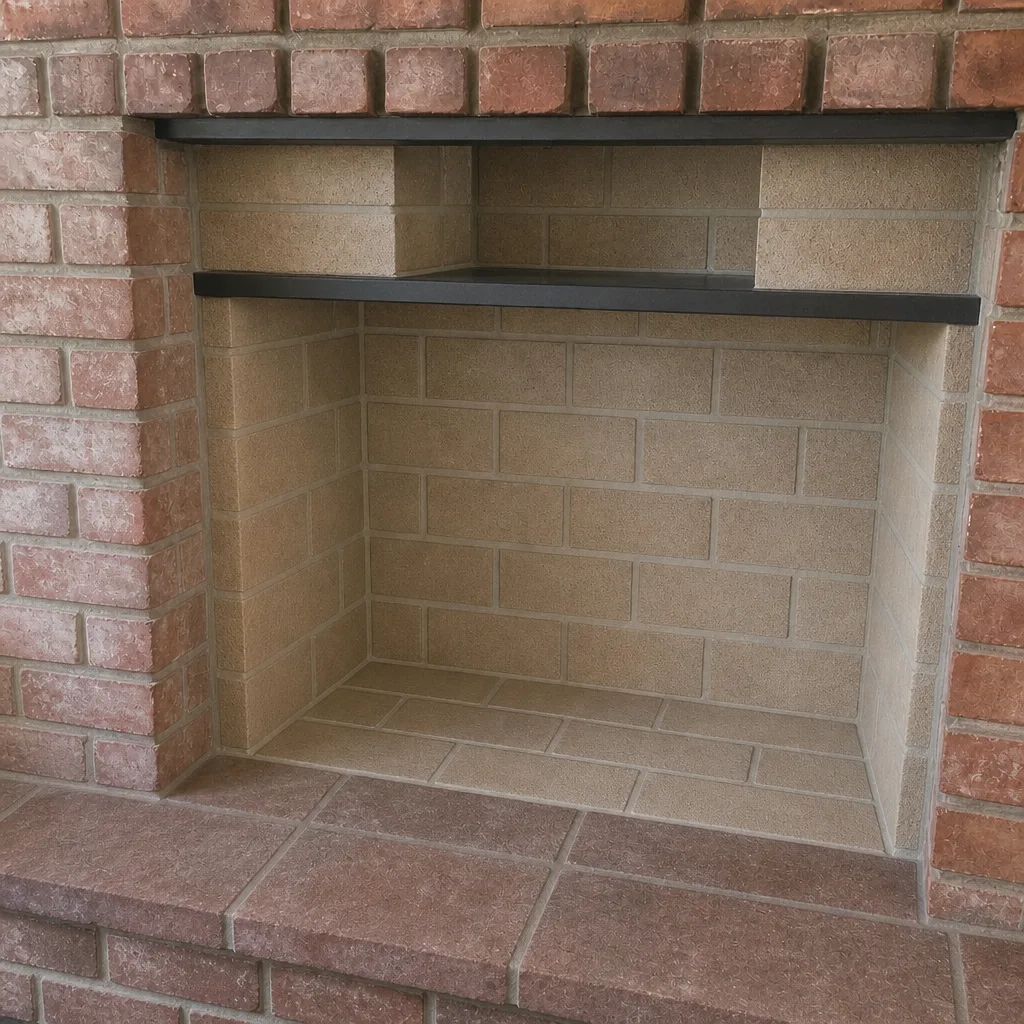
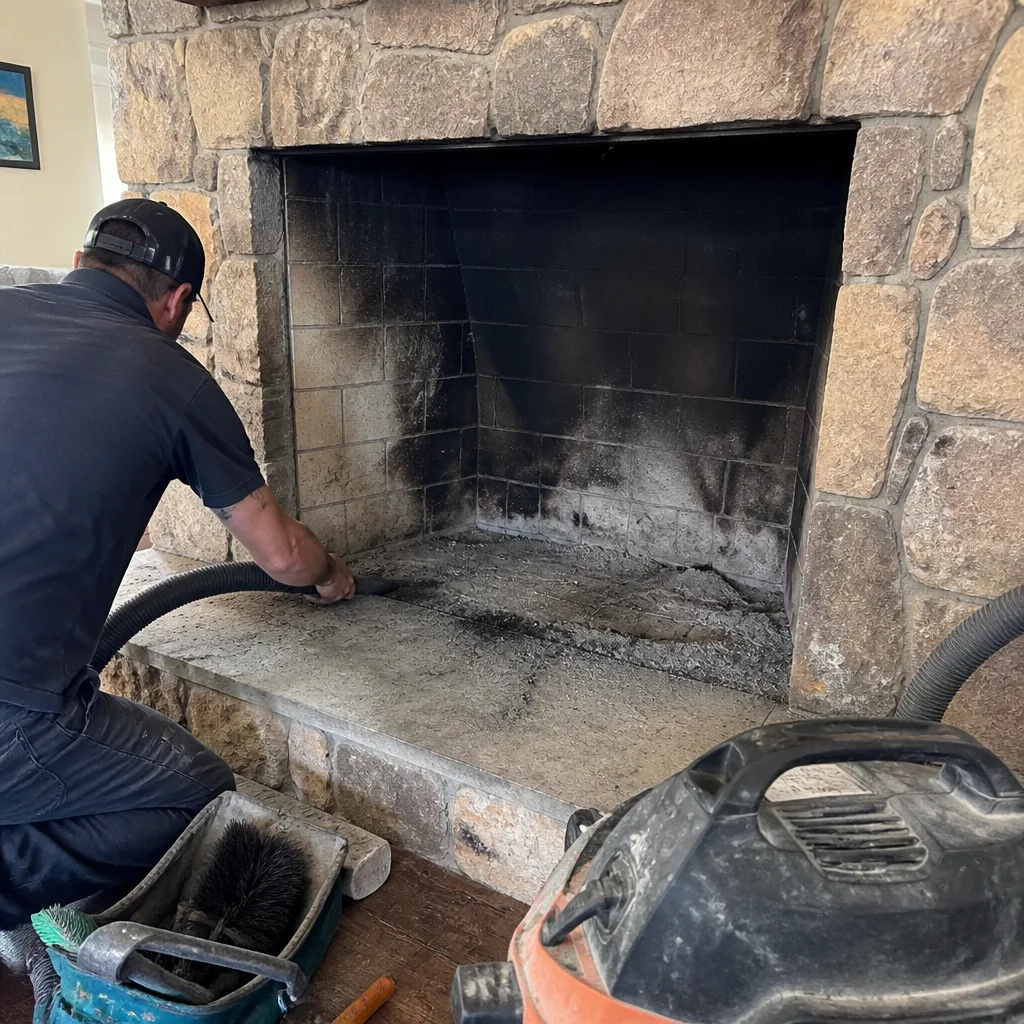
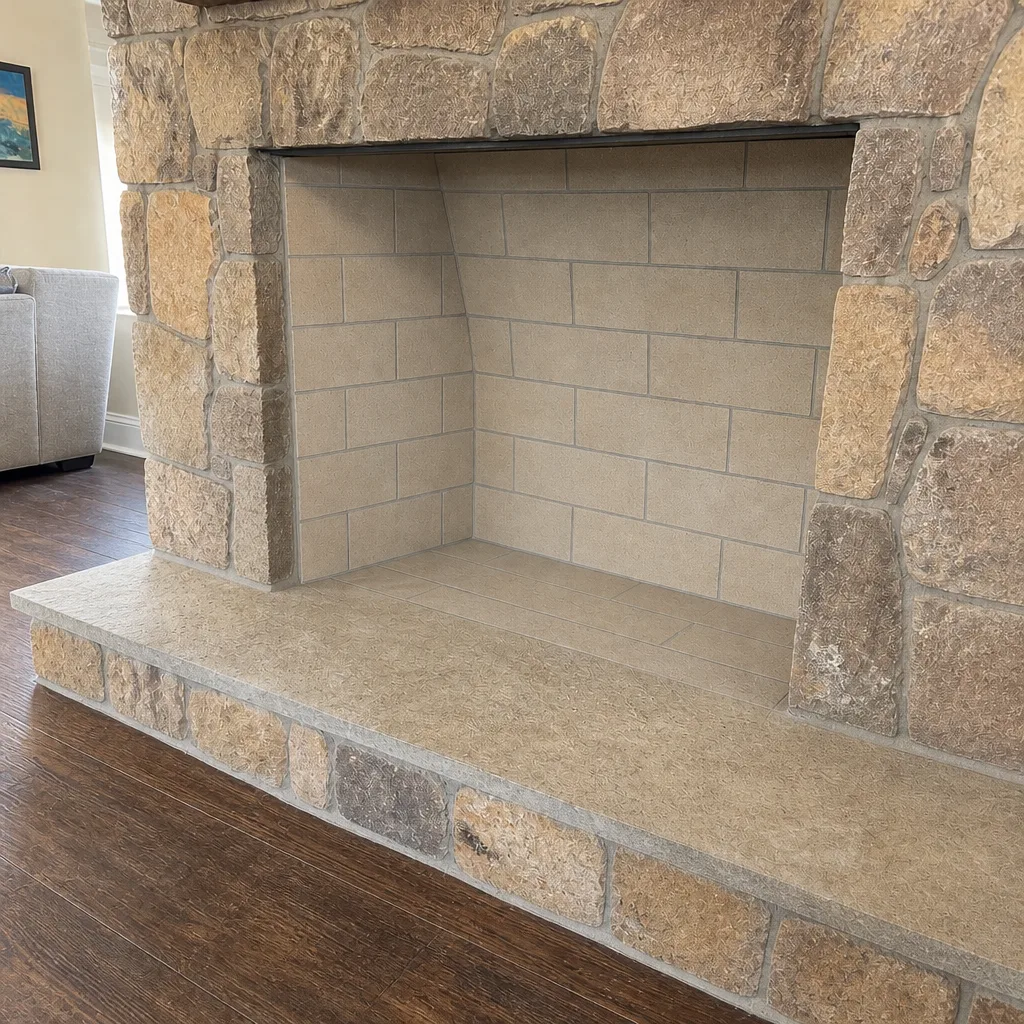
See the difference
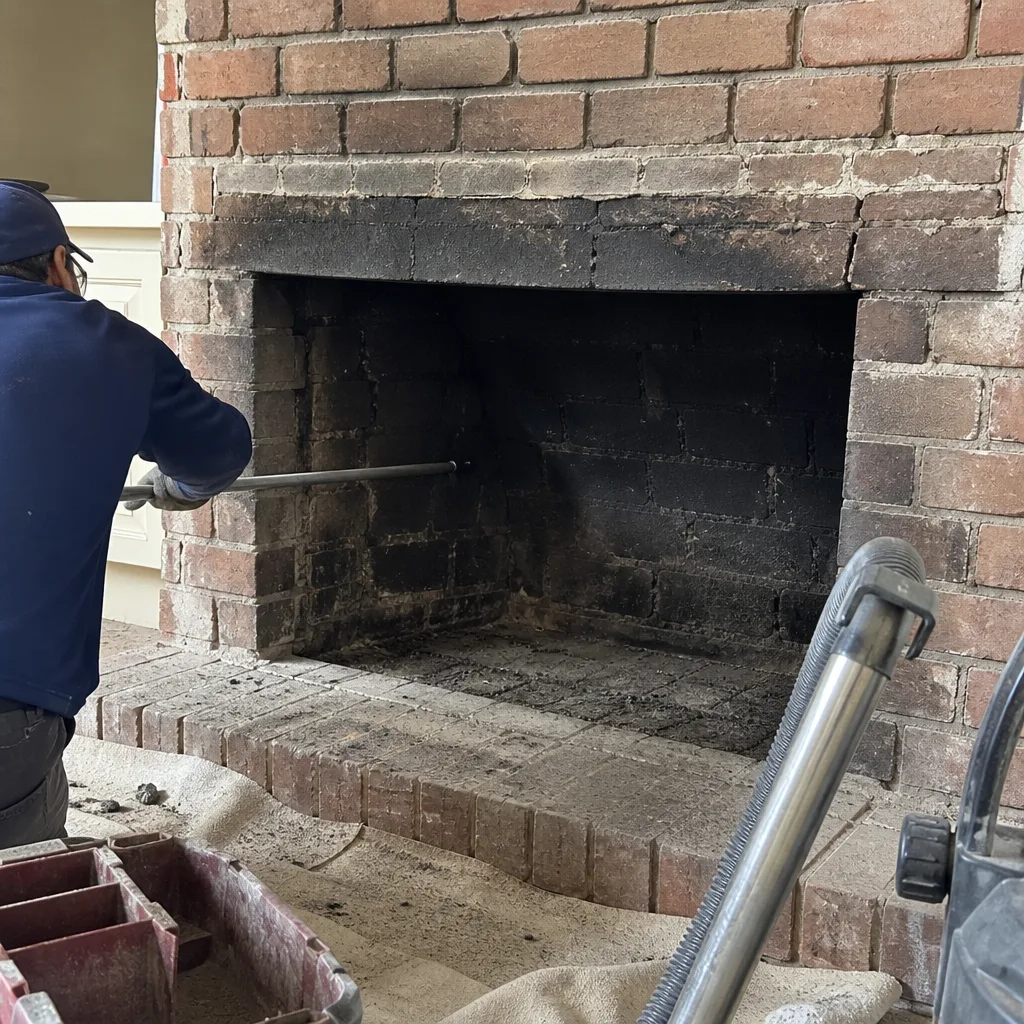 Before
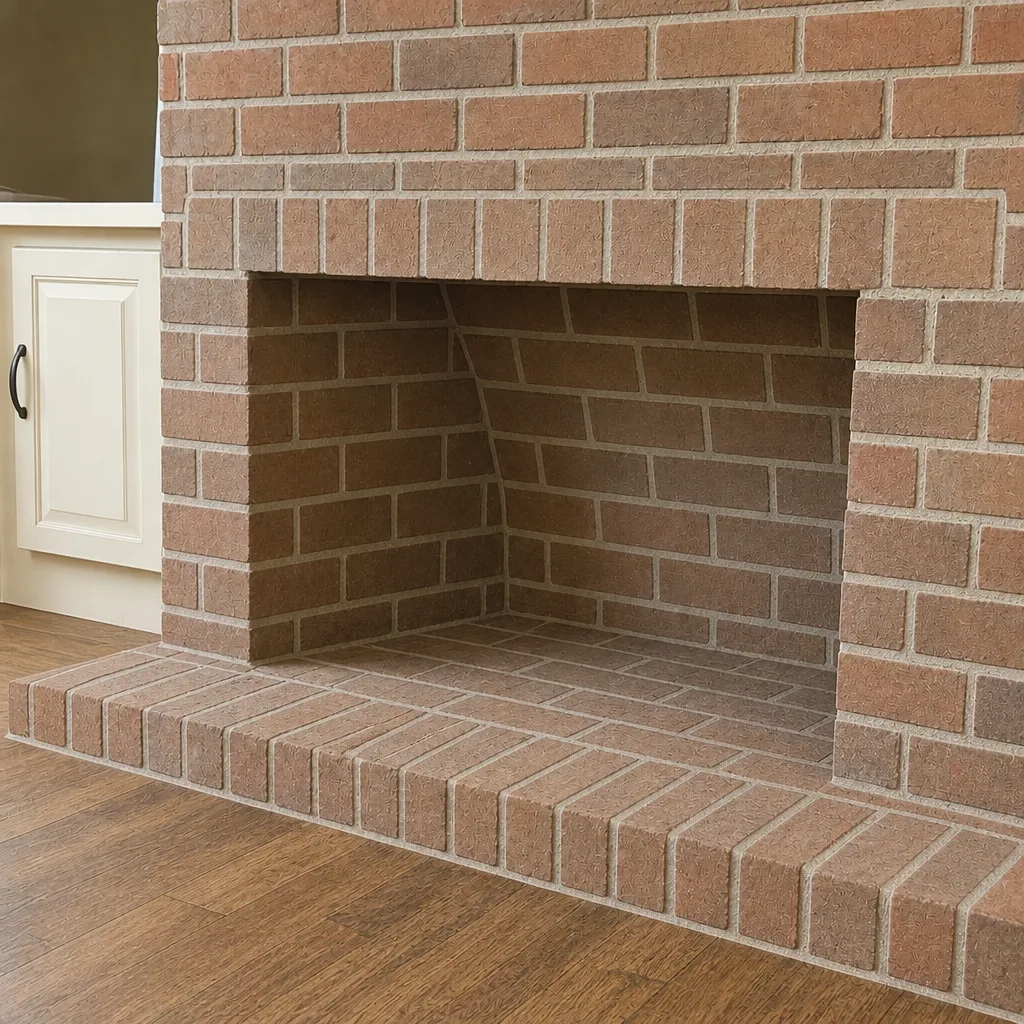 After
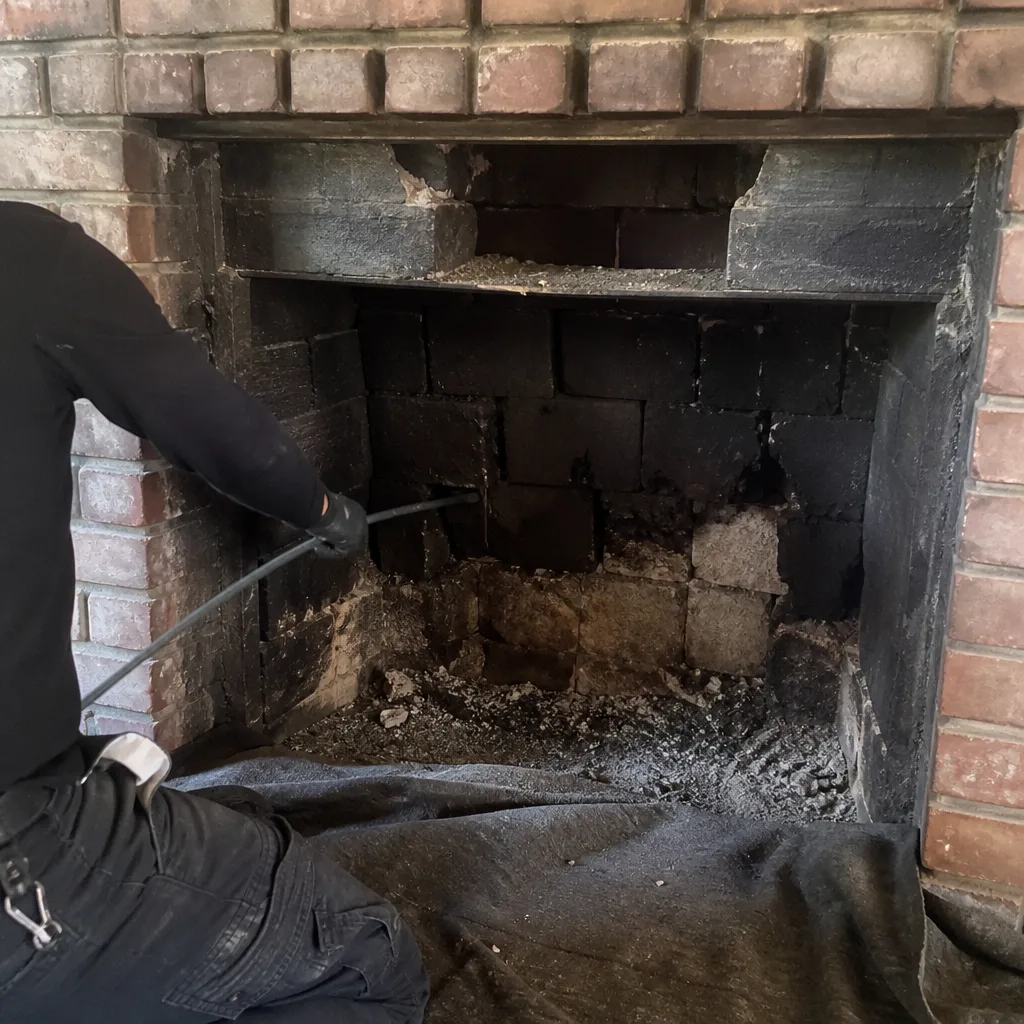 Before
 After
 Before
 After
When to Call a Professional
Call a professional if you see any of the serious signs above, or if you simply aren’t sure whether what you’re seeing is normal. Uncertainty is a valid reason to call. Beyond that, the clean moments to schedule a sweep and inspection are before each burning season and after any chimney that sits unused for a long stretch. In St. George that means late summer or early fall is the ideal window, before the first cold snap when appointment slots fill up. If you have a gas insert or a dryer that takes two cycles to dry a load, book those alongside the chimney. Glacier Chimney Sweep offers free estimates in St. George. Call (877) 327-1971. We answer 24/7. Fast dispatch from 7am to 7pm, Sunday through Friday.
Frequently Asked Questions
Most chimneys should be swept and inspected once a year, or after about a cord of wood burned, whichever comes first. A lightly used St. George chimney still benefits from an annual inspection, because off-season moisture and residue can develop even when the fire count is low. The inspection is what confirms whether the sweep is due now or can wait.
A strong, sour, or acrid smell from the firebox in summer is a real warning sign. It points to moisture in the flue, residual creosote, or biological growth, and it almost never appears on generic warning-sign lists. If you notice it, book an inspection rather than waiting for the cold season.
It can. Spalling brick signals active moisture movement through the chimney structure, and that water often reaches the liner, the smoke chamber, and the firebox. A professional inspection with a camera is the way to find out whether the liner is also affected. Call (877) 327-1971 for an exact quote and a clear answer – estimates are free.
Stage 3 creosote – the glazed, tar-like coating – is the one to stop on. It’s the most flammable and the most likely to be involved in a chimney fire. Stage 2 is also a reason to book a sweep before the next burn. If you see shiny black or tar-like deposits above the damper, stop and get an inspection.
Gas insert venting failures present as condensation, a metallic or exhaust-like smell, a flickering flame, or soot on the insert glass, rather than smoke. Those signs matter because a poorly venting gas insert can send carbon monoxide into the living space without obvious smoke. Any of those signs is a reason to call for an inspection.
We clean both. Chimney sweeping and inspection, chimney repair, and dryer vent cleaning are our three core services, and we handle them under one company. If you have more than one venting concern, we can address them in the same visit. Call (877) 327-1971 to set up a time.
The Bottom Line
The warning signs worth acting on in St. George are often the quiet ones: a chimney that smells in August, spalling brick on the chase, a dryer that takes two cycles, an insert with a metallic smell. Those are the early indicators. Keep them on your radar, and the loud signs – smoke in the room, carbon monoxide alarms – stay out of your life. Book a sweep and inspection before the next burning season, get a camera report you can see yourself, and let an honest recommendation tell you what needs fixing now and what can wait. Call (877) 327-1971 to book a free estimate. We answer 24/7. Fast dispatch from 7am to 7pm, Sunday through Friday.
Written by the team at Glacier Chimney Sweep.