
Last updated November 15, 2026
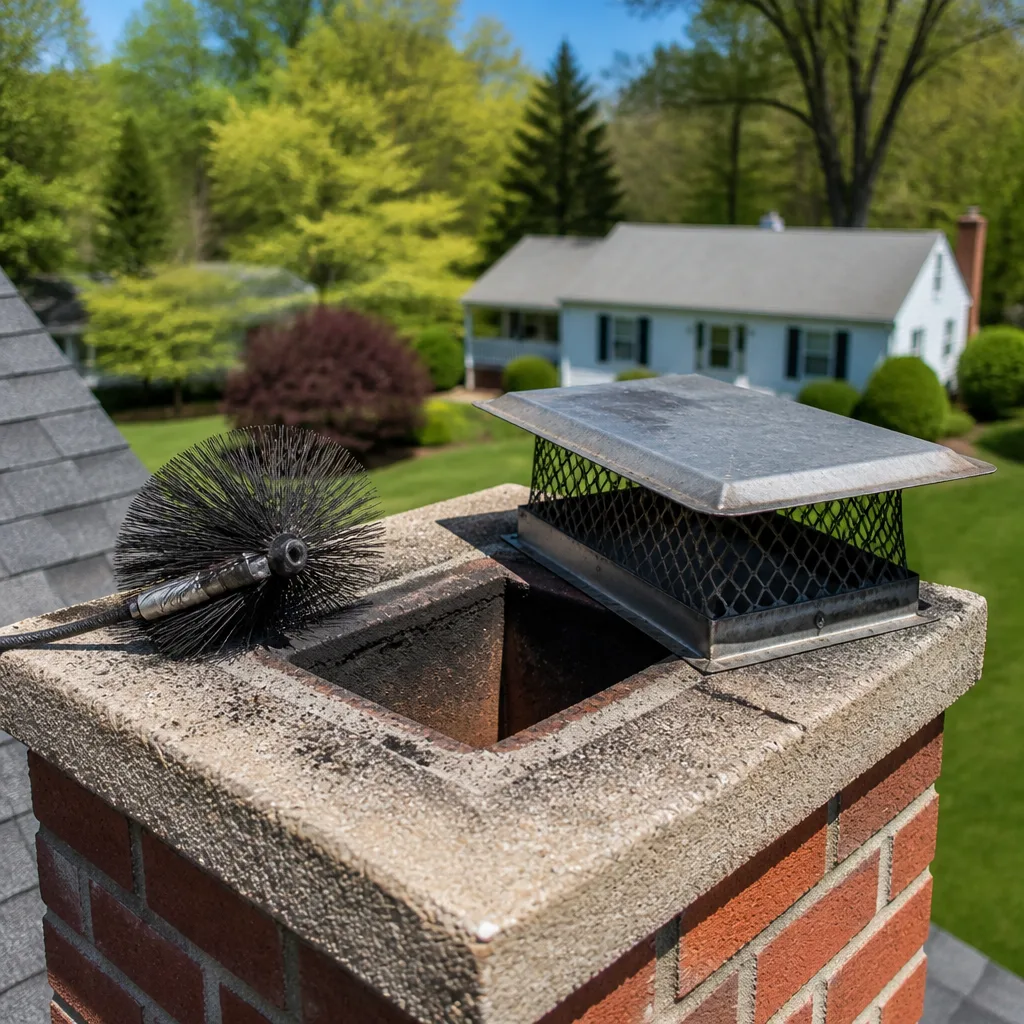 Sweep & inspection
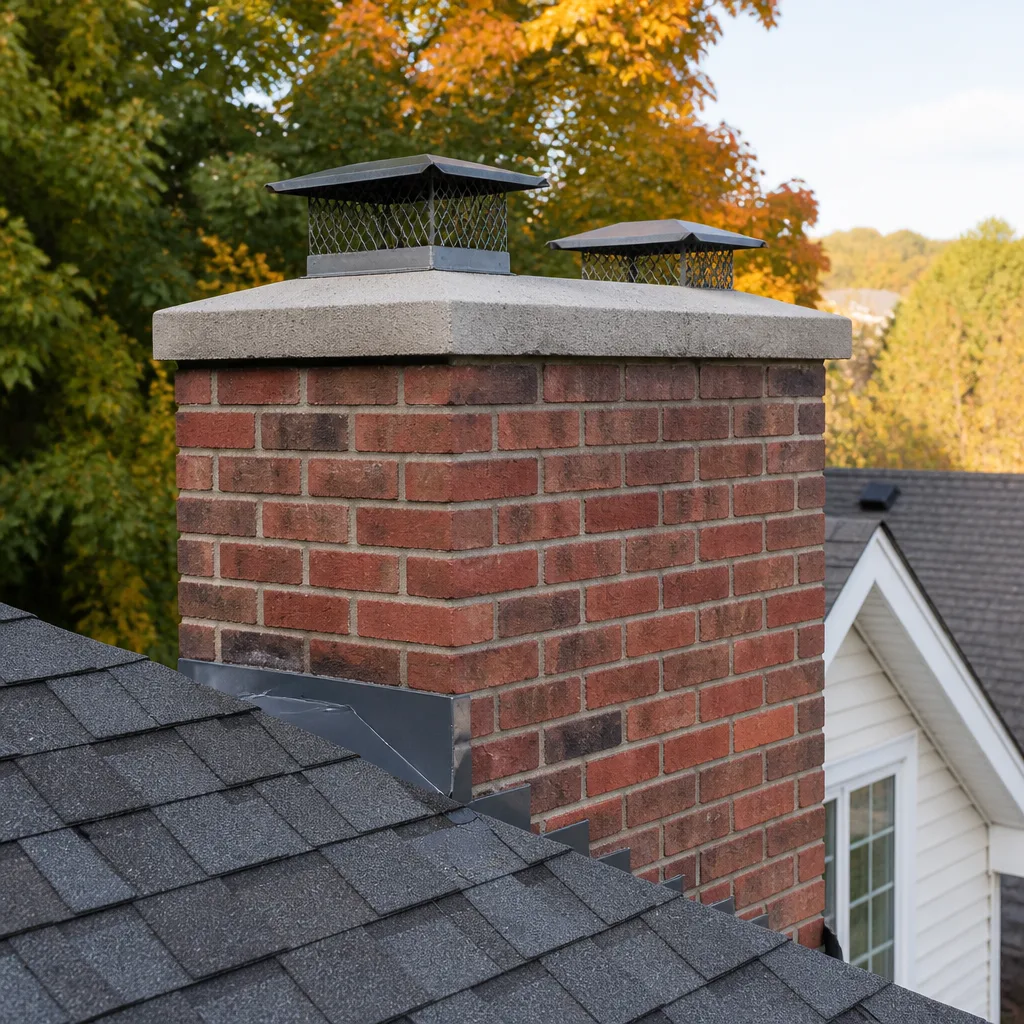 Caps & crowns
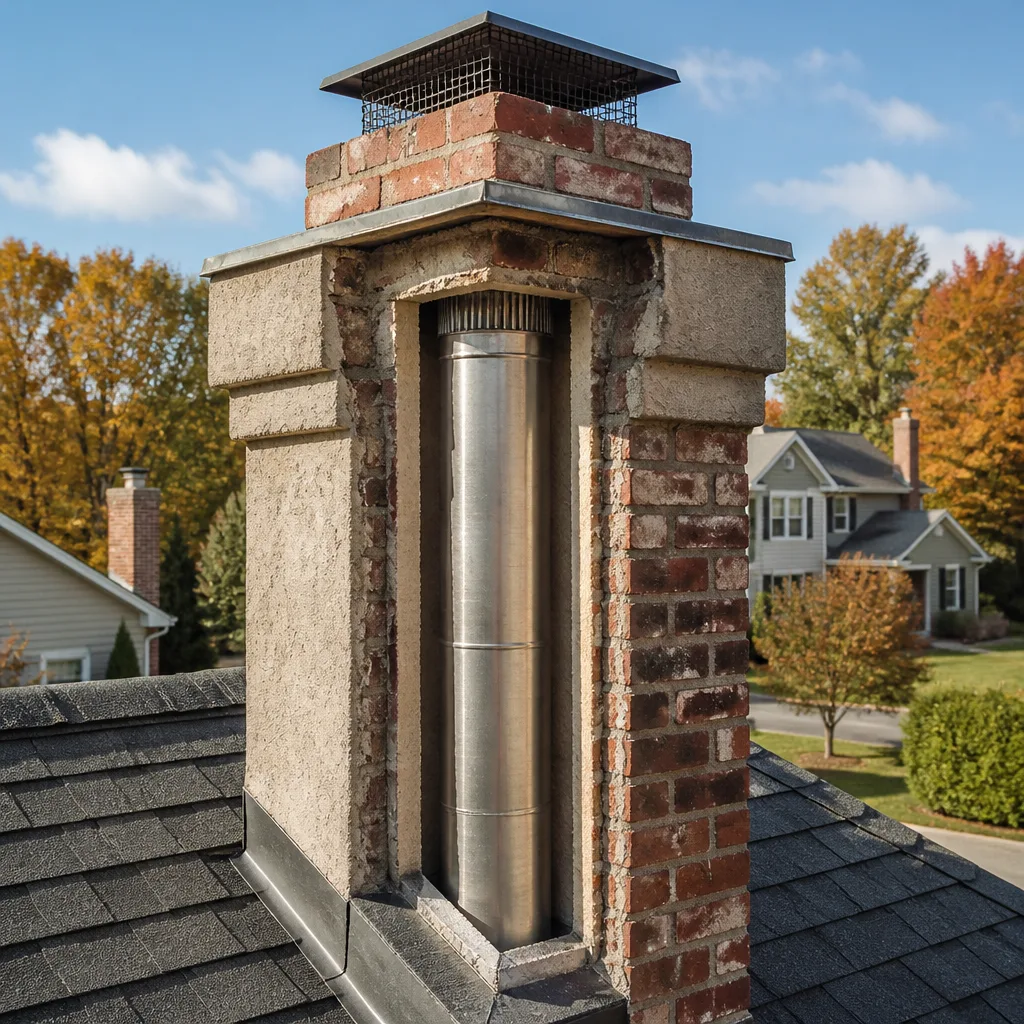 Flue relining
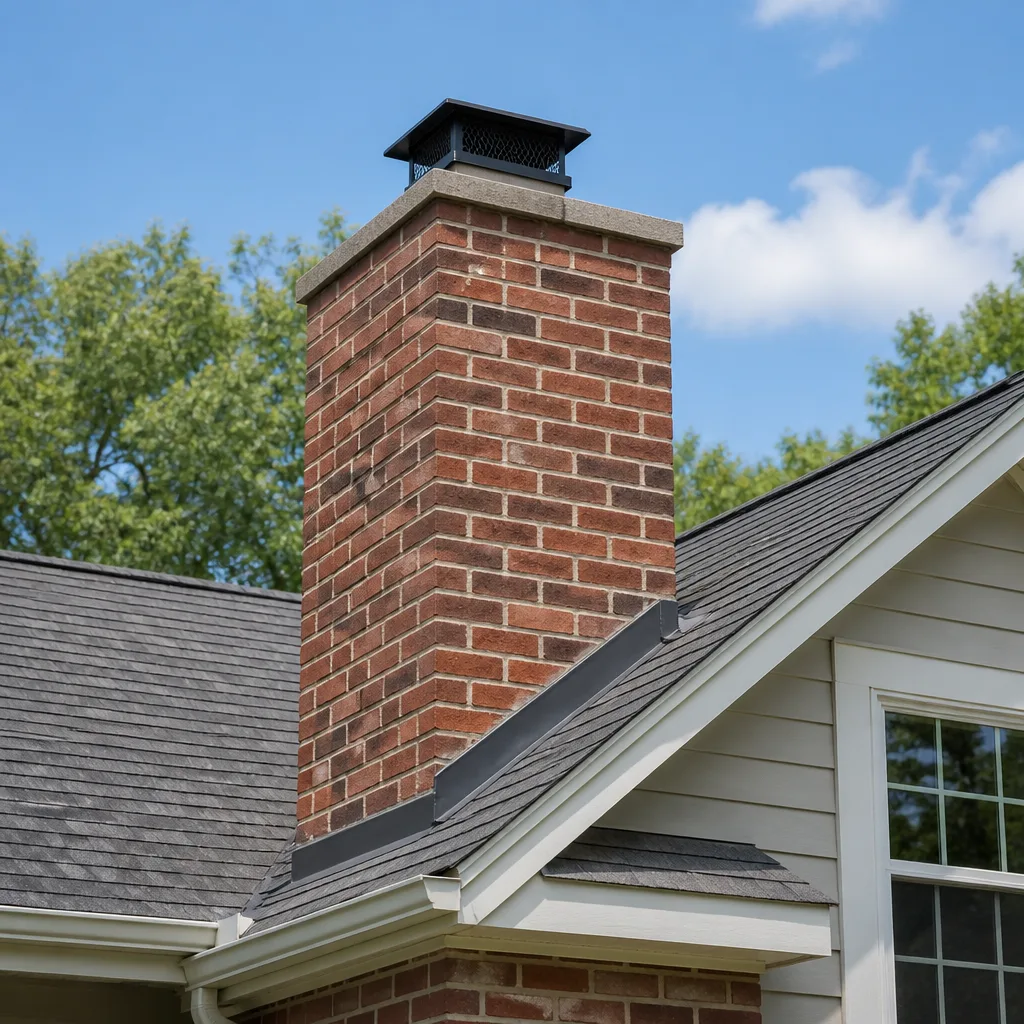 Masonry repair
 Gas fireplace service
Level 1 sweep and inspection to the NFPA 211 annual standard - flue, crown, cap, and flashing checked and photographed
Chimney sweep logs do not sweep chimneys. They loosen some creosote - which then falls where a brush and vacuum still have to collect it.
Chimney Sweep Maintenance Schedule: What to Do and When
The most common chimney question we hear isn’t “how often?” – it’s “should I just do it every fall?” That’s the wrong framework. A single annual date treats every fireplace the same, and they’re not. A wood-burning fireplace burned three nights a week from October through March accumulates creosote at a completely different rate than a gas insert lit on holidays. Drier climates like ours in St. George change the calculus again, because burn frequency drops but creosote dries harder. We’ve watched homeowners book a Spring sweep on an unused gas log set, then skip the wood stove that actually needed attention.
This guide builds maintenance tracks by fuel type and use frequency, not the calendar. You’ll get a month-by-month reference sized for Southern Utah, the inspection findings that trigger an early return visit, and the spring shoulder-season tasks most homeowners skip entirely.
Quick Answer
Chimneys should be inspected once a year and swept whenever the inspection finds enough creosote or obstruction – the annual inspection is the constant, the sweep is the variable. In St. George, a wood-burning fireplace used regularly through the mild winter typically needs a sweep every 12 to 18 months, while a gas insert rarely needs more than an inspection every other year plus cap checks. Dryer vents are a separate timeline entirely and should be cleaned when airflow drops, usually every 12 to 24 months depending on household size.
Styles & brands we work with
- Sweep & inspection
- Caps & crowns
- Flue relining
- Masonry repair
- Gas fireplace service
Table of Contents
- Why “Once a Year” Is the Wrong Way to Think About It
- The Wood-Burning Fireplace Track
- The Gas Insert and Gas Log Track
- The Pellet Stove Track
- The Dryer Vent Track
- How St. George’s Climate Changes the Timeline
- Inspection Findings That Trigger an Early Return Visit
- Month-by-Month Reference for Southern Utah
- The Spring Shoulder-Season Tasks Homeowners Skip
Why “Once a Year” Is the Wrong Way to Think About It
The national fire-safety standard says chimneys, fireplaces, and vents should be inspected annually, but the same standard carries the phrase “at minimum” – and that’s the part people miss. An inspection every year is the floor, not the ceiling. Whether you need a cleaning in that same year depends on what you burn, how often, and what the previous inspection found.
Think of it like oil changes on a car you drive occasionally versus one you commute in. Same vehicle, same oil type, radically different schedule. A chimney is the same way. The variable that matters isn’t time, it’s accumulation.
Accumulation is governed by three things:
- Fuel type. Wood produces creosote as a normal byproduct of combustion. Gas and pellets produce far less, sometimes almost none, but they bring different risks – corrosion from condensation, vent blockage from nesting animals, flue collapse in older masonry.
- Burn frequency and burn quality. Three fires a week with seasoned hardwood is one rate. Three fires a week with unseasoned pine that smolders is another rate entirely.
- Vent condition. A lined, inspected flue with intact mortar accumulates predictably. A flue with spalling tile, eroded mortar joints, or a warped cap accumulates faster and hides it better.
So the right schedule is built backwards from inspection findings, not forwards from a calendar date. That’s the frame the rest of this guide uses. This is exactly the kind of thing a professional-grade Glacier Chimney Sweep inspection is designed to establish – not just “clean or don’t clean,” but “here’s your accumulation rate, and here’s when to check again.”
The Wood-Burning Fireplace Track
Wood-burning fireplaces – masonry, factory-built, and inserts – are the highest-maintenance category and the one where the old annual-cleaning advice comes closest to correct. Creosote accumulates every time you burn, and the accumulation rate depends heavily on how the fire burns.
Two forms of creosote dominate:
- Stage 1 creosote is flaky, sooty, and easy to sweep. It’s what forms when wood burns hot and relatively cleanly.
- Stage 2 creosote is glazed, hard, and resistant to a standard brush. It forms when combustion is cool or smoldering – damp wood, choked dampers, short hot fires that never fully establish.
If you’re burning three or more fires a week through a St. George winter, plan on an annual inspection and be ready to sweep if the technician finds a quarter-inch or more of buildup in the flue. That’s the industry threshold many inspectors work to. Below it, you can usually defer. Above it, you don’t.
If your fires are occasional – a few a month, mostly for atmosphere – you can stretch the sweep to every 18 to 24 months, provided the annual inspection still happens. The inspection is the thing that never moves.
What a proper wood-burning sweep involves, in order:
- Protect the firebox opening and surrounding floor area before any tools come out.
- Run a camera up the flue to record the condition of the liner, mortar joints, and any obstructions.
- Sweep the flue with the appropriate brush for the liner material – metal brushes on clay tiles, softer head on stainless flex liner.
- Brush the smoke chamber and firebox, then vacuum debris with a HEPA unit.
- Re-run the camera and photograph any findings, including the ones you don’t need to fix.
- Deliver the report with the photos attached, so you can see what the technician saw.
The camera step is the one that changes the recommendation most. It’s how a sweep becomes an actual diagnosis rather than a brush pass.
The Gas Insert and Gas Log Track
Gas inserts, gas log sets, and gas fireplaces produce very little creosote – almost none in most cases – but they bring different maintenance concerns, and they don’t need an annual sweep in the way a wood fireplace does. This is the category where freezing your schedule to “annual sweep” wastes money.
What gas appliances actually need:
- Annual inspection, at minimum. The flue still needs to be visually checked for condensation, corrosion, and animal blockage, even if there’s nothing to sweep. Gas combustion produces water vapor, and that vapor condenses on cold flue walls.
- Pilot and burner check whenever the appliance has been dormant. Expectation-setting matters here: gas logs can develop dust, insect nests, or spider webbing in the burner ports over a single off-season in St. George.
- Venting check in older homes. A number of gas appliances in this area are vented through older masonry chimneys that were originally designed for wood heat. The sizing and condition of that vent matter for safe exhaust of combustion gases.
- Sweep only when the inspection finds it necessary. Some gas appliances go five-plus years without ever needing a sweep. Others need one every two to three years because of debris from the cap or nearby vegetation.
The schedule for a typical gas insert in St. George looks like: annual inspection, sweep if needed, otherwise no cleaning. If the insert runs on a sealed combustion line, the inspection is mostly about the exterior – cap, stub, and termination. If it’s a natural draft appliance, the interior vent matters as much as it does on wood.
What to check that you can’t easily see: condensation staining on the firebox walls, rust on metal components, and the condition of the damper. All three tell a technician whether you’re looking at a maintenance item or a repair.
The Pellet Stove Track
Pellet stoves sit between wood and gas in maintenance intensity, but they have their own failure modes. The fuel is dry and consistent, so creosote isn’t the primary concern. Ash and fly ash are.
A pellet stove maintenance schedule usually runs on these intervals:
- Every 1 to 2 weeks of use: empty the ash pan, scrape the burn pot, and check the door gasket.
- Every ton of pellets burned (roughly monthly for regular users): pull the baffles, brush the heat exchanger, and vacuum the exhaust path.
- Annual, pre-season: professional inspection of the vent and combustion blower, plus a full clean of the exhaust termination. The exterior termination point is where ash and condensation combine into a hard plug that can shut the stove down.
Pellet venting is usually stainless flex – many installers work with systems from manufacturers like DuraFlex and Olympia Chimney – and it holds up well, but the cap and the termination screen are wear items. If you’re running a pellet stove through a St. George winter, the annual service is usually required at the pre-season point rather than the end of season.
One thing worth calling out: pellet stoves are the appliance most likely to be left running unsupervised overnight, and the vent termination is where a plug can form without warning. The inspection isn’t about creosote in this case. It’s about flow.
The Dryer Vent Track
Dryer vents are the other major residential venting system under this heading, and they have their own timeline completely separated from chimney work. They’re also the leading appliance-related house fire cause in the country, which is why they belong on the same schedule page as the chimney.
Schedule drivers for a dryer vent:
- Household size. A family of four running three loads a week accumulates lint faster than a single occupant running two loads a week.
- Vent run length and configuration. Long runs, multiple elbows, and crushable foil duct all slow airflow and trap more lint.
- Dryer type. Condensing and heat-pump dryers behave differently than standard vented units.
- Pet hair. Households with pets and dryers running loads heavy with pet blankets see accumulation faster.
The practical interval most homes fall into is a cleaning every 12 to 24 months. A dryer that suddenly takes two cycles to dry a load, or feels hot on the body but produces damp clothes, is telling you the vent is restricted.
What a professional dryer vent cleaning looks like, in order:
- Disconnect the vent from the back of the dryer and inspect the transition connection.
- Run a camera through the run to locate lint build-up, crush points, and termination type.
- Brush and rod the full run with the right head for the duct material.
- Clean the exterior termination, including the flapper and screen, which is where blockages often start.
- Reconnect, then verify airflow with a meter reading and provide the camera photos in the report.
Tying this to a chimney visit makes practical sense for a homeowner. One call covers both venting systems, one report covers both, and nothing gets deferred because “we’ll do that next year.”
How St. George’s Climate Changes the Timeline
St. George sits in a high desert basin, which sounds like it should mean less fireplace use and therefore less maintenance. The reality is more nuanced. Winter days here often swing from cold mornings to mild afternoons, and that pattern changes how fires are burned more than whether they’re burned at all.
What that produces in practice:
- Shorter but hotter burn windows. Homeowners in St. George tend to light fires for a few hours in the morning and then let them die, rather than running a fire all day. Shorter fires burned hot produce less stage 2 creosote than long, cool, all-day smolders – but the frequency of cycles means the box gets re-lit more times per season.
- Extended shoulder seasons. Fireplaces in this climate often get used from November into March, sometimes beyond. The number of “burning days” isn’t dramatically lower than colder climates; the intensity per day is.
- Drier wood, but faster cap wear. Wood stored here cures well, which is good for creosote. But the same dry air and wind that cure wood also degrade chimney caps and mortar crown – the sun and wind exposure is real, and it’s the part of the chimney most likely to fail first.
- Dust and debris. Spring winds in Southern Utah push dust and debris into caps, spark arrestors, and dryer terminations. That’s why spring is a genuinely useful check point in this climate, while in wetter regions it’s often skipped as “nothing to see.”
What that means for your schedule: burn frequency is the driver, not calendar months. A wood fireplace in a St. George home used three nights a week through a mild December and January still needs the same quarterly-to-annual inspection cadence as one in a colder place. The difference is how quickly you can push a sweep out to 18 months instead of 12 – and whether spring, not fall, becomes your more important check.
Inspection Findings That Trigger an Early Return Visit
The annual inspection establishes your baseline. What moves you off that baseline is what the sweep technician finds while they’re in there. These are the specific findings that should shorten the return interval – meaning, instead of seeing you in 12 months, the technician recommends 6.
Stage 2 creosote in the flue
Flaky stage 1 creosote at a quarter-inch is a normal sweep. Glazed stage 2 creosote – hard, shiny, and resistant to a standard brush – means the burn has been running cool, and it means the flue will accumulate faster in the future until the burning habits change. A sweep that finds stage 2 usually comes with a recommendation to re-check in six months rather than twelve.
Spalling flue tiles
Clay tile liners in older masonry chimneys can spall – the surface flakes and cracks off under thermal cycling. Spalling tile exposes the mortar behind it, and once mortar starts eroding, the chimney is on a path toward needing a liner. This is where a resurfacing product like HeatShield becomes relevant. HeatShield is a ceramic resurfacing system applied to the interior of a damaged flue to restore a smooth, serviceable surface without the cost of a full reline. It’s not right for every situation – the technician has to confirm the underlying tile is still structurally sound – but it’s a real middle option between “clean and move on” and “full liner replacement.”
Eroded mortar joints
Mortar erosion in the firebox and smoke chamber is common in older St. George homes, especially where a chimney has sat through many seasons of thermal cycling without repair. Eroded joints allow heat to pass where it wasn’t designed to pass. Finding them at inspection is the whole point of the inspection – a technician who catches them at 1/8-inch can repair them now, before they open up to the point where a rebuild is the only option.
A cracked or missing cap
Chimney caps take the worst of the weather, and a cap in poor condition lets water and animals into the flue. If the inspection finds a failing cap, that’s often a “fix it before next season” finding – and on the next visit, the cap check should happen earlier than the standard interval.
Visible animal nesting or debris
If the sweep finds a bird nest, squirrel cache, or heavy leaf accumulation, that’s a signal the cap or spark arrestor isn’t doing its job. Re-check before the next nesting season, which in Southern Utah arrives earlier than most homeowners expect – often in late February and March.
Condensation staining on a gas appliance
For a gas insert or gas log, heavy condensation staining on the firebox or vent termination tells you the vent is under-performing. Re-check in six months after the fix, because the corrosion process on a gas vent can move faster than it does on a wood chimney.
Month-by-Month Reference for Southern Utah
This is the practical version – a month-by-month reference you can print out and stick on the refrigerator. It’s built for the St. George climate specifically, so it leans on wind-season and nesting-season timing rather than the wet-climate calendar most generic guides still use.
January
Peak burn season. Nothing to do beyond your normal use – but if you’re seeing smoke roll into the room on startup, or a fire that won’t draw, that’s worth a call. Draft problems at peak season usually point to a partially blocked flue.
February
Last full burn month. If your last inspection was more than a year ago, this is a good month to book the annual inspection while the system is still in active use and any issues will be obvious.
March
Nesting season begins. Birds and small animals start looking for sheltered spots, and a chimney is one of their favorites. If you don’t have a functional cap and spark arrestor, this is the month they find out for you. Have the cap checked before nesting starts, not after.
April
Wind and dust season. Southern Utah spring winds push debris into caps, screens, and dryer terminations. This is a good month for the spring cap and termination check – the one task homeowners skip most often. Look at the cap and the dryer vent exterior from the ground. If anything looks backed up, book the inspection.
May
End-of-season sweep. If your inspection last fall found creosote buildup, this is the month to book the sweep, not September. Summer is the busiest season for chimney work in St. George because everyone else is doing the same thing. Booking now gets you the return interval you actually want.
June
Dryer vent season. Long summer days mean more laundry, and a house full of kids doing summer loads pushes the dryer vent harder. If it’s been more than 18 months since the vent was cleaned, this is a good month to get it on the schedule.
July
Repair season. If the spring inspection found mortar erosion, a cap problem, or a spalling tile, July is when you want that repair done – not October when everyone remembers the fireplace. Repairs to chimneys dry and cure better in warm, dry weather.
August
Pre-season inspection window. If you haven’t had an inspection yet this year, book it now. Anything found in August can still be repaired in September, which means the fireplace is ready to use when the first cool evening arrives instead of two weeks later.
September
Final call for repairs. Any repair scheduled in August should be done. If a liner replacement was recommended, this is the last comfortable window before the first fire of the season. Liner systems we install, including DuraFlex flexible liner, are usually in the truck – but inspection, sizing, and installation all take time.
October
First fires. The smoke test matters more this month than any other. Before you use the fireplace for the first time, open the damper and light a small test fire. If smoke doesn’t draft cleanly up the flue, don’t keep burning. That’s the signal the flue needs to be looked at.
November
Peak season begins. Nothing new to schedule – but if your fireplace is going to be lit most evenings from now through February, and your last inspection found creeping mortar erosion or spalling tile, this is the month to have that repaired before it’s working hard.
December
Holiday use. The heaviest fire use of the year. If you’re going to burn every evening for weeks, run a clean fire – dry hardwood, damper open, no smoldering overnight logs. The habit in December sets up your accumulation rate for the next winter.
The Spring Shoulder-Season Tasks Homeowners Skip
Spring in St. George is the shoulder season that matters most, and it’s the one most homeowners get backwards. The common advice is “clean the chimney in the fall before you use it.” The problem is that fall cleaning assumes nothing bad happened between March and October. Spring is when things happen.
Three tasks in particular matter:
Post-wind-season cap inspection
Chimney caps, spark arrestors, and dryer vent terminations are the weather-exposed parts of the system. Southern Utah winds pick up through April, and by May, caps are knocked loose, screens are torn, and debris has been forced into the flue. A visual check of the cap from the ground plus a photo from the inspection camera is quick and definitive.
Animal exclusion check before nesting season
By the time a homeowner notices a bird in the chimney, nesting season is already over and the nest is often unreachable without a real clean. The better move is to check the cap and spark arrestor in February and March, before the nesting attempts happen. Bird nests in flues narrow the smoke passage and can ignite when the next fire is lit.
Summer-long dryer vent check
A dryer vent check is the counterpart to the cap check on the other side of the house. The exterior termination of a dryer vent – the flapper, the screen, and the last few feet of duct – collects lint, and it’s the part homeowners never look at. A quick visual in late spring catches the accumulation before it becomes a slow-drying, heat-buildup problem all summer.
If you’re going to book the sweep and dryer vent together, spring is a good time – the chimney sweep and dryer vent cleaning both involve camera inspection and both produce a photo report you can keep. Booking both together avoids the classic scenario where one gets done and the other slides another year.
Common Mistakes to Avoid
- Treating the annual inspection as the same thing as an annual sweep. The inspection is the calendar item; the sweep is a variable that follows from it. Skipping the sweep when the inspection says “wait” is fine. Skipping the inspection because “it’s not a sweep year” is the actual mistake.
- Burning green or unseasoned wood through a St. George winter. Drier air here tempts homeowners to light early in the season with wood that hasn’t cured long enough. Wet wood produces more stage 2 creosote, and stage 2 is the one that shortens your return interval to six months instead of twelve.
- Ignoring the chimney cap because it “looks fine” from the ground. A cap can look intact from the yard and still be missing its spark arrestor screen. Caps are also the first thing to fail in this climate because they take the worst of the sun and wind.
- Skipping the dryer vent because the chimney was already done. They’re separate systems with separate timelines. A clean chimney and a clogged dryer vent on the same house is a real scenario – different seasons, different accumulation rates.
- Assuming a gas insert doesn’t need an inspection. It produces almost no creosote, but the vent still needs checking for condensation, corrosion, and animal blockage. Gas turns into water vapor, and water vapor condenses on a cold flue wall.
- Waiting until the first cold evening to test-burn. By then you’ve missed the window to have anything fixed before the season. October is when problems become urgent, which is exactly when technicians are busiest.
- Accepting a repair recommendation without seeing the photos. Any recommendation should come with photographic evidence – flue camera photos, not verbal description. If you’re being told you need work, ask for the pictures.
See the difference
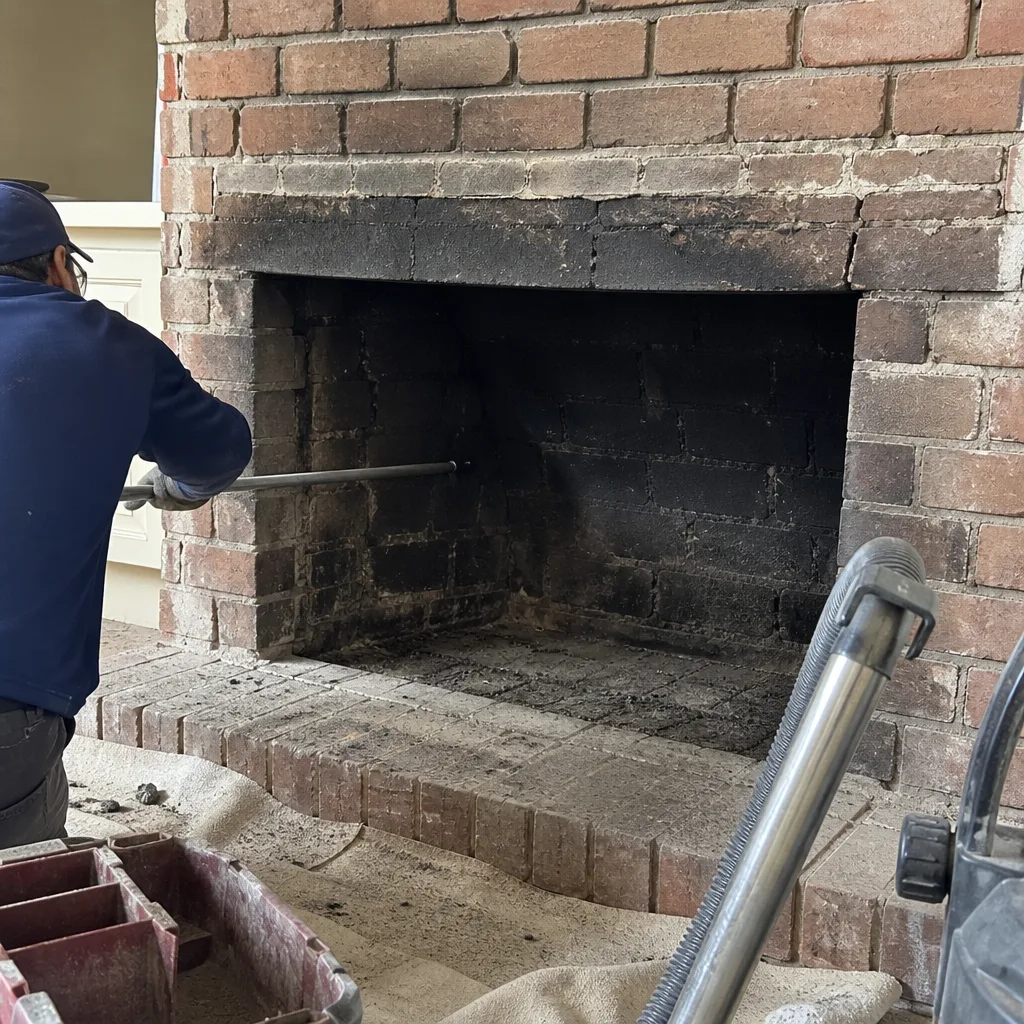 Before
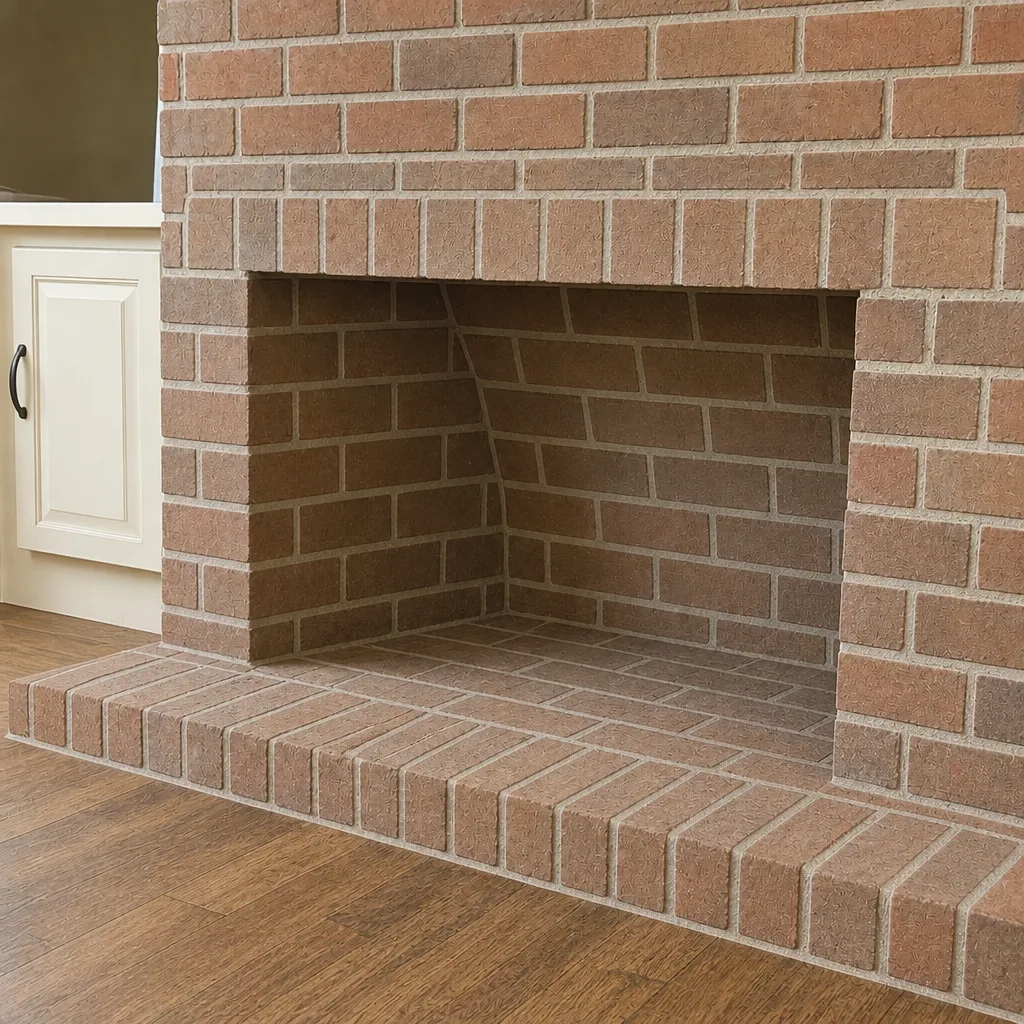 After
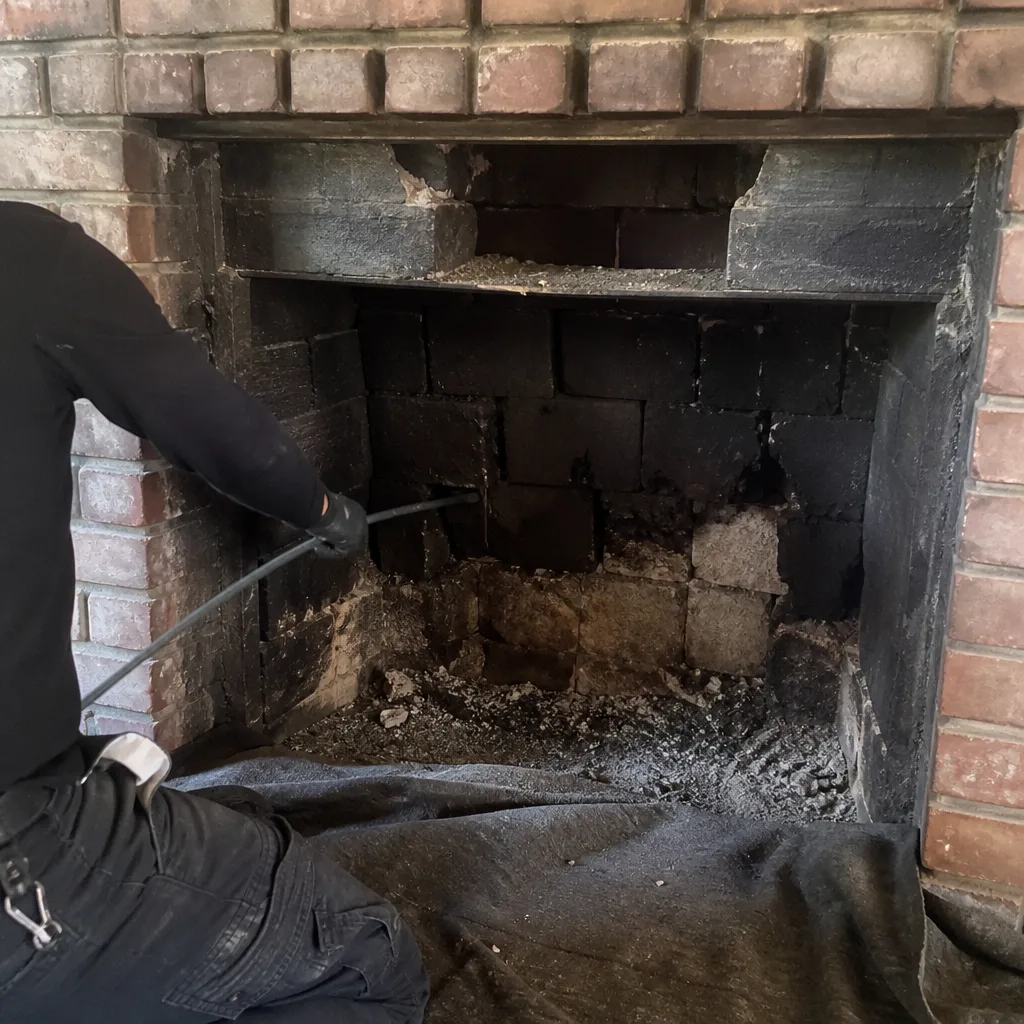 Before
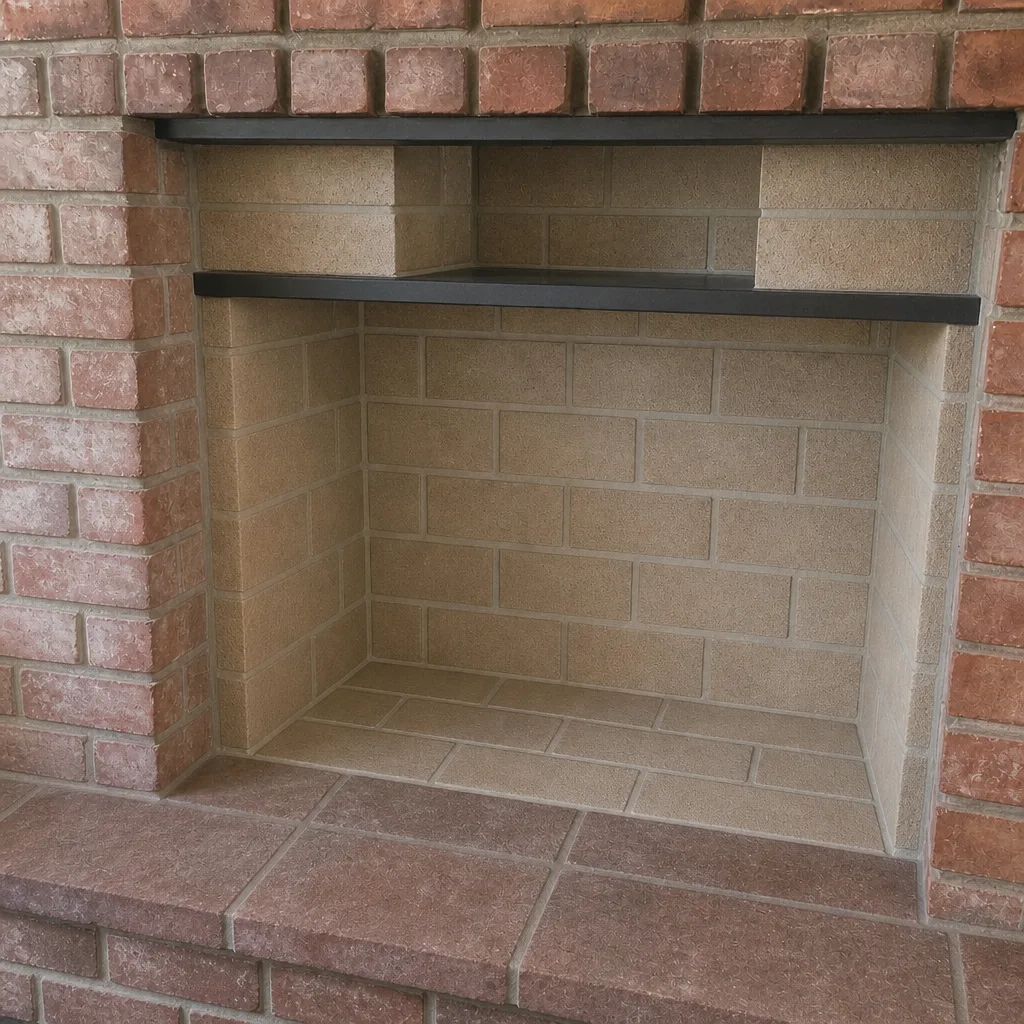 After
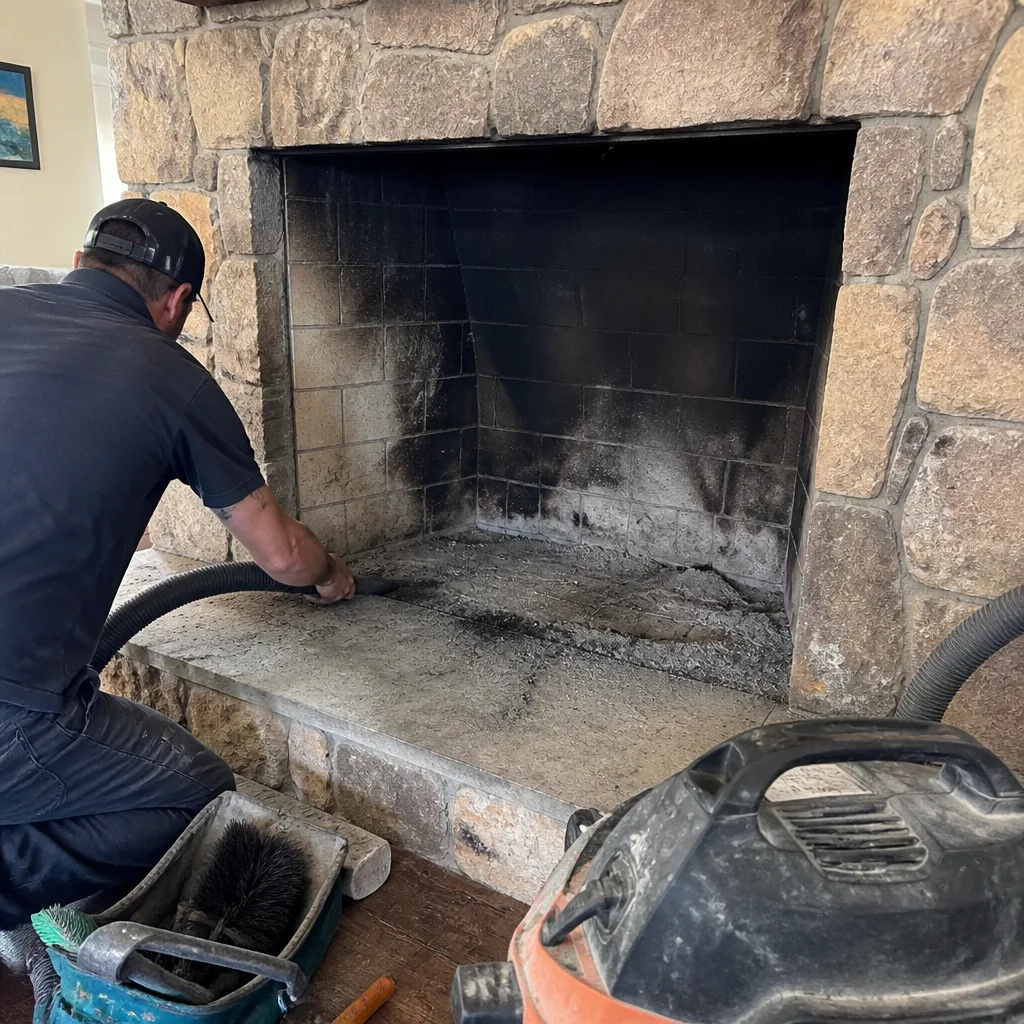 Before
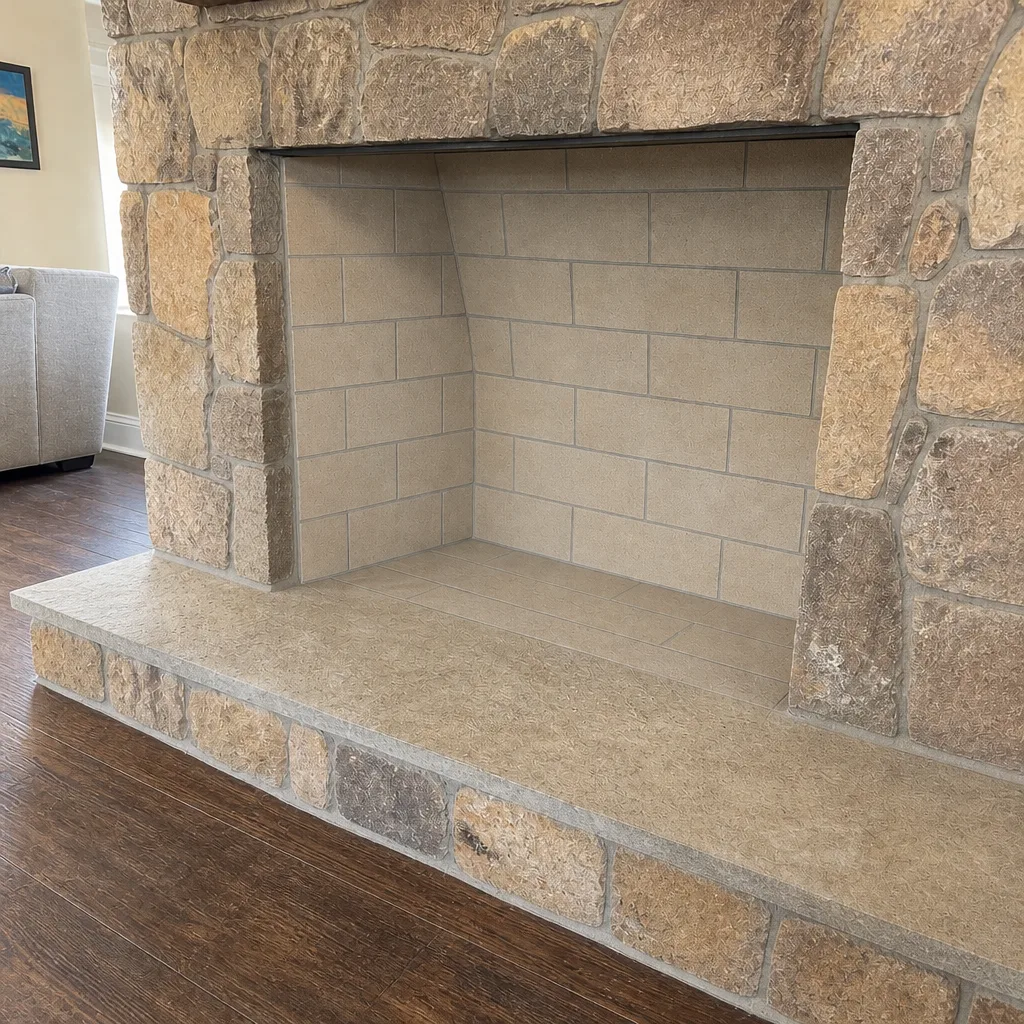 After
When to Call a Professional
Any time the flue is actively being used and something has changed, call. That includes smoke rolling into the room on startup, a fire that won’t draft cleanly, a sour or smoky smell coming from the fireplace on warm days, water stains on the firebox walls, or visible creosote accumulation more than a quarter-inch at the flue mouth.
If it’s been more than a year since your last inspection, that’s a good reason to call even if nothing feels wrong. The whole point of the annual inspection is to catch things before they announce themselves. And if your dryer is taking longer than it used to, or your clothes come out hot but damp, don’t wait for the next scheduled visit – that’s the classic sign of a restricted vent.
For the maintenance visit itself, we can handle the sweep, the inspection, and a dryer vent cleaning in the same call. Anything found during inspection – mortar repair, spalling tile, cap replacement, HeatShield resurfacing as an alternative to a full reline – can usually be corrected by the same crew without a second visit. Our technicians have up to 12 years of experience, and we work with professional-tier lines like DuraFlex and Olympia Chimney because a liner installation done right is the difference between a repair that lasts and one that doesn’t.
Glacier Chimney Sweep offers free estimates in St. George – call (877) 327-1971. We answer 24/7. Fast dispatch from 7am to 7pm, Sunday through Friday.
Frequently Asked Questions
A wood-burning fireplace used several times a week through winter should typically be inspected annually and swept every 12 to 18 months. Gas inserts and gas log sets usually need only an inspection each year, with a sweep only when the inspection finds debris. The actual schedule should be set by what the inspection finds, not by the calendar alone. Call (877) 327-1971 for an exact quote – estimates are free.
Yes for the inspection, no for the sweep. The annual inspection is the constant, because it catches cap failures, animal nesting, mortar erosion, and spalling tiles that happen with or without fires being lit. The sweep is only booked when the inspection finds buildup above the threshold. Burning a few fires a season usually means an 18-to-24-month sweep interval, but never means skipping the inspection. Call (877) 327-1971 for an exact quote – estimates are free.
Yes, at minimum. Gas appliances produce very little creosote, but gas combustion produces water vapor, which condenses on cold flue walls. That means the vent still needs annual checking for condensation staining, corrosion, and animal blockage – even when there’s nothing to sweep. Skipping the inspection on a gas insert is the most common way homeowners miss a developing vent problem.
Three reliable signs: a quarter-inch or more of flaky creosote visible at the flue mouth, a fire that smokes into the room on startup, or a sour smell coming from the fireplace on warm days. Any one of those is worth an earlier call. None of them are worth a self-clean – the flue interior conditions that actually matter are only visible with a camera. Call (877) 327-1971 for an exact quote – estimates are free.
A sweep is the cleaning itself. An inspection is the diagnostic check that determines whether a sweep is needed and what else the chimney might need – cap condition, mortar erosion, spalling tile, liner integrity. Getting the sweep without the inspection is the scenario that produces surprise repairs; getting the inspection without a sweep is a perfectly normal outcome when the chimney is clean.
No – the two systems have separate timelines. Most households should have the dryer vent cleaned every 12 to 24 months, depending on household size, pet hair, and vent-run length. Chimney inspection is annual; the sweep is conditional. Booking both in the same visit is convenient, but the underlying schedules don’t match month for month.
HeatShield is a ceramic resurfacing product applied to the interior of a damaged flue to restore a smooth, serviceable surface. It’s used when a flue has spalling tile or eroded mortar joints but the underlying structure is still sound. It’s a real alternative to a full liner replacement – not a substitute for one when the underlying tile has failed. A technician should confirm which applies based on the camera inspection, and you should see the photos before deciding.
Most years, nothing – but the problems that build up over multiple skipped years don’t announce themselves until they do. Eroded mortar joints in a firebox can open up to the point where rebuilding becomes the only option. A failing cap left in place can let water into the flue through a full winter. An animal nest can go undetected until the first fire of the season. The inspection exists to catch those things while they’re still small. Call (877) 327-1971 for an exact quote – estimates are free.
The Bottom Line
Chimney maintenance is a schedule, not a date. The annual inspection stays fixed – it’s the anchor that keeps everything else honest. The sweep, the cap check, and the dryer vent cleaning are all conditional, and their timing is driven by what you burn, how often, and what the inspection finds. In St. George, the mild winters mean burn frequency drops, but the spring wind and nesting seasons create two additional check points most generic maintenance guides miss. Spalling tile, eroded mortar, and stage 2 creosote are the findings that shorten your return interval; a clean flue with intact structure is the finding that lengthens it. Build the schedule around your actual fireplace, get the photos from every inspection, and let the evidence set the next appointment.
Call (877) 327-1971. We answer 24/7. Fast dispatch from 7am to 7pm, Sunday through Friday. Written estimates set the final price, and the estimate is free.
Written by the team at Glacier Chimney Sweep.